A Journey To Kanchenjunga’s North & South Base Camps "One Of Nepal’s Remote Trek"
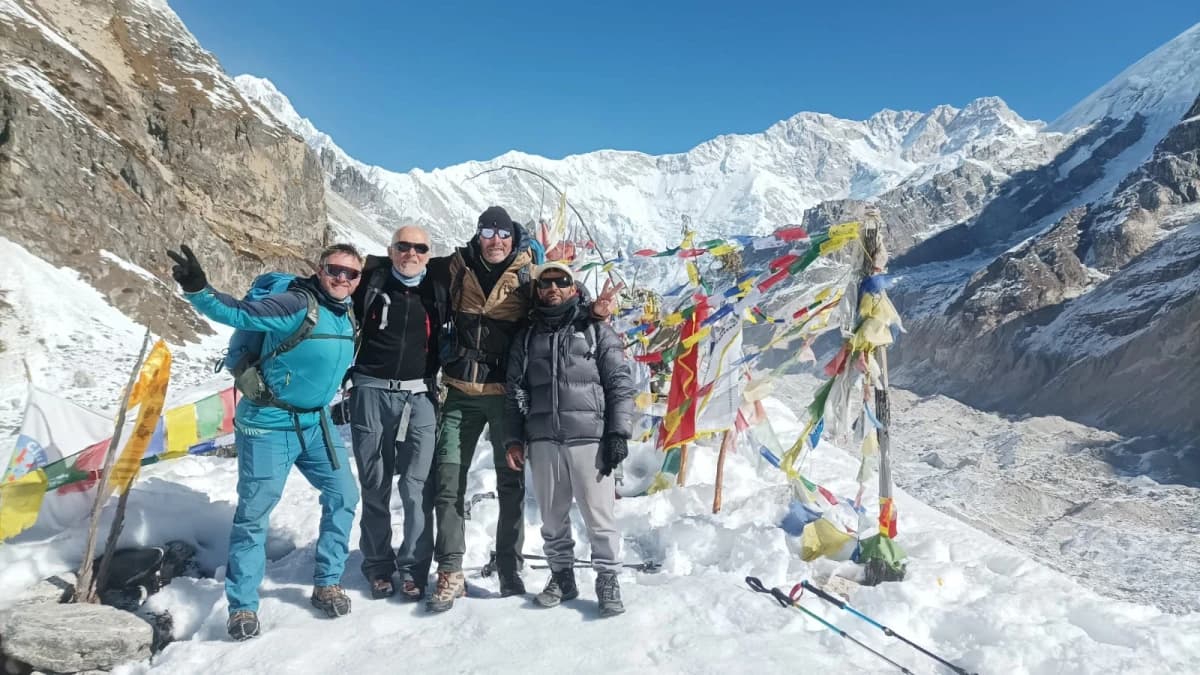
Kanchenjunga Circuit Trek is one of Nepal’s most remote trekking regions situated in the far-eastern region of Nepal. Kanchenjunga Base Camp provides an adventure of a lifetime along the off the beaten path and remote trails to the world’s third highest peak, Mount Kanchenjunga at 8,586 meters. The complete Kanchenjunga North & South Base Camp Trek Itinerary extends approximately 220-235 kilometers taking us through the North Base Camp (Pang Pema) as well as the South Base Camp (Yalung) of Kanchenjunga. The Kanchenjunga Base Camp Circuit Trek exclusively presents some of the most intriguing panoramas of the mountains like Tent Peak (5,663 m/18,684 ft), Mt. Kambachen (7,902 m/25,925 ft), Mt. Janu (7,710 m/25,300 ft), etc. including the eight-thousanders like Mt. Everest (8,849 m/29,032 ft), Mt. Makalu (8,463 m/27,765 ft) and Mt. Lhotse (8,516 m/27,940 ft) while hiking through, high passes like Sele La, glaciers like Yalung, traditional villages, monasteries like Ramtang and Oktang at such high altitude. This journey to Kanchenjunga’s North and South Base Camps is an immersion into Nepal’s remote yet rewardingly authentic Himalayan adventure filled with true wilderness and remoteness which is vastly opposite to the crowded paths of Everest Base Camp or the Annapurna Base Camp. Kanchenjunga trek offers an unfiltered and raw adventure where you will experience nature in its pristine form far from the busier trails of other treks.
Kanchenjunga peak lies bordering Nepal and Sikkim state of India while also being a restricted region. The journey to Kanchenjunga hence requires special permits like the Restricted Area Permit (RAP) and the Kanchenjunga Conservation Area Permit (KCAP) unlike other famous trekking destinations like Langtang Himal Trek or Manaslu Trek which legally requires you to trek with a licensed guide. Your journey to the base camps of Kanchenjunga begins here in Kathmandu boarding a flight to Bhadrapur which is a city in the eastern lowlands of Nepal. From there, you can either take a jeep drive to Taplejung and begin your trek from there to the north base camp or take a jeep drive to Yampuding via Kanyam and begin your trek from the south base camp side.
The best time to pack up for the Kanchenjunga base camp trip is during spring around March to May and fall /autumn around September to November. During this time, the weather is favorable with bright sunny days and clear skies with magnificent mountain views and the forests of lowlands are covered with dense Rhododendron flowers elevating its beauty even more. You should try to avoid trekking this circuit in winter or monsoon because of the unfavourable conditions such as heavy snow, trail blockades, extreme cold, heavy rain which make your trip unpleasant and uncomfortable. This will also add to the already strenuous difficulty of Kanchenjunga Circuit even more hence we should avoid winter and monsoon season.
Talking about the difficulty of the trek to both North & South base camps of Kanchenjunga, my answer would be simply strenuous. Kanchenjunga trekking is demanding on the body and mind as well as challenging to our physical fitness. The reason for this is a much longer trekking duration of 18-25 days compared to Everest Base Camp’s 12-14 making it non beginner friendly. On top of that dangerous high altitude passes including famous Selele pass , terrains and glaciers with very thin air this trek is unsuitable for beginners and is strongly advised for experienced trekkers. To add onto the difficulty even more, the trip to Kanchenjunga region is very remote and less developed in logistical services and facilities which can make it unfamiliar and uncomfortable.
In this trek, your home throughout the journey to the base camps will be very basic local teahouses and camping tents in the higher altitude regions and not so luxurious basic hotels in the regions where you reached by vehicles at lower altitude and the beginning of the trek. The facilities and amenities are much less prevalent compared to other popular circuits like Lhotse or Langtang which includes meals as well. This trip will make you eat the local delicacies Daal, Bhat And Tarkari, potatoes and lots of hot water and forget western menus.
Where Is Kanchenjunga Located And How Do You Get There?
Kanchenjunga Circuit Trek lies in Taplejung district of Nepal in the far eastern region. The region lies inside the Kanchenjunga Conservation Area and it also is a restricted area. The base camp trip lies in the far eastern himalayan belt bordering Nepal and Sikkim state of India. This trek is a home to Rai, Limbu and Sherpa communities of Nepal who offer the unfiltered experience into their rich culture and traditional values along with magnificent mountain peaks panorama.
To reach Kancenjunga Base Camp, our journey starts here in Kathmandu the bustling capital city of Nepal from where we traverse to Bhadrapur which is an important city in the lowlands of eastern Nepal by domestic flight. From there onwards, we can take different routes to the base camp being, route to the northern base camp or the southern base camp of the massif of Kanchenjunga. We take a scenic 5 to 6 hour jeep ride to Taplejung from Bhadrapur passing through small towns, scenic roads and lush green hills which provides a look into the rural Nepalese lifestyle. After that journey we will take a drive to Sekathum from Taplejung from where our trekking trail begins. This is the route which takes you to the North Base Camp (Pang Pema) from Taplejung. We can also take a jeep ride to Kanyam, Ilam from Bhadrapur which is a beautiful place famous for its tea gardens. From there onwards, we take another drive up to Yampuding which is the beginning of our trekking trail to the South Base Camp (Yalung).
Why Should We Trek To Kanchenjunga Base Camp?
● See the world’s third highest mountain, Mount Kanchenjunga from the basecamp.
● Witness the stunning views of lush green valleys, dense Rhododendron forests to snowcapped mountains.
● Hike through the off the beaten path into the wilderness of Kanchenjunga which provides peace and solitude.
● Get a chance to see the exotic and endangered Himalayan species like Red Panda, Snow Leopard, Himalayan Brown Bear, Blue Sheep, Musk Deer and Himalayan Monal.
● Culturally immerse with the rich culture of the local communities of Rai, Limbu and Sherpa and their traditions.
● Explore the culture of Tibetan influenced villages of Ghunsa and Khambachen.
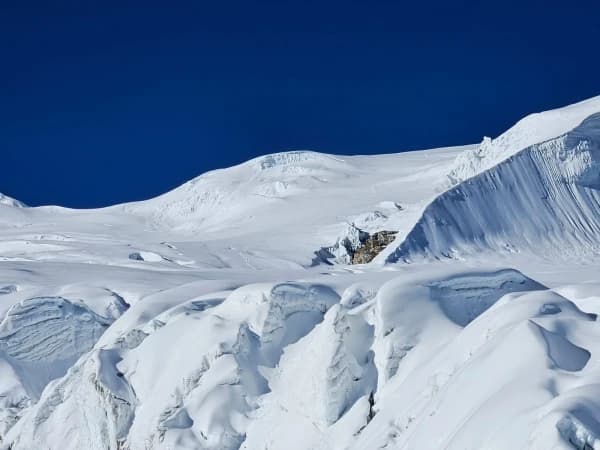
● Witness the magnificent Yalung Glacier.
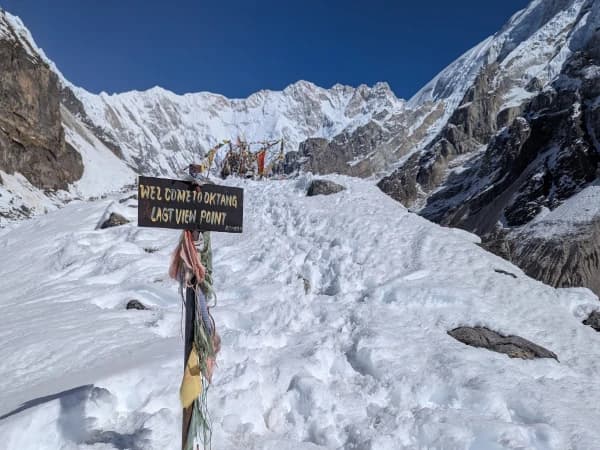
● Meditate in peace at the Ramtang and Oktang monasteries.
● Experience the unfiltered remote lifestyle of the locals in the highlands.
When Is The Best Time To Go Kanchenjunga North & South Base Camp Trek?
The trip to Kanchenjunga Base Camp is the most rewarding during the spring and fall/ autumn seasons. During spring which is from March to May the Kanchenjunga trek offers an exceptional environment including difficulty and beauty. During this time the temperature is quite mild compared to other seasons which provides a perfect scenario for trekking as it is neither very hot nor excruciatingly cold. Also, during spring we can see clear skies which allows stunning views of the mountains which makes you feel amazing. As we hike upwards to higher altitude, we can experience walking through dense, luscious forests filled with blooming Rhododendrons and other flowers which adds beautiful vibrance to the overall landscape during the trek.
During Autumn (September to November) the trek provides us with stable dry weather with mild breeze in the higher alpine meadows and a fresh breath of cold mountain air. We can experience crystal clear views of the mountain vistas which open up after monsoon. This allows a very pleasant environment and temperature for trekking.
Kanchenjunga North & South Base Camp 21 Days Itinerary
Day 01: Arrival in Nepal’s capital Kathmandu and transfer to a hotel
Day 02: Rest day in Kathmandu and Permit Preparation.
Day 03: Domestic flight to Bhadrapur and transfer to Taplejung.
Day 04: Jeep drive from Taplejung to Sekathum.
Day 05: Trek from Sekathum to Amijilosa (2500m).
Day 06: Trek from Amijilosa to Ghunsa (3595m).
Day 07: Trek from Ghunsa to Khambachen (4150m).
Day 08: Acclimatization day
Day 09: Trek from Khambachen to Lhonak (4780m).
Day 10: Trek from Lhonak to Pang Pema/ North Base Camp (5143m) and back to Lhonak
Day 11: Descent from Lhonak to Ghunsa (3595m).
Day 12: Trek from Ghunsa to Sele La pass (4480m).
Day 13: Trek from Sele La to Tseram (3870m) via 3 passes of the Sele La pass.
Day 14: Trek from Tseram to Ramche (4680m).
Day 15: Trek from Ramche to Kanchenjunga South Base Camp (4740m) via Oktang (4730m) and return back to Tseram (3870m).
Day 16: Descent from Tseram to Trotong (3000m).
Day 17: Descent from Trotong to Yampuding (1980m).
Day 18: Drive to Kanyam (1200m) from Yampuding.
Day 19: Drive from Kanyam to Bhadrapur and flight back from Bhadrapur to Kathmandu..
Day 20: Free day for shopping relax.
Day 21: Final Departure
Can Beginners Do The Kanchenjunga Circuit Trek?
The trek to the North and South Base Camps of Kanchenjunga is very physically demanding as it is one of the least commercialized and remote treks in Nepal. Due to it being a very under the radar trek, the development of services and facilities is also not quite advanced like in some other treks such as Everest or Annapurna Base Camp. It is a very long excruciating trek of duration ranging from 18 to 25 days which is very hard on your body and mind. Unlike Manaslu Circuit trek which is of 12- 16 days, Kanchenjunga is much more demanding on our physical fitness and mental resilience. The total approximate distance we will need to cover on this trek is around 220 to 230 kilometers which requires a daily average of 6 to 8 hours of hike. This region painfully tests your endurance and stamina as the air is very thin with low oxygen levels which requires even more experience and fitness. While trekking down and back from the Pang Pema Base Camp we need to trek to the gorgeous yet difficult terrain of the Sele La pass which includes other three passes Sinion La, Mirgin La and Sinelapche La pass as well as the magnificent Yalung glacier. Due to the remoteness and lack of facilities the trip will be even harder as we will need to carry extra trekking gears and trekking clothes which could result in physical overload. Due to these reasons the Base Camp trek is not advised for beginners as it is of strenuous difficulty. An experienced trekker is strictly advised for this magnificent yet challenging trek to the remote Himalayas.
What Are The Permits Requirements For Kanchejunga Trekking ?
Kanchenjunga circuit trek falls under the restricted area as well as conservation area of the Kanchenjunga. Unlike Annapurna, to trek this beauty of a mountain we will require some more special permits.
The number one thing for this trek is that we must trek here with a licensed guide since the Kanchenjunga region falls within a restricted area. We will require the following permits for the Kanchenjunga trek:
Restricted Area Permit (RAP)
This permit is required in the Kanchenjunga region and for every trekker entering the restricted zone. It is available via a registered trekking agency. The permit costs $20 per person per week for the first four weeks, then $25 per person per week afterwards.
Kanchenjunga Conservation Area Permit (KCAP)
This permit grants entrance to the Kanchenjunga Conservation Area and can be obtained at a national park checkpoint during the trek. Non-SAARC nationals need to pay $20 USD, whereas SAARC nationals need to pay $5 for the permit.
Kanchenjunga Trek Accommodation & Food Facility
Kanchenjunga Trek is for those who are ready for a true Himalayan experience. The accommodation facilities along the circuit trek are very basic and limited. In comparison to other popular trekking regions like Langtang Trek, accommodation in Kanchenjunga is very poorly developed. One of the reasons for it is that the region is located in a very remote area and has not developed due to very less treks through there as it is not popular and easier compared to some other treks. Also since Kanchenjunga trekking region falls within the conservation area it is much less subjected to development by destroying the flora, fauna and the habitat of the exotic wildlife living there. We will be accommodating in very basic local teahouses with lesser to none facilities in comparison to other trekking regions. We should prepare ourselves for harsh conditions leaving the comfort and luxury behind. Facilities like hot showers, Wi-Fi and charging are less prevalent in lower regions and as we gain altitude they seem to stop. Also for these facilities we must pay an additional cost which is not included in the itinerary.
The food we find in Kanchenjunga Circuit Trek is simple, hearty and which reminds us of home. It includes the classic fuel for each Nepalese which is Daal, Bhaat and Tarkari ( rice and lentils with veggies). We can also find Tibetan influenced meals as we climb in altitude like Thukpa ( a soup with Tibetan noodles and veggies) , boiled potatoes and lots of hot water. These staple foods will be our fuel throughout the trek so we can forget about the western menus and prepare to indulge ourselves in a true Nepalese fooding experience.
Facilities And Amenities In The Kanchenjunga Base Camp Trek
During our trek to Kanchejunga base camp, the facilities of hot showers, Wi-Fi, charging and electricity are very limited and rare unlike in other treks such as Everest Base Camp. Teahouses at lower altitudes may have the service of Wi-Fi and charging but there will be an additional cost we should pay for it. Also as we rise in altitude, many teahouses use solar panels for electricity just for a few hours a day hence we should not expect hot showers and Wi-Fi and power source for charging. We should prepare ourselves, for fewer facilities and comforts, and enjoy the experience as a true remote mountain native by disconnecting ourselves from technology and being one with the wilderness.
Tips, Tricks And Guide For Trekking The Kanchenjunga Circuit
- We should ideally pack our bags for this trek during Spring and Autumn since during those seasons the environment is very favourable unlike the added difficulty brought by Winter and Monsoon seasons with heavy snow fall, snow covered trails, low to none visibility, heavy rain, leaches and so on.
- Kanchenjunga Circuit Trek is quite challenging with long durations, difficult terrain and dangerous high passes. Due to this reason, trekkers with prior experience and physical fitness are only advised to do this trek.
- We must trek the beautiful and remote Kanchenjunga’s magical trails with a licensed guide with us as it falls under a restricted area as well as a conservation area which requires two special permits: Restricted Area Permit (RAP) and Kanchenjunga Conservation Area Permit (KCAP).
- We must prepare with trekking essential gears and warm insulation clothing which traps the body heat keeping us warm. Warm jackets, waterproof gears, good quality trekking boots, and high quality sleeping bags as some essentials for us during the trek. Since the expectation of electricity is not very fruitful we should also bring power banks for charging our devices such as mobile phones or camera batteries.
- Along with all the gear and warm clothes, we should also pack a sun protection cream of minimum SPF- 50 to prevent sunburns. Toiletries and amenities for personal hygiene which includes a small personal towel, toothbrush and toothpaste, a hand sanitizer if possible, travel sized soaps if available and toilet paper and wet wipes of our own can be a huge plus.
- The highest point of this Kanchenjunga Circuit Trek reaches an altitude of 5,143 meters at Pang Pema (North Base Camp). Due to trekking in higher altitude we can be the prey to altitude sickness hence preparing for higher climate and elevation in altitude is a must. We should drink plenty of water, ascend gradually and acclimatize ourselves to new altitude levels by taking acclimatization days. We should be properly rested prior to a new day’s hike.
- As we are trekking to one of Nepal’s most remote trekking circuits, the existence of ATM machines is near to zero. Hence for using basic available facilities during the trek and for the meals we will have we should carry enough cash.
Final Thoughts: Why Kanchenjunga Trek Should Be On Your Bucket List In 2026 ?
Kanchenjunga Base Camps trek is a special journey which guides us through one of Nepal’s most remote and untamed Himalayan hikes to the lap of the great Mount Kanchenjunga. Trekking to the north and south base camps of Kanchenjunga provides us with a 360° view of the breathtaking massif that is Kanchenjunga. Still this year 2026 or next year 2027 Spring & Autumn threre are less crowded and more connected with nature in its true form than Annapurna or Everest Base Camps, Kanchenjunga takes us into towering glaciers, rural communities where we immerse in their traditions and cultures, pristine alpine landscapes and a remote adventure of a lifetime which other popular treks just cannot provide.
FAQs:
1. What is the trek about?
The Kanchenjunga circuit trek is a demanding trek that circles the basecamps of the third highest mountain in the world, located in the eastern part of Nepal.
2. How tall is Mount Kanchenjunga?
Kanchenjunga is 8,586 meters (28,169 ft) tall.
3. How long does the Kanchenjunga Circuit Trek take?
The trek takes around 18-25 days, varying on your specific itinerary and acclimatization needs.
4. What is the highest altitude reached in this trek?
The maximum altitude reached in this trek is at 5,143 meters in the Pang Pema, North base camp.
5. How difficult is the trek?
This trek is strongly advised for experienced trekkers. Due to the strong physical and mental demand this can be quite treacherous for beginner trekkers and is not recommended.
6. Is Solo trekking allowed in this circuit?
No, solo trekking is strictly prohibited since Kanchenjunga is a restricted area so you must trek in groups or a minimum of 2 trekkers.
7. Do I need a guide?
Yes, since Kanchenjunga is a restricted area, you need to be with a licensed guide.
8. What are the accommodation options on the trek?
The accommodation ranges from local basic teahouses and lodges in lower altitudes and tented camps at higher elevations. Facilities and amenities are very limited and basic to none compared to other popular trekking routes like Annapurna or Everest.
9. Are special permits required?
Yes, mainly two permits are required for this trek:
1.Restricted Area Permit (RAP)
2.Kanchenjunga Conservation Area Permit (KCAP).