Everest Base Camp Trek Highlights
- Step foot on the world’s highest base camp – Everest Base Camp
- Experience a scenic and thrilling mountain flight to Tenzing Hillary/Lukla airport, one of the world’s most dangerous airports
- Explore the beauty, breathtaking landscapes and Himalayan wildlife of the high-altitude Sagarmatha National Park
- Reach Namche Bazaar, the gateway of Everest and the trade hub of Khumbu region
- Experience and immerse in the culture and tradition of the legendary Sherpa people
- Short hike to witness panoramic views of Everest, Ama Dablam, Lhotse, Nuptse from Hotel Everest View, the highest hotel in the world
- Visit Tengboche Monastery, the oldest monastery in the Everest region
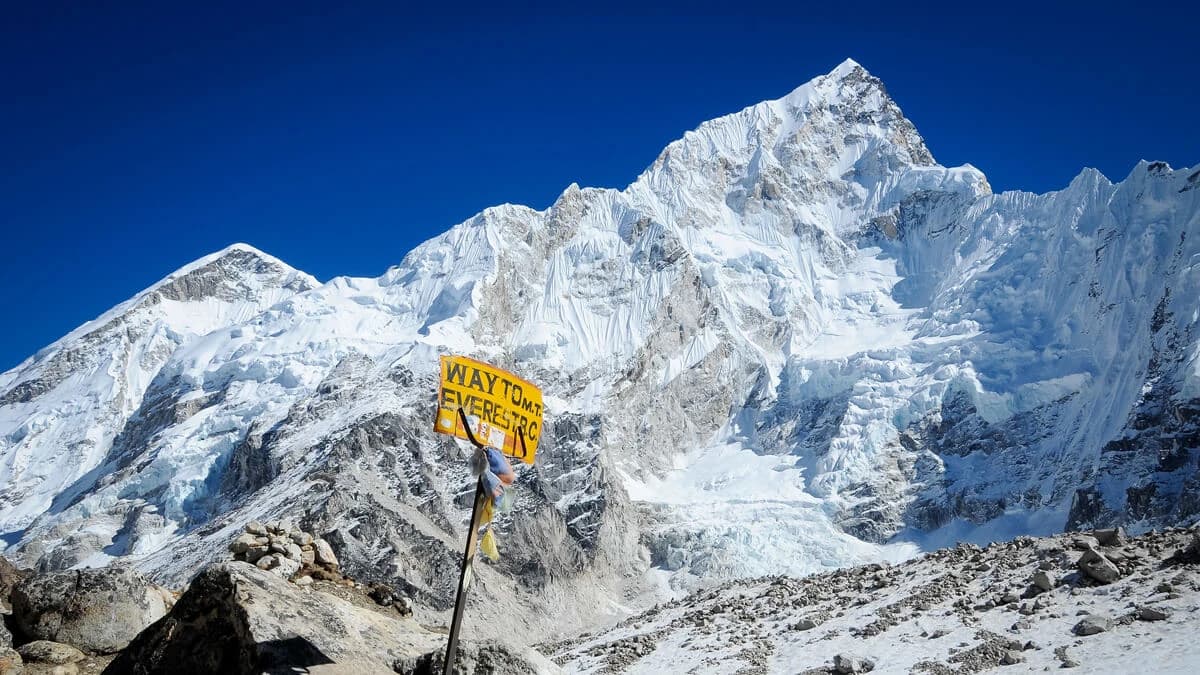
- Witness the views of Khumbu glacier and Khumbu icefall on the EBC trail
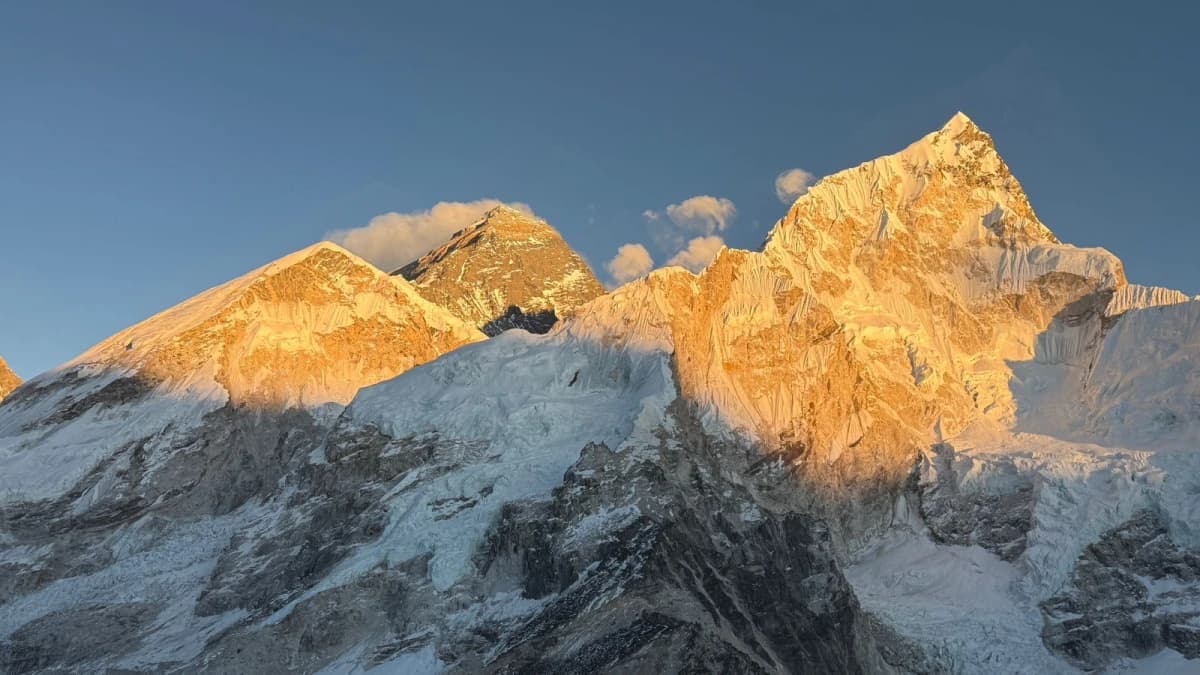
- Stand at Kala Patthar (5,545 m) for the best sunrise view of Mount Everest.
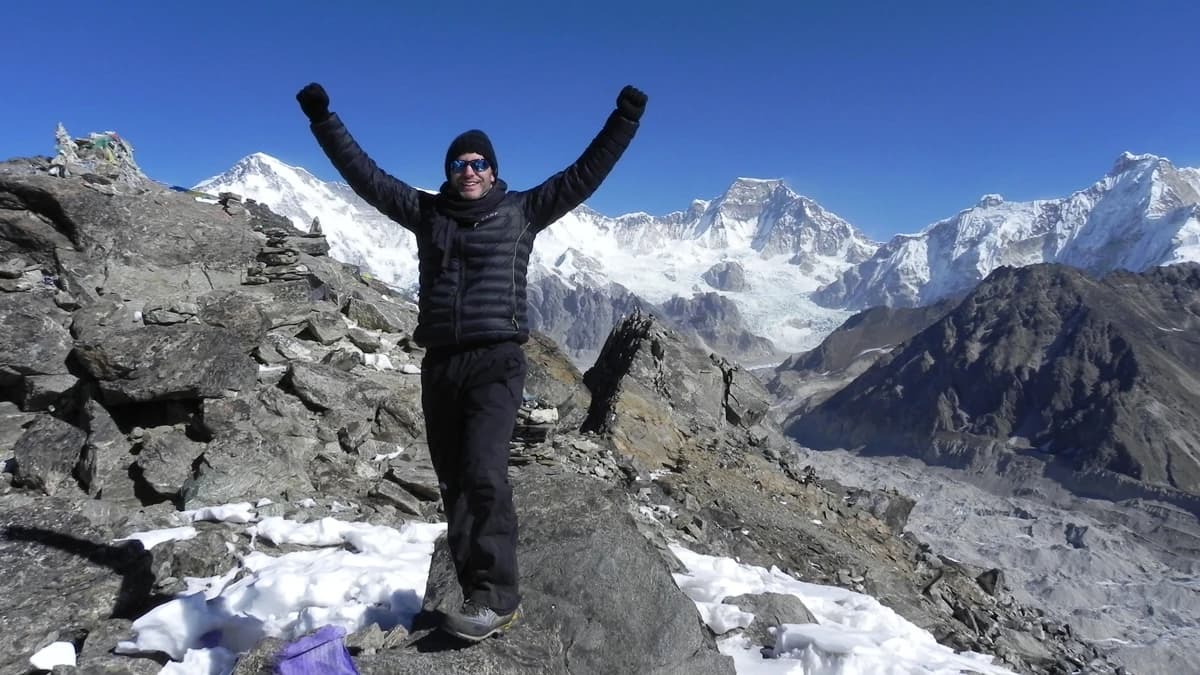
- Soak in awe-inspiring views of Mount Everest, Makalu, Ama Dablam, Lhotse, Nuptse, Thamserku, Cho Oyu, and other surrounding peaks
Everest Base Camp Trek Overview
The Everest Base Camp Trek is the main and most popular trekking route in Nepal. This Himalayan odyssey takes you to Mount Everest Base Camp. It offers an ultimate high-altitude trekking experience in the Everest region. Mount Everest Base Camp (EBC) Trek puts together beautiful scenery, Sherpa culture, exotic Himalayan wildlife and stunning close up views of Mount Everest (8,848m), the world’s tallest mountain. Everest is known as “Sagarmatha” in Nepali and “Chomolungma” in Tibetan. Several other peaks like Ama Dablam, Lhotse, Nuptse, Cho Oyu, Thamserku, Makalu, etc are also visible from a close distance during the Everest Base Camp Hike.
Everest Base Camp Trekking route lies within the Sagarmatha National Park in Solukhumbu district of Nepal. This adventure brings you to the Everest Base Camp (5,364m) which is the world’s highest base camp. Our 14 days Everest Base Camp trek begins from Kathmandu and you start trekking from Lukla. The scenic flight to Lukla is thrilling as it is one of the most dangerous airports in the world. The hike then starts from Lukla towards Namche. Namche Bazaar is the gateway to Everest and is the main point/ hub of the Khumbu region.
With Attentive Holiday Tours, the Everest Base Camp trek itinerary includes Phakding, Namche Bazaar, Thengboche, Dingboche, Lobuche and Gorak Shep as the overnight stops. On the first day, the trek takes you from Lukla to Phakding. From Phakding our EBC itinerary takes you to the village of Namche famously known as Namche Bazaar. We include one acclimatization day while you are at Namche Bazaar. During the acclimatization day, you will take a short hike to the Everest View Hotel to gain altitude and also to witness magnificent panoramic views of peaks like Everest, Lhotse, Nuptse, Ama Dablam, Cho Oyu, etc and continue trekking to Thengboche the next day.
This Everest trekking takes you to Dingboche and Lobuche from Thengboche. After overnight in Lobuche, the next morning the trek begins to Gorak Shep from where you continue walking along the Khumbu glacier until you finally reach the iconic Everest Base Camp (EBC). From base camp, Mount Everest is not clearly visible so the next day takes you to Kala Patthar (5,545m) which is considered one of the best viewpoints of Everest. The famous viewpoint offers a breathtaking sunrise view over Mount Everest and other peaks likewise.
Everest Base Camp Hike retraces steps to Pheriche village from Kalapatthar and descends until Lukla for the next few days. One popular and most requested option is the EBC trek with heli return where you trek to the Mount Everest Base Camp and return via an aerial flight over the Everest Himalayas and Mount Everest.
Everest base camp trek is the backbone of the tourism industry of Nepal. As the most popular trek in Nepal, we offer the best competitive price, value for your money, safety, local staff and a high success rate for EBC trekking in 2026/2027. Our team at Attentive Holiday Tours have been providing exceptional service for over 15 years in the tourism industry.
Everest trekking trail is generally considered of moderate to strenuous difficulty. The uneven terrain, longer trekking duration, and high altitude makes the trek challenging. But don’t worry as our expert travel planners customize the EBC trek itinerary according to your specific needs. Even if you are a first-time trekker in the mighty Everest region, we fit proper acclimatization schedules and adjust your itinerary according to your fitness and experience, so you reach the Everest base camp successfully.
EBC Trek certainly requires good fitness to complete this high-altitude adventure. But do not let this discourage you as our Everest Base Camp Trek Package is suitable for every kind of trekker from beginners to experienced. With enough acclimatization days, customized itineraries and well supported treks, experience the majestic Everest region with warm hospitality and culture of the Sherpa people.
Book the Everest Base Camp Trek in 2026/2027 and experience Mount Everest from its base with us for a well supported Himalayan adventure.
Everest Base Camp Trek Cost 2026/2027
Everest Base Camp Trek cost depends upon factors like group size, service level and itinerary. With Attentive Holiday Tours and Travel, EBC trekking cost in 2026/2027 begins from USD 1400 to USD 2400 per person on average. Please note that the mentioned cost factors in various services and can increase with the itinerary, route and side trips that you choose. If you are trekking with a group, there will be group discounts on the per person cost for 2026/2027.
We are very transparent with our Everest trekking package cost. You will not receive any hidden fees when you hike to Everest base camp with us. Our cost details section has a detailed briefing of what the package cost includes and what it excludes.
If you want to use services such as Wi-Fi, charging and hot water you will have to pay additionally for them as they are imposed by the teahouses.
With Attentive Holiday Tours, you can be assured about transparency and flexibility in our pricing. We also customize the itinerary to tailor the EBC trekking cost to your budget, preferred service level and luxury.
Everest Base Camp Trekking Permits
You need two permits for the Everest Base Camp Trek, as you hike in the protected region of Sagarmatha National Park. It is mandatory to have permits with you to trek legally in any regulated trekking regions in Nepal. Every trekker needs the following permits for trekking to Everest Base Camp:
- Sagarmatha National Park Entry Permit
- Khumbu Pasang Lhamu Rural Municipality Permit
We issue your permits and paperwork before you depart for Lukla. We make sure your permits are ready with you even before you leave Kathmandu to hike to Mount Everest Base Camp. Our guide verifies your permit at the checkpoint on the trail on your behalf giving you a hassle-free and enjoyable trekking experience.
Everest Base Camp Trekking and Sherpa Culture
Everest region is the home of the legendary Sherpa people. During the Everest Base Camp trek you will discover the culture, tradition and daily lifestyle of ethnic people of the Sherpa community. Get two bonuses of witnessing over a dozen of snow-capped peaks and learning about Sherpa culture and their Tibetan Buddhism in one single trip. With this journey, learn about how those towering peaks are not just mountains but are a symbol of spirituality for them. In the villages, on the trail, you can see prayer flags, mani walls, and prayer wheels, which are not just for aesthetic purposes but have a deep cultural and religious significance.
Catch amazing and authentic life stories from elderly people in the evenings at teahouses. Hear their stories, life and add to the experience of hiking to the world’s tallest base camp. During your stay at Namche, visit the Sherpa museum and learn about their climbing history, life, artifacts and Himalayan heritage.
An important part of trekking to EBC is learning about the mountains but also learning about the people of these mountains who have lived here for centuries.
Kalapatthar "The Best Everest Viewpoint"
Reaching Everest Base Camp (EBC) is the ultimate goal of this trek, however the perfect glimpse of Everest you are dying to witness comes from Kalapatthar. Kalapatthar literally meaning Black Rock, is considered the best Everest viewpoint. The view of Everest and other peaks are blocked from the base camp by the icefall. Due to this, our itinerary first takes you back to Gorak Shep from base camp and on the next day takes you to Kalapatthar.
The early morning hike to Kalapatthar (5,545m) is the most fulfilling moment for trekkers hiking with us. This is where you get to see Mount Everest as you have been seeing in pictures. Additionally the sunrise view of Everest is what melts your heart away.
You will see the full front face of Mount Everest’s south side, South Summit, Hillary Step and South Col route from Kalapatthar. Additionally, you get close-up views of Pumori, Lhotse, Nuptse, Ama Dablam and Makalu. Also, get ready to witness Khumbu icefall and Khumbu glacier.
If you trek during spring season you can see small yellow tents and climbers resting at Everest Base Camp for Everest expedition season. Do not omit the hike up to Kalapatthar as it is the best vantage point of seeing Mount Everest and the beauty of Khumbu region.
Best Time For Everest Base Camp Trek
The best time for Everest Base Camp trekking is during Spring (March to May) and Autumn (September to November). Hike to EBC is possible throughout all seasons and we can arrange it when it fits your schedule. However, we suggest you choose either spring or autumn as conditions are favourable and safe for trekking with stable weather, clear skies, bright days and clear panoramic views of the Himalayas.
If you prefer a minimal crowd, the winter is a better option for you. However, offseasons can be challenging so prepare accordingly with proper gear and clothing.
Is this Adventure Trek for You?
You can do this adventure trek to Mount Everest Base Camp, if you are fit and ready to face the challenges that the mountains bring upon. It is a strenuous to a moderate difficulty trek you can compare Everest Base Camp vs Annapurna Base Camp what is the different. EBC trekking trails do not require technical skills but the challenge comes with uneven, rocky terrain and the high altitude.
You trek up to base camp at 5,364 meters, Kalapatthar at 5,545 meters. and spend one night at Gorak Shep at 5,180 meters. So, the concern of altitude sickness is seriously high. To be able to trek in such low oxygen levels and fatiguing terrain, you need to be physically, cardiovascularly and mentally fit. Prepare yourself at least 2 months prior with some physical activities to build stamina, cardio and mental resilience.
If you are looking for more adventure, Everest Three High Passes trek is the perfect journey for you. If you want the views with lesser physical activity, choose the Pikey Peak Trek. We have trek packages in the Everest region suitable to the requirements of every trekker.
What Makes us the Best Trek Operator in Nepal ?
Attentive Holiday Tours & Travel is one of the leading and reputable trekking agencies which has been carrying out tourism services in Nepal for over 17 years. Our experience in this sector is single-handedly our biggest reason as to why we are the best trek operator for EBC Trek in 2026/2027 season.
Our trekking team (guide and porter) are local to the region which increases authentic information and knowledge while hiking. We are highly flexible with our itineraries and cost, tailoring packages according to our client’s time, preference and budget without any hassle.
Safety and customer satisfaction are the top priority of our company. Additionally, with us there will be zero hidden fees while trekking. We maintain full transparency and provide you an unforgettable EBC trekking experience without any travel-hassles.
We also provide special discount as follows:
- If you book in advance: 5- 7 % off on package cost
- If you are a student trekking with a student group: 10% off on package cost
- We provide free sleeping bag and down jacket for rental
- Book with us and enjoy transparent pricing with zero hidden fees.
So, book your Everest Base Camp Trek 2026/2027 with us and experience the beauty and spirituality of the Everest Himalayas with excellent support from our team.