“Everest Base Camp Trek vs Annapurna Base Camp Trek”
Everest Base Camp Trek and Annapurna Base Camp Trek both offer you an ultimate adventure experience in the Himalayas but they shape you differently. If you are looking for giant mountain drama and the traditional Khumbu region culture along with glaciers, Everest is your story. If you want to experience rich cultural immersion with smoother trails with minimal acclimatization with the motive of experience rather than altitude dominance, the trek combining nature and soul, Annapurna is calling your name. In the year 2026 the question that remains isn’t “Which Trek Is Better” but is “Which Trek Feels More Like Your Cup Of Tea?”
Here are some points of comparison for us to understand the key differentiating factors of both Everest Base Camp Trek and Annapurna Base Camp Trek.
“Everest vs Annapurna Trek Point of Comparison”
|
Point of comparison |
Everest |
Annapurna |
|
Maximum Altitude |
5,545 meters (Kalapatthar) |
4,130 meters |
|
Trek Duration |
12- 14 days |
8- 10 days |
|
Accessed By |
Flight To Lukla |
By Road/ Flight to Pokhara |
|
Crowd |
Crowded but spread out |
Very Crowded |
|
Accommodation |
Basic/ Standard with basic at altitude |
Slightly better than EBC |
|
Difficulty |
Moderate to Challenging |
Moderate |
|
Highlight Views |
Mt Everest, Lhotse, Ama Dablam |
Annapurna I, Machhapuchhre, Dhaulagiri |
|
Cost |
Expensive then Annapurna |
Cheaper than Everest |
|
Predominant Culture |
Sherpa and Tibetan |
Gurung and Thakali |
How To Reach The EBC And ABC Treks?
Everest Base Camp, Getting to the start point of the Everest Base Camp trek, you will need to take a domestic flight from Tribhuvan International Airport in Kathmandu to Lukla, a small village situated in the Solukhumbu district which is the world’s most dangerous airport. The airport’s official name is Tenzing-Hillary Airport which pays homage to the first people who summited Mount Everest. The flight is short but unforgettable as you will see the sight of towering Himalayan peaks stretching as far as your eyes can see and it gives you that first real taste of the adventure ahead. At the same time, the weather can be unpredictable which allows clouds, wind, or sudden storms to delay or even cancel your flight. Due to this reason it is wise to keep a few extra days in your plan. In peak season or such a case of unfavourable conditions you can take a six to seven hour drive to Ramechhap Airport and catch a flight to Lukla from there. It is a longer and slightly exhausting alternative but it keeps your trek on track during the busy spring and autumn seasons. Then you will finally land in Lukla where the real magic begins with walking through welcoming Sherpa villages, crossing swinging suspension bridges, and soaking in the breathtaking landscapes of the Solukhumbu region making your adventure to the EBC feel even more incredible.
Getting To The Annapurna Base Camp
Your start point to the Annapurna Base Camp trek is Pokhara, a beautiful city situated about 200 kilometers west of Kathmandu which serves as your gateway to the Annapurna trekking region. You can travel by road in about six to seven hours on a comfortable tourist bus or take a short 30 minute domestic flight from Tribhuvan International Airport in Kathmandu to Pokhara Airport. You will have both options which are convenient and will allow you to reach Pokhara with comfort and ease. After you reach Pokhara either via flight or by road, you will be able to start hiking towards the trailheads the same day which means you can start trekking within 24 hours of arriving in Nepal. Unlike during Everest Base Camp trek when you cannot immediately start trekking due to the flight and acclimatization requirements in Lukla. The Annapurna Base Camp trek will begin with a walk through charming villages guiding you through terraced fields, and lush forests introducing you to the stunning landscapes of the Annapurna region with magnificent massifs of mountains like Annapurna, Machhapuchhre (Fishtail), Dhaulagiri and many more which will add immense beauty to your trekking experience. In case of unforeseen circumstances such as heavy rainfall or road closures, there are multiple alternative routes which you can take from Pokhara that will allow you to adjust your trek without losing valuable time.
What Makes EBC And ABC Trek So Scenic And Unique?
As you walk into the breathtaking Himalayas, the trail becomes a part of you and your story. This is exactly the case during your trek to Everest Base Camp and Annapurna Base Camp. These are two unique journeys which take you to two completely different worlds but located within the same country.
Everest Base Camp Trekking Best Viewpoint
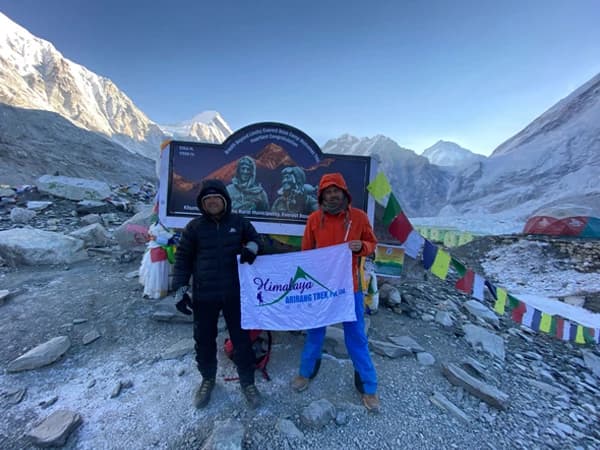
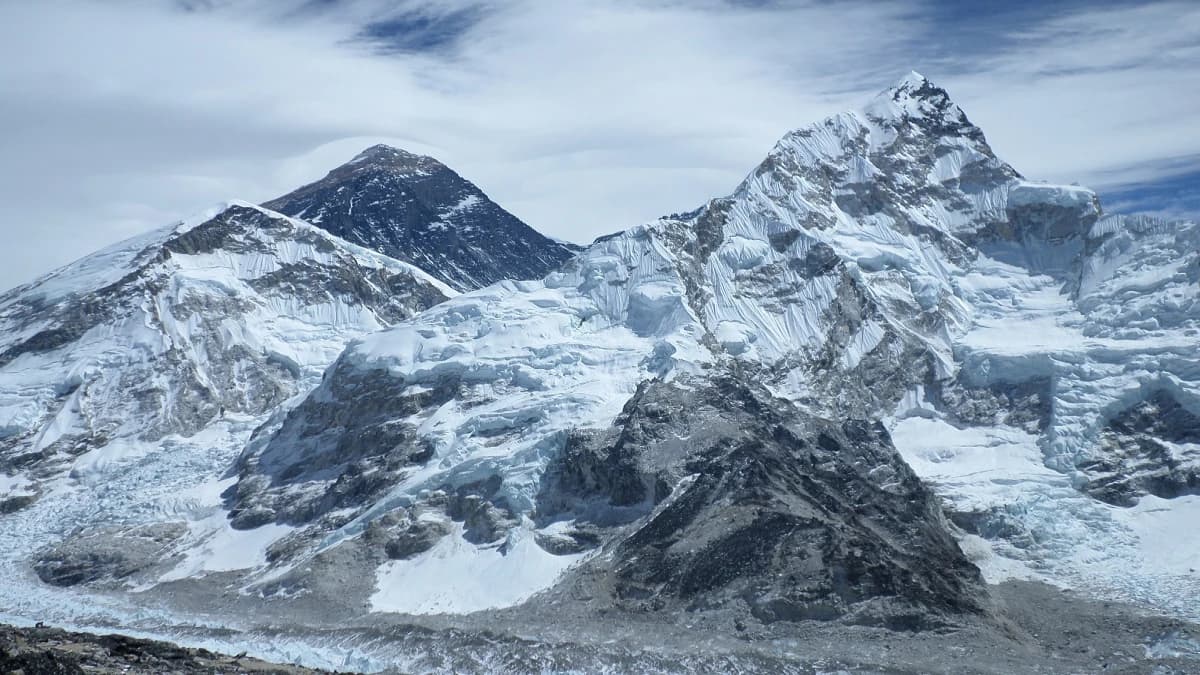
During your trek to the magnificent EBC in the Solukhumbu region of Nepal, it takes you along its epic trail filled with adventure at every step. You will be trekking along Dudh Koshi River, crossing suspension bridges covered with prayer flags and entering the Sagarmatha National Park. Along the journey you will reach the beautiful and historic Sherpa village the Namche Bazaar which is the hub of Khumbu region. Making your journey then towards the oldest monastery of the world, the Tengboche after hiking through pristine and dense Rhododendron forests will lead to terrain of higher altitude filled with rocky paths, icy glacial rivers and steep terrain. You will see the towering peaks of Everest, Ama Dablam, Lhotse and Nuptse silently watching over you as you hike up the rocky glacier terrain to the base camp. The maximum altitude you will reach in this trek to the Everest Base Camp is 5,545 meters at Kalapatthar which is considered the best vantage point to spectate the beauty of Everest and surrounding regions including glaciers, steep rocky terrains while feeling the cold icy breeze strike you in your face.
Annapurna Base Camp Trekking Best Viewpoint
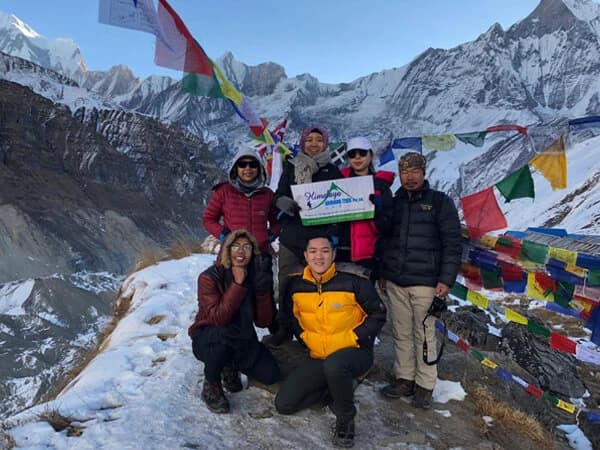
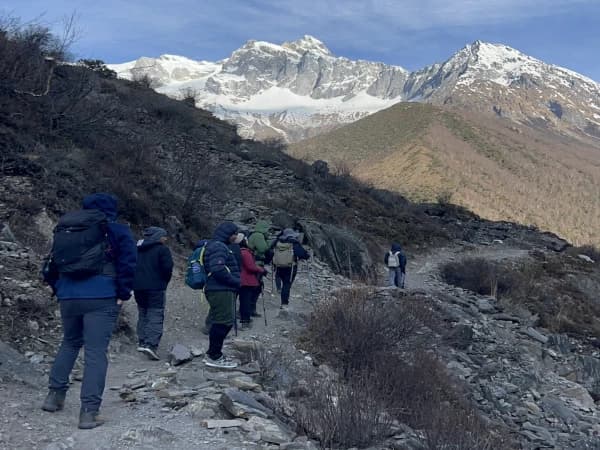
During your trek to the stunning Annapurna Base Camp, the trail takes you through landscapes filled with adventure, natural beauty, and Himalayan charm at every step of yours. You will hike along the Modi Khola River, cross suspension bridges decorated with prayer flags, and pass through traditional Gurung and Magar villages. Along your journey, you will reach picturesque settlements like Chhomrong and Bamboo rich in culture and traditions, and hike through dense rhododendron and bamboo forests, gradually entering higher altitude terrain with rocky paths, glacial streams, and steep trails. You will be surrounded by the majestic peaks of Machhapuchhre (Fishtail), Annapurna South, Hiunchuli, Gangapurna, and Dhaulagiri, silently watching over you as you make your way to the base camp. The maximum altitude you will reach is 4,130 meters at Annapurna Base Camp, offering an unparalleled panoramic view of the Himalayas, glaciers, and alpine landscapes while feeling the crisp mountain breeze on your face.
EBC Trek vs ABC Trek Duration, Altitude And Difficulty
Trekking to the Base Camps of Everest and Annapurna both presents itself with its own set of challenges that you need to be prepared for. You need to be physically strong and fit and mentally resilient.
Everest Base Camp Trek Difficulty For Beginners
The Everest Base Camp trek covers a total distance of around 130 kilometers which you will need to trek. The maximum altitude you will reach on this trek is Kala Patthar at 5,545 meters, which is known for offering the most spectacular panoramic view of Mount Everest. Compared to the Annapurna Base Camp trek, EBC is more challenging due to higher altitudes, longer trekking days, steeper ascents and descents, and occasional glacier and risky terrains that require a little bit of technical skill. You will walk for about 6 to 8 hours every day through forests, riversides, suspension bridges, traditional Sherpa villages, and high mountain landscapes for the entire trek. The main challenge for trekkers is coping with altitude sickness, which can affect anyone regardless of their fitness. Feeling short of breath, headaches, or fatigue is common as you go higher which are also the signs of altitude sickness. Therefore, having proper and more acclimatization days is required, gradual ascent, and rest days absolutely essential for you to be out of the risk of getting sick by higher elevation. With moderate to strong physical fitness, mental preparation, and dedication, you can successfully complete the Everest Base Camp trek and enjoy the breathtaking beauty of the Himalayas, including iconic peaks like Mount Everest, Lhotse, and Ama Dablam. Proper hydration, nutritious meals, and maintaining daily endurance are key to managing the challenging terrain and high altitudes, making this once in a lifetime journey both demanding and deeply rewarding.
Annapurna Base Camp Trek Difficulty For Beginners
The Annapurna Base Camp trek covers a total distance of around 115 kilometers which you will need to trek. The highest point during your trek to the ABC is 4,130 meters at the base camp itself. ABC trek is considered moderately difficult as not much of a technical skill is required but the ups and downs of the terrain and altitude make it quite a challenging hike. It is ideal for trekkers with moderate physical fitness and those looking to experience trekking in Nepal for the first time.You will walk for about 5 to 7 hours every day through forests, fields, villages, stone steps, and high mountain meadows. The main challenge for the trekkers is to maintain daily endurance while adjusting to the increasing altitude which increases the risk of Acute Mountain Sickness (AMS). However, by preparing physically and mentally with proper rest between hiking days, hydration and dedication you can complete the ABC trek and enjoy the magnificence of the Himalayas and your journey to get there.
Trekking Guide And Porters
For your trek to either the ABC or the EBC you can choose to go solo trekking however, we recommend that you hire a licensed guide through a government registered trekking company here in Nepal for your safety and overall experience. We at Attentive Holiday Tours, a government registered trekking company in Nepal with 15 + years of experience will provide you with a team of experienced and reliable licensed guide and porters whether you choose the Everest Base Camp trek or the Annapurna Base Camp trek.
Everest Base Camp Trekking Guide And Porter
Due to the difficulty of Everest Base Camp trek you are not advised to go for solo trekking. Instead to trek through the tough terrains, steep icy rocks and high passes along with glaciers you will need an experienced trekking guide with you. With a licensed guide, they will connect you with the locals, tell you about the history and knowledge of certain areas and sites but most importantly guide you to a safe hike ensuring that you are not getting sick by AMS or any other unforeseeable conditions. A trekking guide will generally cost you USD 30 to 35 per day in the EBC trek and porters USD 20 to 25 per day. You will absolutely require porters with you during your hike to the EBC. The difficulty of this trek is challenging hence you will be better off hiking with just your weight letting the porters carry your baggage. This will bump the cost of this trek a little higher.
Annapurna Base Camp Trekking Guide And Porter
As the ABC trek is moderate in difficulty and of short itinerary, hiring porters is not a necessity like in the EBC trek. You will be just fine with you carrying your own bags, gears and equipment. However, you are strongly recommended to hire a trekking guide which is going to cost you around USD 25 to 30 in this trek. The need for hiring a guide is the rich cultural immersion you will face during your trek. When you are trekking with guides they will explain, inform and give you knowledge about the local culture and traditions and make your conversation with the local people easier. They will also navigate you through the diverse and scenic landscapes of the ABC trekking region.
Best Weather For Trekking In Nepal
Everest Base Camp Trek and the Annapurna Base Camp Trek both shine the brightest during the two core Himalayan trekking seasons which are spring (March to May) and autumn (September to November). You really can't go wrong choosing either of these periods for your big Nepal adventure. The stable weather, mild temperatures, and phenomenal visibility of surrounding peaks like Everest, Lhotse, Nuptse, Ama Dablam, Annapurna I, Dhaulagiri and Machhapuchhre (Fishtail) are why these seasons are known as the best time for high altitude trekking in Nepal.
Spring The Nature Lover’s Delight (Mar-May)
If you love hiking in slightly warmer temperatures and being surrounded by color, Spring is awesome. During this time, the temperature is moderate with green and vibrant landscapes surrounding you. EBC and ABC trekking trails both look awesome during this season with warmer temperatures, vibrant and colourful trails and bright days. This is when the Annapurna region really shows off! The lower hills explode with blooming rhododendron forests, turning the ABC trails into a vibrant spectacle which raises the beauty of the Annapurna Trekking Region exceptionally. During this season, daytime temperatures in the lower regions of Annapurna range from 15° to 20°C, while higher villages like Namche Bazaar on the EBC trail can see daytime temperatures around 10° to 15°C. Nights will get chilly, with temperatures dropping to 5°C in lower regions and around -2° to 0°C at higher elevations.
Autumn The View Seeker’s Choice (Sept-Nov)
If getting that jaw dropping, postcard perfect, picturesque shot of the mountains is your main mission, you should aim for Autumn. After the monsoon finishes the rain fades and the atmosphere is provided with bright blue skies and crystal clear views of the giant massif of mountains. The air is unbelievably crispy and clear, giving you the sharpest, most guaranteed views of giants like Everest, Annapurna I, and many more. Seriously, October is trekking heaven with the only downside being the trails get pretty crowded as it is the peak season. During this time, daytime temperatures in the Annapurna region range from 15° to 20°C in lower areas and 10° to 14°C in mid-hills, while Everest Base Camp daytime temperatures hover around 5° to 10°C. Nights can be cold, with Annapurna dropping to 5°C and Everest Base Camp and higher villages reaching -5° to -10°C.
The Slight Edge
During Autumn September to November Everest Base Camp Trek slightly wins. The stability and clarity are unbeatable when you’re facing that extreme altitude. You want the highest chance of seeing Everest clearly after all that effort and you will get just that with crisp clear air and skies, complete visibility of the steep rocky terrain along with clear panoramic views of the Everest/ Khumbu region.
During spring March to May Annapurna Base Camp Trek might just edge it out. The lower elevation means you fully enjoy those warmer temperatures and the beautiful wildflower and Rhododendron blooms adding more vibrant colour and warmth to the diverse landscape giving you a slightly richer, more colorful experience overall.
As we get deeper into the environmental circumstances, the treks unveil another dimension of their own identities. Annapurna Base Camp, hidden in the heart of the Himalayas, has a constant challenge from excessive rainfall, especially during the monsoon season, which turns the climb into a slippery, mud fest with leaches. You must handle not only the difficult terrain, but also the unpredictable and relentless rain, which adds a wild, unpredictable element to the adventure. In contrast, Everest Base Camp presents a chilly challenge set by constantly cold temperatures and occasional extreme weather conditions at higher altitudes, resulting in an ice battle in which you must compete with chilling winds and searing cold.
Difference In Culture " Sherpa Villages vs Gurung Villages"
The giant mountains are the goal of your trekking journey however the people living here are the soul of this region. Which trek you will choose will shape your high altitude himalayan trekking experience profoundly by the different, unique and meaningful cultures your encounter. From the historic Sherpa community to the welcoming Gurung villages both of these trekking experiences will provide you with completely different traditions. Your choice will lead to two completely different worlds rich with culture in the same nation being the rugged spirituality and high altitude legacy of the Sherpa heartland or the warmth and rich diversity of the Gurung villages !
Everest " Home Of The Sherpas And Their Legacies"
Everest Base Camp Trekking region is a high altitude journey into the world of Sherpa People which is defined by Tibetan Buddhism and their legacy of mountaineering. Sherpa People carry mountaineering connections with men being the world’s most successful climbing ethnic group. You will witness and experience high altitude monasteries like Tengboche Monastery at 3,860 meters and prayer flags and wheels depicting their pure spirituality. During your trek you will know the knowledge that for the Sherpa people sacred mountains are home to deities and climbing holds religious significance to them. It’s a spiritual tradition passed down to them. During your trek, you will experience the hearty and warm Sherpa hospitality in the local teahouses often staying with families. The menu is hearty and carb rich , designed for altitude, with warm Sherpa stew, filling potato dishes, and traditional Butter Tea with Nepalese staple Dat Bhat (cooked rice with lentils). Your entire journey through the Khumbu region will feel like a pilgrimage where you are constantly surrounded by the deep reverence the Sherpa hold for the towering peaks which they call home.
Annapurna "Warm Village Of Gurung And Thakali "
The Annapurna Base Camp trekking region on the other hand will offer you with a more gradual and varied cultural odyssey that embraces everyday life of the local people inhabiting there which are the Gurung and Thakali people. During your trekking journey through the middle hills near Pokhara, you will walk through the heartland of the Gurung and Thakali people. The warm villages of Ghandruk and Chhomrong you will be welcomed with open arms with the locals embodying the saying “Atithi Devo Bhava” which means that “All guests are a form of god”. You will be part of their homes which are famous for their stone engineering with an open lawn as their courtyard. You will enjoy arguably better, more diverse food at lower altitudes, where supplies are easier to manage including authentic Thakali Dal Bhat and delicious local dairy products. The ABC route will provide you with a broader ethnic immersion. In villages like Chhomrong and Ghandruk, you will experience traditional Gurung dance or folk music performance by local cultural groups. Here you will find that culture is rooted in agriculture, military history, and the warm smiles of the communities living in harmony with the terraced fields. This region will offer you a broader, earthier cultural experience at a lower, more accessible altitude. This cultural perspective will feel genuine as you will sense homely hospitality.
High Altitude Trekking In Nepal, Accommodation Facilities
As you embark on your Himalayan trekking adventure, your day’s end in a teahouse is far more than just a room but is your chance to recharge, warm up, and connect. While both the Everest Base Camp trek and the Annapurna Base Camp trek utilize the same classic teahouse system, the level of comfort and access to modern amenities shifts noticeably between the two trekking regions.
EBC Accommodation, Food And Facilities
Your Everest Base Camp trek offers you lodges which are quite comfortable below Namche Bazaar and in the lower altitude region but as you climb above Dingboche towards the high altitude zone, the conditions become basic by necessity. This geographical shift will matter because these simple rooms are often uninsulated wooden boxes with thin mattresses which will serve you mainly as shelter. The only heating usually comes from a wood stove in the common dining area, meaning you must rely heavily on your own down sleeping bag to stay warm in your unheated bedroom.
The food will purely serve you as fuel with the menu simplifying drastically as you ascend to higher altitudes. You will have plenty of Dal Bhat and pasta but the variety of fresh vegetables disappears above 4,000 meters. Most trekkers understand that this minimal comfort is the necessary altitude trade off for reaching the foot of the world’s highest peak for an ultimate experience of a lifetime.
While the teahouse staff are wonderful, the services are minimal in this trek. Hot water is scarce and costly and essentials like mobile charging and Wi-Fi are slow with extra charge for the facility.
ABC Accommodation, Food And Facilities
On the Annapurna trek, the experience is designed in a way you will feel immediately welcomed largely because supplies are much easier to bring in from Pokhara than it is by bringing from Lukla to higher altitude in EBC trail. You will be pleased to find that lodge quality is very good, with many lower and mid altitude stops offering private rooms and even attached bathrooms which makes a world of difference after a long day of hiking for hours.The beds come with clean blankets, and the overall atmosphere is so inviting that you'll generally sleep well most nights.
This focus on guest comfort extends to practical services with hot showers being reliably available (though charged separately), and Wi-Fi is often faster, more accessible and sometimes even free in the lower lodges. This will not take your digital connectivity away from you in this digital day and age also ensuring you can easily check in with family.
The food is also a highlight of your Annapurna experience as you will get to enjoy fantastic variety including hearty breakfasts (eggs, pancakes, flatbread), and dinner menus that rotate deliciously between filling Dal Bhat, pasta, momos, and local Thakali specialties.
EBC And ABC Trekking Cost Difference 2026-2027
In your plan for trekking to the Everest Base Camp it costs approximately Usd 1200 to Usd1500 and the Annapurna Base Camp cost Usd 500 to Usd 800 , the deciding factor is generally cost. In this verdict, you should know that Everest is always the more expensive option, due to one unavoidable expense: the domestic flight to Lukla.
EBC Trek "The Price Of Remoteness"
The trek to Everest Base Camp is the higher costing endeavor primarily due to its remoteness of the Khumbu region. The main factor in increasing the price in what you will have to pay in this trek compared to ABC trek is the round trip domestic flight to Lukla which is simply unavoidable. Or when it is peak season and the flights to Lukla get cancelled you will have to drive to Ramechhap which is another point of your journey that will add to your total budget during your high altitude trek to the Everest Base Camp. Adding to that Everest Base Camp Itinerary is simply longer than Annapurna which will naturally increase the total cost of trekking guides and porters. You will also have to get two permits; Sagarmatha National Park Permit and the Khumbu Rural Municipality Permit which adds to the cost. With the remoteness of the trek your accommodation, food and every other services are priced higher than other treks in Nepal. Short itinerary of EBC trek with approx. cost of USD 1299 pax
EBC Trek 12 Days Itinerary
Day 01: Arrival in Kathmandu
Day 02: Kathmandu fly to Lukla trek to Phakding (2,652m/8,700ft)
Day 03: Trek to Namche Bazaar (3,440m/11,283ft)
Day 04: Acclimatization day in Namche Bazaar
Day 05: Trek to Thengboche (3,867m/12,684ft)
Day 06: Trek to Dingboche (4,410m/14,469ft)
Day 07: Acclimatization day in Dingboche (2-3 hour hike)
Day 08: Trek to Lobuche (4,928m/16,164ft)
Day 09: Trek to Gorakshep (5,160m/16,929ft) and visit Everest Base Camp (5,320m/17,450ft)
Day 10: Early hike to Kala Patthar (5,550m/18,204ft) and trek to Pheriche (4,371m/14,340ft)
Day 11: Trek back to Lukla
Day 12: Fly back to Kathmandu
Day 13: Departure
ABC Trek "Luxury Experience In Low Budget"
Compared to the base camp trek to Everest, the Annapurna Base Camp trek is lower in cost. It is more budget friendly because of the fact that it is more accessible. You will avoid the need of flying which significantly reduces your total cost from day one by going to Pokhara via road eliminating the need of flying. Due to the ABC trek not being as remote as the EBC trek, everything from your food, accommodation and other facilities is priced significantly lower. Some places in the lower altitude regions even offer complimentary hot showers and wifi facilities without even having to pay. You will also need the Annapurna Conservation Area Permit (ACAP) and the Trekkers’ Information Management System (TIMS) card for this trek. With all these reduced costs and the ABC trekking itinerary being shorter the total cost of this trek is significantly lower than the EBC trek. ABC trek via Poonhill 10 Days approx cost of USD 799 pax and ABC short trek 8 Days approx cost of USD 655 pax
ABC Trek via Poonhill 10 Days Itinerary
Day 1: Kathmandu to Pokhara to Nayapul, Trek to Tikhedhunga
Day 2: Tikhedhunga to Ghorepani
Day 3: Sunrise at Poonhill, Trek to Tadapani
Day 4: Tadapani to Chhomrong
Day 5: Chhomrong to Dovan/Bamboo
Day 6: Dovan to Deurali
Day 7: Deurali to Annapurna Base Camp via Machhapuchhre Base Camp
Day 8: Annapurna Base Camp to Bambo
Day 9: Bambo to Jhinu danda to Pokhara
Day 10: Pokhara to Kathmandu
ABC 8 Days Itinerary
Day 1: Kathmandu to Pokhara
Day 2: Pokhara to Ghandruk to Chhomrong
Day 3: Chhomrong to Bamboo
Day 4: Bambo to Deurali
Day 5: Deurali to Annapurna Base Camp via Machhapuchhre Base Camp
Day 6: Annapurna Base Camp to Bambo
Day 7: Bambo to Jhinu danda to Pokhara
Day 8: Pokhara to Kathmandu
Conclusion: Which Himalayan Trek Should You Choose?
There is no wrong decision when it comes to choosing between these two famous high altitude treks in the Himalayas. Whether you choose Everest Base Camp trek or Annapurna Base Camp trek you are in a win-win situation. Your decision comes down to all the factors mentioned in this guide and on top of that your own preference. Your choice between Annapurna and Everest should not be a matter of one being superior to the other but a reflection of human preference, aspirations, strengths, and the craving for adventure.Remember that both Annapurna Base Camp and Everest Base Camp entice you with their distinct charm as you stand at the crossroads, wondering about your Himalayan adventure.
We at Attentive Holiday Tours and Travel will help you embark on your journey to the Himalayas whether you choose Everest or Annapurna.