Trekking In Upper Mustang- Kingdom Of Lo, Ancient Caves And Monasteries
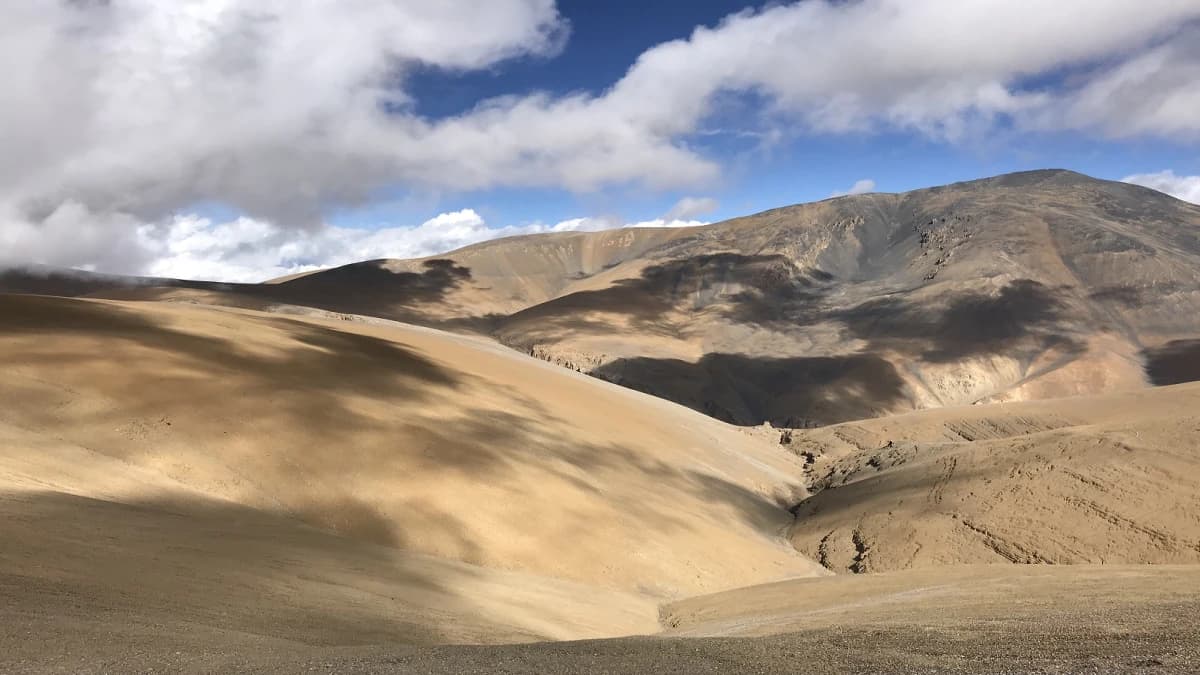
Hidden beyond the main Himalayan ranges in the rain shadow of the Annapurna and Dhaulagiri massif, the Upper Mustang region is a culturally unique and ancient, intact and historically significant trekking region in Nepal. Until Nepal was a kingdom, the Upper Mustang region was also an independent Buddhist kingdom isolated and restricted to outsiders which has preserved the ancient cultures, way of life, spirituality and traditions along with the terrain of the place. It is also known as the ‘Kingdom of Lo’ or the ‘Last Forbidden Kingdom’ since Nepal has been a republic country losing its status as a kingdom. The route remained closed to outsiders until 1992 AD and only after then, Trekking in Upper Mustang was allowed and legal. Upper Mustang trek is not just a physical journey through dramatic landscapes, it is a direct encounter with a living Tibetan civilization inside Nepal. The Upper Mustang trekking trail lies north of the Kali Gandaki River and shares a border with Tibet. Due to its location in the rain shadow zone, the region receives very little rainfall, creating a high-altitude desert landscape unlike the lush green trails of Annapurna circuit trek or Langtang circuit trek. Wind-carved cliffs, deep canyons, multicolored rock formations, and vast open valleys dominate the terrain, giving the trek an almost otherworldly feel. This harsh geography, combined with strict permit regulations, has kept Upper Mustang trekking destination protected from mass tourism.
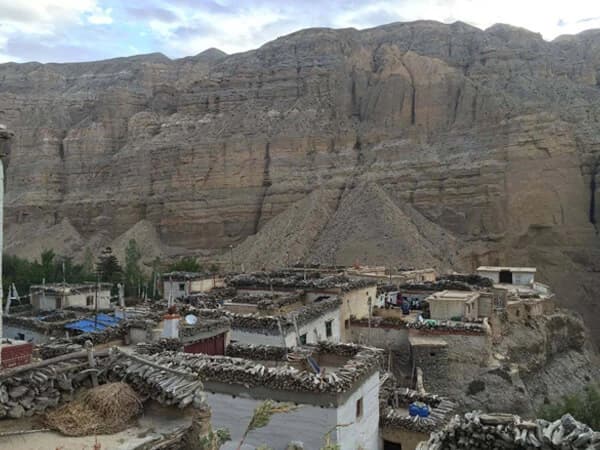
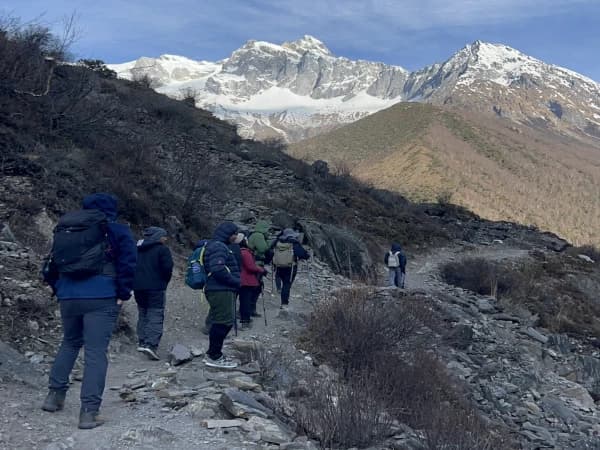
Reaching Upper Mustang itself feels like stepping beyond the modern trekking world. The journey typically begins with a flight from Pokhara to Jomsom and takes us to the gateway of Mustang restricted trekking region in Kagbeni. From here onward we hike through and witness the scenery, culture, and atmosphere which changes immediately. During Mustang trekking, the thing that truly sets Upper Mustang apart is its cultural and historical richness. The region is deeply rooted in Tibetan Buddhism, with influences from the ancient Bon religion. Villages such as Chele, Ghami, Tsarang, and Lo Manthang are filled with whitewashed mud-brick houses, fortress-like monasteries, prayer wheels, mani walls, and centuries-old chortens. Life here revolves around monasteries, agriculture, and seasonal trade, much as it has for hundreds of years. The walled city of Lo Manthang is the former royal capital of the Kingdom of Lo and is the cultural heart of Upper Mustang. As the description suggests the city is enclosed by high mud walls which houses royal palaces, narrow alleys, and some of the most important monasteries in the region including Jampa Lhakhang, Thubchen Gompa, and Chodey Monastery. These structures are not museum pieces but they are active spiritual centers where monks still practice daily rituals passed down through generations which gives us ancient and spiritual cultural insights into the Tibetan Buddhism practices of the Lo people during the Upper Mustang historical trek.
The upper Mustang restricted area is also famous for its ancient cave systems which were carved into sheer cliffs thousands of years ago. These mysterious sky caves were used for meditation, burial chambers, storage, and early settlements. The sites near Chhoser and Lo Manthang reveal these caves to us with ancient murals, manuscripts and artifacts which offer rare insight into prehistoric Himalayan civilizations which makes the Upper Mustang trek a completely unique trek in Nepal. From a natural perspective, the landscapes of Upper Mustang are stark yet mesmerizing. The Kali Gandaki gorge cuts through barren plateaus, while eroded cliffs display layers of red, yellow, and gray rock shaped by relentless wind. We can witness the snow-capped peaks of the Nilgiri range, Mount Annapurna I, and Dhaulagiri looming in the distance creating dramatic contrasts against the dry desert terrain which makes the scenery truly mesmerizing. The arid and barren region may look simple at first glance but each day of trekking offers us a completely diverse and unique scenic beauty along with Upper Mustang trekking terrains.
Upper Mustang Trek is moderate in difficulty and this is where most of us often misunderstand and misinterpret it. The trek does not involve crossing extremely high passes like Dolpo Trek or Manaslu Circuit trek as the elevation generally stays below 3,800 meters. However, the longer trekking days along the dry, rocky, arid and desert-like terrain, altitude, dehydration, and exposure to scorching sun wears us down physically and mentally quickly. We should keep the idea that Upper Mustang trek is not a beginner friendly cultural trek, however with proper fitness, mental resilience and high endurance conquering the trans-Himalayan desert of Nepal to trek to the Forbidden Kingdom of Lo can be far more accessible and moderately difficult.
Most of the Upper Mustang trek itinerary is of 14 to 17 days which depends on the itinerary and side trips to cave complexes and monasteries. The Upper Mustang trek accommodation is mainly in basic teahouses, and food options are limited but sufficient. We will have cozy, simple, warm and hospitable teahouse accommodation which are mostly family run by the local people of the Lo region. During our stay we can immerse ourselves in Upper Mustan trek culture as we witness the daily life and tradition of the Lo people following Tibetan Buddhism. The locals talk to us about their nomadic and historical lifestyle and share insights with us as they are very welcoming, kind and hospitable. Trekking in Upper Mustang does require some special permits as the region has its status of restricted as well as protected under the Annapurna Conservation Area. The Restricted Area Permit (RAP), which is mandatory and helps control tourism numbers and directly contributes to preserving the region’s centuries old ancient and fragile culture and environment. Additionally we also require an entry permit for Annapurna conservation area as the trekking route falls under it. Hence along with Upper Mustang Trek permits, a licensed trekking guide is compulsory as trekking independently is not allowed due to the region being a restricted area, requiring us to hire Upper Mustang trekking guide and porters.
The best time to trek in Upper Mustang is spring (April to June) and autumn (September to November). Unlike other regions, Upper Mustang is also one of the few areas in Nepal suitable for trekking during the monsoon season as it lies in a rain shadow zone. Summer treks offer clear trails and dramatic skies, though winds can be intense. Winter trekking is possible but challenging due to cold temperatures and limited services.
Trekking in Upper Mustang is not about chasing summit views or testing physical limits to the extreme. It is about us walking through history, witnessing a culture that has resisted time in real life. Learning how modernization and politics have changed the once Kingdom of Lo, now the city of Lo Manthang and experiencing something rare the region has to offer us in today’s Himalayas which is authenticity that still feels alive and not staged for tourism as we witness ancient caves and historical cultural facts and monasteries which cheers us up spiritually.
How To Reach The Upper Mustang Trekking Route?
The journey to the Upper Mustang Trek begins from Kathmandu, the bustling capital city of Nepal. One of the ways that we can reach the trekking route is by road. For those of us who enjoy long overland journeys and want to experience Nepal’s changing landscapes gradually in hilly, riverside highway roads we can drive from Kathmandu to Pokhara and then continue towards Jomsom via Beni, following the Kali Gandaki corridor. This route takes us through winding mountain highways, remote settlements and rugged off-road sections. The road journey from Kathmandu to Pokhara usually takes 6 to 8 hours and offers us a raw sense of adventure and an early introduction to the arid trans-Himalayan landscape that defines Mustang. From there we can head to the start of the trekking trail in a flight to Jomsom or continue by road from which is the main starting point of Upper Mustang trek.
A faster and more convenient way of reaching the Upper Mustang trekking route is by flight. From Tribhuvan Airport in Kathmandu, we take a short domestic flight to Pokhara which takes around 25 minutes. Pokhara acts as the main gateway to the Annapurna and Mustang trekking regions. From Pokhara, we then board an early morning mountain flight to Jomsom, which takes approximately 20 to 25 minutes. Due to strong winds in the Kali Gandaki Valley, flights usually operate only in the morning. Jomsom is the main starting point for the trek, and from here we walk to Kagbeni, where permit checks are conducted before entering the restricted Upper Mustang region. Once past Kagbeni, the landscape changes dramatically, marking the beginning of the culturally preserved and historically isolated Kingdom of Lo.
Short Upper Mustang Jeep Tour
Upper Mustang was once a forbidden region to outsiders until the 1990s hence the name “Forbidden Kingdom of Lo”. The Upper Mustang region still feels like a hidden world with windy cliffs, walled villages, and ancient monasteries. It was once a region where time seemed to have stopped passing but now due to rapid and modern development, the whole Upper Mustang Circuit is connected by well constructed roads. Due to this, in today’s time we can visit Upper Mustang in a very short time completely by road. Upper Mustang Tour is popular parallely to Mustang Trekking due to the development and easier accessibility thanks to the restricted area permit change. We can also embark on the Upper Mustang Jeep Tour which can be very helpful for people wanting to experience the magic of Mustang but can’t physically trek here. This alternative has been very helpful to many visitors/ tourists who are incapable of trekking, who are short on time but still want to witness the beauty, ancient culture and unique trans-Himalayan desert with the ease of vehicle. Below is a Upper Mustang Tour short itinerary of 6 days:
Upper Mustang Jeep Tour Itinerary
Day 01: Drive from Pokhara to Kagbeni via Jomsom (2,800 m).
Day 02: Drive from Kagbeni to Ghami (3,520 m).
Day 03: Scenic Drive to Lo Manthang (3,800 m).
Day 04: Explore Lo Manthang and the Chhoser Sky Caves.
Day 05: Drive from Lo Manthang to Muktinath (3,800 m).
Day 06: Drive from Muktinath to Pokhara via Dhumba Lake.
Why Should We Do Upper Mustang Trekking?
- Explore the ancient walled city of Lo Manthang, the former Kingdom of Lo, with centuries-old palaces, ceremonial courtyards, and traditional Tibetan-influenced architecture.
- Trek through remote villages like Kagbeni, Chele, Tsarang, and Dhakmar, experiencing the authentic lifestyle and warm hospitality of Loba people of Tibetan-Buddhist communities.
- Discover hidden monasteries, palace ruins, and ancient caves, offering a deep insight into the spiritual and cultural heritage of Upper Mustang.
- Cross low altitude mountain passes and desert trails while enjoying panoramic views of the Annapurna and Dhaulagiri ranges
- Immerse yourself in Tibetan-Buddhist culture, witnessing traditional festivals, rituals, prayer wheels, and mani walls along the trek.
- Experience the stark beauty of Upper Mustang’s landscapes, deep canyons, and unique trans-Himalayan desert terrain that is unlike any other trekking region in Nepal.
- Engage with remote communities largely untouched by tourism, and enjoy local cuisine such as Thukpa, butter tea and Daal Bhat, prepared with warm hospitality.
- Witness the region’s well-preserved flora and fauna, including hardy alpine plants, wild desert vegetation, and occasional sightings of birds unique to the rain-shadow Himalayan environment.
When Is The Best Time For The Upper Mustang Trek?
Almost as every other Trekking in Nepal, the best time for Upper Mustang Trek is during the seasons of Spring and Autumn. These seasons provide us with the most favourable conditions, weather and experience while trekking in Mustang region specially in the high altitude trans-Himalayan desert terrain.
Upper Mustang trekking best time is during the spring season from March to May when we can experience vibrant and colorful trails. The spring provides us with the blooming of wildflowers and Rhododendrons throughout the lower altitude villages. Greenery, vibrance and colors adds scenic beauty to the whole trail. We can enjoy trekking on pleasant days of spring season which provides us with mild temperatures of 15°C to 20°C, a perfect weather condition for packing our bags and hiking in Upper Mustang. Spring season also provides us with cultural insights in the Upper Mustang trek as the festival of Tiji is celebrated around May which is a unique festival observed by the local people of this region.
Autumn season from September to November blesses us with crisp visibility as the monsoon rain in the prior season clears the environment from dust and haze of the arid desert like terrain. We get sunnier and brighter days in autumn when the temperature also becomes moderate. Upper Mustang trekking during autumn comes with very stable weather and dry trails which makes hiking easier and very convenient. We get the best views of the Himalayas including Mount Dhaulagiri, Annapurna I, Nilgiri range and other peaks during Autumn which is another Upper Mustang Trek best time. This season is best for visibility and photography as the days are brighter and clearer with gentle breeze blowing through our hairs and hitting us not just on our body but also on our soul as the scenario of the entire landscape makes it very beautiful. The temperature normally ranges from 10°C to 18°C during autumn. Two of the biggest festivals of Nepal fall in late October to Early November which are Dashain and Tihar. We can experience the grand celebration of these massive cultural festivals of Nepal during our stay in lower villages, Pokhara, Jomsom or even Kathmandu city.
Also the Upper Mustang region lies in a rain shadow, hence trekking during Monsoon season from June to August is also viable unlike in the Annapurna Circuit Trek. The trekking route stays relatively dry even during Monsoon. Since this season is not the peak season we can experience less crowds than during Spring or Autumn. The landscape features lush and rain washed scenery which makes the whole scenery breathtaking in that rugged desert terrain. However, the con of the monsoon season is that the risk of landslides increases dramatically which makes the road blockades very common, limiting our access to the Mustang region.
Upper Mustang Trek Difficulty- Altitude and Terrain
The Upper Mustang trek presents us with a moderate trekking difficulty level which is perfect for trekkers with decent fitness and some previous high-altitude hiking experience. This journey into the arid desert landscape in the rain shadow zone in Upper Mustang region takes us gradually from Kagbeni at 2,858 meters up to Lo Manthang at 3,800 meters with most of our nights spent between 3,000 and 3,800 meters elevation. The beauty of this restricted area trek is that we don’t gain extreme high altitude and trekking up to the Upper Mustang trek maximum altitude of 3,800 meters is also steady and manageable. Even though altitude sickness is less likely while trekking in Upper Mustang than on Everest Base Camp trek, we spend most of our days hiking in elevations over 3,000 meters which still makes altitude sickness a concern. For the best possibility of avoiding falling sick to Acute Mountain Sickness (AMS) we must follow the basic steps which are crucial for minimizing the risk of Upper Mustang trek altitude sickness. We must give our bodies crucial time to acclimatize to the rising altitude level by providing ourselves with proper rest and hydration. Gradual ascent is the most important thing as well as identifying the early symptoms such as nausea, vomiting, dizziness, loss of appetite and so on.
The Upper Mustang terrain is what makes this trek truly unique among Nepal trekking adventures as we will be walking through an arid, desert-like landscape. During Mustang trekking, we hike for an average of 5 to 7 hours daily through rocky paths, barren valleys, and ancient trade routes that wind between towering cliffs and deep canyons. The trails themselves aren't technically difficult as we don't need technical climbing skills but the trans-Himalayan desert terrain brings its own challenges. The combination of long trekking days of around 15 in the arid terrain makes walking very tiring and difficult as it takes on our bodies. Along with dry air, constant sun exposure and the relentless wind factor means this moderate Upper Mustang trek difficulty will test our endurance along with mental resilience. The landscape shifts dramatically as you move through remote villages like Chele, Syanbochen, Ghyami and Tsarang with each day revealing more of the stark, breathtaking beauty of colorful rock formations and centuries-old cave dwellings carved into cliff faces. While the Upper Mustang trekking route may not be as physically punishing as technical mountain climbs, the longer trekking duration and harsh conditions makes it a demanding trek both physically and mentally.
Are Trekking Guides And Porters Required In Upper Mustang Restricted Trek?
The correct answer is Yes! We cannot trek in the Upper Mustang restricted area without trekking guides and porters. The Upper Mustang trek is listed as a restricted area due to sensitive border location with Tibet and for preservation of culturally and environmentally fragile Tibetan influenced villages, monasteries, ancient cave and desert landscapes. According to policies, the government of Nepal requires us to trek with a licensed trekking guide hired through a registered trekking agency in restricted areas. Upper Mustang Trekking guides are mandatory for making sure that we are allowed the restricted area permit, without them we aren’t even issued the permit. Licensed trekking guides while trekking in Upper Mustang are also required for permit validation at checkpoints.
A licensed trekking guide takes us through our trails helping with navigation and ensuring our safety. They provide us with cultural and historical knowledge about the ancient Tibetan Buddhism culture of the villages, monasteries, caves and lifestyle of the Upper Mustang region. They connect us with the locals and bridge the gap of communication. The Upper Mustang trek difficulty is moderate and of longer trekking duration in the rocky and desert landscape which takes a toll on our bodies, which our guides monitor our health and check us for altitude sickness symptoms and ensure we get the immediate emergency response in the worst case scenario. Hiring a licensed trekking guide in Upper Mustang trek, we are charged around USD 25-30 per day.
Upper Mustang trek porters are not legally required, however hiking without them certainly is a big mistake. Porters play a vital role in making this adventure possible and enjoyable. Traversing through desert-like trails, rocky terrain for a long trekking duration of usually 15 days with the heavy luggage backpack of gears, equipment and clothing can be extremely dangerous and the reason we possibly could fail physically. Even though altitude sickness is not that much concerning, the difficulty of this Upper Mustang Historical trek is mostly about hiking through the arid and rocky landscapes which demands a lot out of us physically. Porters carry our heavy luggage allowing us to trek comfortably without being weighed down. Having porters trekking with us in Upper Mustang journey ensures that we can focus solely on the trek and soak in the breathtaking landscapes while immersing in the rich, ancient culture and fully enjoying the experience. Their support not only makes the journey safer but also lets us immerse ourselves in one of Nepal’s most untouched and stunning regions. Hiring a Upper Mustang trek porter costs us around USD 20 to 25 per day.
Permits Required In Upper Mustang Trekking
During the journey in the Upper Mustang trekking route, we require some special permits which are mandatory for hiking in the Upper Mustang region. Trekking in Upper Mustang falls under the protected area of the Annapurna Conservation Area as well as the higher region beyond Kagbeni is listed as a Restricted Area to ensure preservation of the centuries old religion, culture, traditions as well as the natural heritages and the biodiversity. The trekking region is a restricted area for safety and border related issues due to its proximity to Tibet. The permits required in Upper Mustang Trek as listed below.
Annapurna Conservation Area Permit (ACAP)
Since the Upper Mustang Trekking trail falls under the Annapurna Conservation Area, we require the entry permit of the conservation area for the trek. The Annapurna Conservation Area permit (ACAP) grants us trekkers entry into the protected region of the conservation area. The ACAP is directly used by the government for the protection, preservation and conservation of the region’s biodiversity, wildlife along with development and management of the Annapurna trekking route. The Upper Mustang trek permit cost of ACAP varies for different nationalities as Non-SAARC nationals are required NPR 3,000 per person and SAARC nationals get a discounted price of NPR 1,000. Similarly, Nepalese nationals are also required to pay NPR 100 for the entry permit of the conservation area helping in sustainable development and preservation of the whole trekking region.
Upper Mustang Restricted Area Permit (RAP)
Upper Mustang restricted area permit allows legal entry into the restricted area of the upper Mustang region from Kagbeni and above. It cost us USD 500 per person for the first 10 days in the restricted area and an additional USD 50 for each extra day after the first 10 days in the past. However, the government of Nepal has introduced a major change for this permit system in November of 2025 and the old USD 500 for 10 days is replaced by a pay as you go system. Now we are required to pay USD 50 per person per day in the restricted area of Upper Mustang. We only need to pay for the actual number of days we stay in the Upper Mustang restricted area which makes it a lot more flexible. Additionally, the RAP requires a minimum of 2 trekkers and a licensed guide for the permit and is only issued through a registered trekking agency due to the Upper Mustang trekking trail’s status as a restricted area.
Trekker’s Information Management System (TIMS) Card
The TIMS ( Trekker’s Information Management System ) card is another permit required in the Upper Mustang Trekking. We can get the TIMS card in Kathmandu or Pokhara which costs us NPR 2,000 per person. Although it is believed to have been replaced by other permits or simply not required, there has not been official confirmation about the TIMS card yet. Hence, it is recommended that we also get access to the TIMS card which is used for safety and tracking of us trekkers in the remote and restricted area of Upper Mustang region.
Upper Mustang Trekking Itinerary
Day 01: Arrival in Kathmandu.
Day 02: Kathmandu sightseeing & Upper Mustang trek preparation.
Day 03: Drive from Kathmandu to Pokhara.
Day 04: Fly to Jomsom & trek to Kagbeni (2,858m).
Day 05: Trek from Kagbeni to Chele (3,050m).
Day 06: Trek from Chele to Syanbochen (3,475m).
Day 07: Trek from Syanbochen to Ghyami (3,520m).
Day 08: Trek from Ghyami to Tsarang (3,500m).
Day 09: Trek from Tsarang to Lo Manthang (3,800m).
Day 10: Explore Lo Manthang (3,800m), monasteries & Chhosar caves.
Day 11: Trek from Lo Manthang to Dhakmar (3,810m).
Day 12: Trek from Dhakmar to Ghiling (3,806m).
Day 13: Trek from Ghiling to Chhuksang (3,050m).
Day 14: Trek from Chhuksang to Jomsom (2,720m).
Day 15: Fly from Jomsom to Pokhara.
Day 16: Drive from Pokhara to Kathmandu.
Day 17: Final departure from Kathmandu.
How Is The Upper Mustang Trek Accommodation Facility?
Upper Mustang Trek accommodation features basic and very limited places to stay. As the trek lies in a restricted area, accommodation in Upper Mustang mainly are basic teahouses and local lodges. Since the Upper Mustang region is a remote trekking area the facilities are basic but clean and comfy. During our stay, we can find cozy and very hospitable teahouses which are family run, having a common dining area with a stove for warmth and socialization that also offers authentic cultural immersion experience into the daily life of the Lo people who follow Tibetan Buddhism. The overall facilities of these basic teahouses are limited. We can get hot showers, Wi-Fi and chagrin with an additional charge on them as logistics are very difficult and limited due to the remoteness and restricted status of the Upper Mustang trekking region. In the village of Kagbeni and at Lo Manthang the accommodation is a bit more developed than the rest as they are the two popular stops in the trekking route.
Despite the remoteness, the overall experience won’t be limited as we get to experience the rich, warm hospitality of the local people practising Tibetan-Buddhism. They welcome us whole heartedly with warm and hearty Upper Mustang trek foods like Daal, Bhat which is the Nepalese staple cooked rice with lentils, Thukpa, tibetan bread along with their famous butter tea. Also we can find western meals to an extent which are bread, sandwiches, eggs, tea, coffee, pasta and noodles while staying in these warm cozy teahouses.
Cultural Insights Of Trekking In Upper Mustang Region
Trekking in the Upper Mustang region is a journey into the unspoiled rain shadow desert region of the Annapurna region which sits bordering Tibet. It is not just about stunning desert landscapes and high Himalayan passes but is a journey of time into a living Tibetan culture which has remained largely untouched for centuries. The Kingdom of Lo is what the place is known as but since Nepal lost its status of a Kingdom, it is called the “Last Forbidden Kingdom“. Upper Mustang was a restricted area until 1992 which did not allow visitors, trekkers or tourists, which has preserved its unique and fragile cultural, religious, and architectural heritage. The region is home to Tibetan-Buddhist communities who follow ancient traditions, rituals, and festivals, making it one of the most culturally immersive treks in Nepal.
As we hike from lower villages like Kagbeni and Chele to higher settlements such as Tsarang, Lo Manthang and Dhakmar, we can witness centuries old monasteries, chortens (stupas), prayer wheels along with ancient caves throughout the landscape. The walled city of Lo Manthang is a living museum, where local kings’ residences, palace ruins, and ceremonial courtyards offer a glimpse into the kingdom’s rich history and governance. We can also witness the daily life of Tibetan-Buddhist people following rituals and attending monastery prayers. During the Upper Mustang trek in May during the spring season, we can observe the celebration of the festival of Tiji which is unique to Mustang.
Upper Mustang trek culture can be vastly studied by us during our interaction with the locals. The local people warmly welcome us into homes and guesthouses, offer us with the local delicacies of butter tea, Tsampa and traditional meals while sharing their stories of nomadic lifestyles, high altitude desert agriculture and trade along the ancient salt routes.
Experiencing Upper Mustang Trekking- The Forbidden Kingdom
The Upper Mustang Trek offers us trekkers with unparalleled experience of trekking where dramatic Himalayan landscapes meet centuries old Tibetan-Buddhist culture located swiftly in the hidden desert Kingdom in the rain shadow region of the Himalayan range. Upper Mustang Trekking is one of Nepal’s most unique and culturally rich trekking routes. It takes us through the remote desert landscapes of northern Nepal, where towering cliffs, deep canyons, and barren trails create a stark yet stunning contrast to the lush Himalayas elsewhere. We encounter ancient walled villages, monasteries, and ancient caves, many of which reflect the region’s rich and historic Tibetan-Buddhist heritage. The walled city of Lo Manthang stands as a living museum, preserving traditional architecture, local rituals, and festivals that are rarely seen anywhere else in the world.
For us trekkers who are planning to explore Nepal beyond the popular trekking circuits of Annapurna Base Camp and Everest Base Camp, the Upper Mustang trekking is a destination that combines adventure, culture, and natural beauty in a way which most of the treks fail to do. Each day on this magical journey allows us to understand and appreciate the Last Forbidden Kingdom of Lo which remains as one of Nepal’s most captivating and unspoiled trekking regions in the Himalayas.
Trekking Tips And Guide For Upper Mustang
- We should ideally plan and do the Upper Mustang Trek during spring from March to May or autumn from September to November as these seasons offer the most favourable weather. Winter brings extreme cold and snow-covered trails, while monsoon season brings heavy rain, slippery paths, and the risk of landslides, making trekking more difficult and less safe.
- The Upper Mustang Trek difficulty is moderately challenging with long walking days, harsh conditions and trans-Himalayan desert terrain. Trekkers with prior experience and a good level of physical fitness are best suited for this journey.
- Since Upper Mustang lies in a restricted area, trekking here requires a licensed trekking guide and permits must be obtained before starting through a licensed trekking agency. The required permits include the Upper Mustang Restricted Area Permit (RAP), Annapurna Conservation Area Permit (ACAP) and the TIMS card.
- Proper preparation is important as we should carry essential trekking gear and warm clothing that keeps body heat insulated. This includes warm jackets, waterproof layers, quality trekking boots and a sleeping bag suitable for cold nights at high altitude.
- Electricity is limited along the route hence bringing power banks for charging devices like phones and cameras is very useful and essential.
- Sun exposure can be strong especially at higher altitudes, so packing sunscreen, sunglasses and a hat is recommended. For personal hygiene, small items such as a towel, toothbrush, toothpaste, travel-sized bio-degradable soap, hand sanitizer, wet wipes and toilet paper can be very helpful along the trek.
- The trek gradually reaches high altitudes around Lo Manthang (approx. 3,800 meters), and although it is lower than some Himalayan passes, altitude sickness is still a possibility. It is important to drink plenty of water, walk at a steady pace and allow time for acclimatization. Proper rest before each day’s hike helps maintain energy and reduces risk of altitude sickness in Upper Mustang trek.
- ATM machines and banking facilities are almost non-existent in Upper Mustang. Trekkers should carry sufficient cash in Nepali Rupees to cover expenses throughout the trek.
- Finally, respecting the local culture is important. Upper Mustang is rich in Tibetan-Buddhist traditions and trekkers should observe local customs, dress modestly and interact respectfully with communities in villages like Lo Manthang, Ghyami, and Charang.
FAQs About Upper Mustang Trek
1. What is the Upper Mustang Trek about?
The Upper Mustang Trek explores Nepal’s restricted trans-Himalayan region, once the Kingdom of Lo. The trek focuses on ancient Tibetan culture, cave dwellings, monasteries, and the walled city of Lo Manthang, set in a dramatic high-altitude desert landscape.
2. How long does the Upper Mustang Trek take?
The trek usually takes 14 to 17 days depending on the itinerary, acclimatization days, and side excursions such as Chhoser cave complexes and nearby monasteries.
3. What is the highest altitude reached in this trek?
The highest altitude reached is approximately 3,800 meters at Lo Manthang.
4. How difficult is the Upper Mustang Trek?
The Upper Mustang Trek is moderate in difficulty. It does not involve technical climbing, but long walking days, strong winds, dry terrain, and high altitude make it physically demanding.
5. Is solo trekking allowed in the Upper Mustang region?
No. Solo trekking is not allowed as the Upper Mustang trekking region is a restricted area and a minimum of two trekkers are required for the Restricted area permit (RAP) accompanied by a registered trekking agency.
6. Do I need a guide for the Upper Mustang Trek?
Yes. Upper Mustang is a restricted area and trekking without a licensed trekking guide and agency is not permitted.
7. What are the accommodation options on this trek?
Upper Mustang trek accommodation is primarily basic teahouses and local lodges with luxurious and standard hotels at Lo Manthang and Kagbeni. Facilities are simple, with limited electricity, shared rooms, and basic meals.
8. Are special permits required for the Upper Mustang Trek?
Yes. Since the Upper Mustang Trekking route lies in protected and restricted areas, you require Upper Mustang trek special permits which are:
I. Restricted Area Permit (RAP) for Upper Mustang
II. Annapurna Conservation Area Permit (ACAP)
III. TIMS card