A complete guide to the Everest Three Passes Trek covering route options, trekking difficulty, best seasons, altitude risks, permits and itinerary.
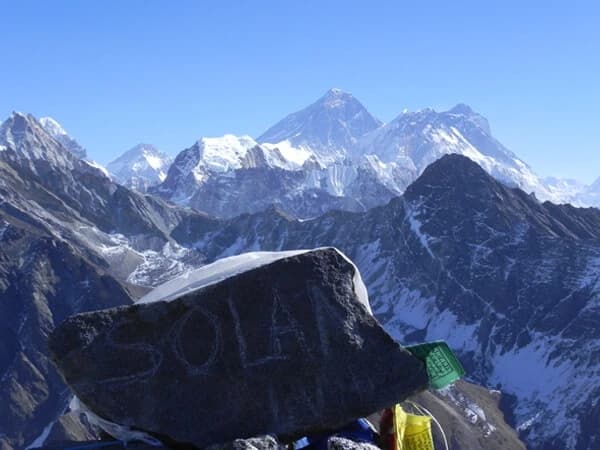
Everest Three High Passes Trek - 20 Days
20 Days
12
A complete guide to the Everest Three Passes Trek covering route options, trekking difficulty, best seasons, altitude risks, permits and itinerary.
The Everest Three Passes Trek is a long high-altitude trekking route in Nepal’s Everest region that involves crossing three Himalayan passes above 5,300 meters: Renjo La, Cho La and Kongma La. The trek takes around 17 to 21 days and follows a circuit linking the Everest Base Camp trail with the Gokyo Lakes valley, avoiding route backtracking. It includes glacier crossings and high mountain passes that are often snow-covered.
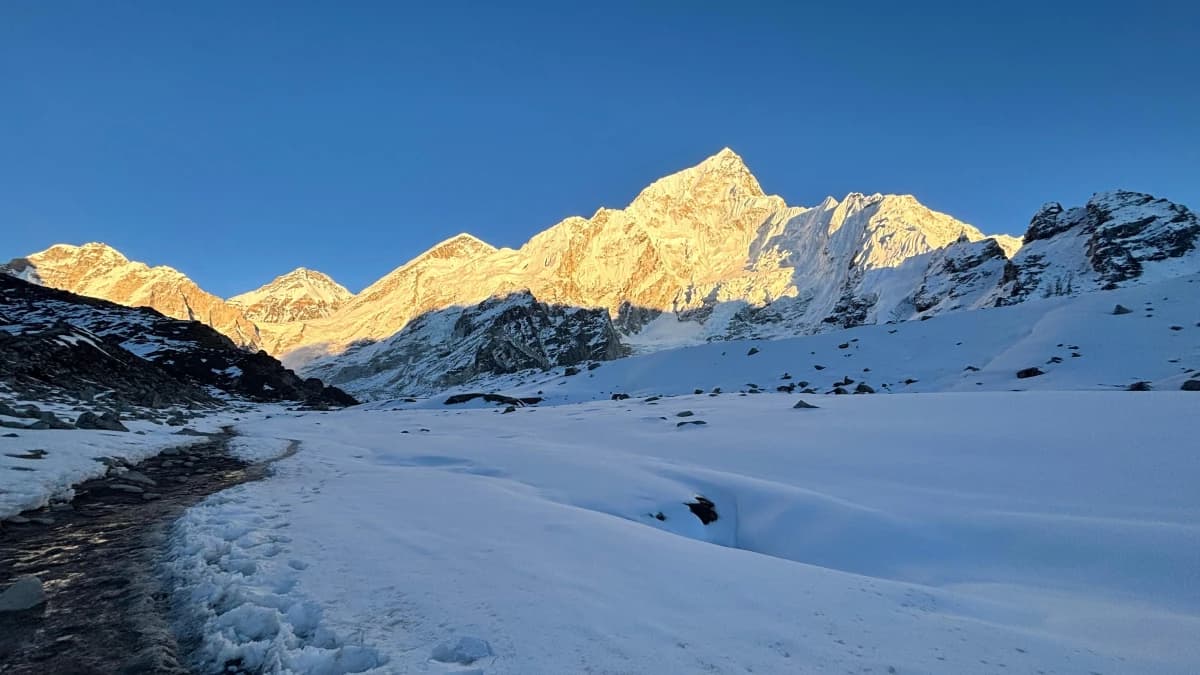
Trekkers experience the grandeur of the Khumbu Himalayas, remote Sherpa villages, glacial crossings and panoramic views of some of the peaks such as Mount Everest along with the journey to EBC and its best viewpoint Kalapathhar as well as Lhotse, Nuptse, Ama Dablam and many other surrounding mountains. This hike literally adds to the magnificent experience of Everest Base Camp trek and doubles it with the High mountains passes and magical destinations in the Khumbu valley.
The three high passes of the Everest Three Pass Trek are Renjo La Pass (5,360m), Cho La Pass (5,420m) and Kongma La Pass (5,535m) which are all located in the Khumbu region. These Himalayan passes connect the major trekking valleys of Gokyo, Everest Base Camp and Chhukung, forming a complete circuit through the Khumbu. Each pass presents with their own unique terrain and identity. The passes range from rocky ascents and glacier crossings to steep and often snow-covered sections at high altitude. Together the three passes define the challenge of the Everest Three Passes Trek and require careful acclimatization, stable weather conditions and strong physical endurance.
Renjo La Pass is the first of the three high passes on the Everest Three Passes Trek, connecting the Thame Valley with the Gokyo Lakes region. The ascent offers wide panoramic views of the surrounding Himalayas, making it a favorite for trekkers seeking scenic landscapes and photography opportunities.
Major highlights of Renjo La Pass:
Cho La Pass links the Gokyo Valley with Dzongla, bridging the Gokyo Lakes route to the classic Everest Base Camp trail. This pass is known for its glacier crossings and steep descents, requiring trekkers to be cautious while navigating icy sections.
Major highlights of Cho La Pass:
Kongma La Pass is the highest of the three passes, connecting Chhukung Valley with Lobuche on the upper Khumbu trail. It is the most remote and physically demanding pass, offering dramatic close-up views of iconic peaks and glaciers.
Major highlights of Kongma La Pass:
Trekking in Nepal provides a journey which is a lifelong dream of many along with an adventurous journey with magical Himalayan views and experience of a lifetime. Likewise, the Everest Three Passes trek also manages to qualify for all these criteria making this hike in the Everest region an experience which is very worth it.
“Why is it worth it?”, some may ask to which the answer is as follows:
The magical journey into the less trodden, hidden gem region of Everest Three Pass trek is quite strenuous. This is due to the longer trekking duration which is required to complete the loop around all the three high passes of Renjo La, Cho La and Kongma La. Additionally, trekking to the Everest Base Camp and Kalapatthar is also covered, requiring a tiring 6 to 9 hours of walking in the trekking trail.
Usually trekking rounds up to 6 to 9 hours each day and along different kinds of terrain which ranges from rocky, glacial to icy and exposed sections at the higher altitude part of the trek.
On top of that, the exposure to higher altitude over 5,000 meters adds to the challenge of fighting against altitude sickness while also conquering high passes which requires a bit of technical skills.
It is generally not recommended for a beginner to trek the Everest Three High Passes. The number one reason for it is the safety concern of any beginner trekker. The hike throws various difficulty factors such as a gruesome long trekking days of around 20 days, lots of exposure to higher altitude prone to Acute Mountain Sickness (AMS), mixture of rugged terrain of all kinds, glacial crossings and technical climbs requiring light crampons/microspikes which combined together in a single trek can be too much for a beginner to handle.
Although it is not impossible for a beginner, the 3 passes trek is strongly recommended to trekkers with prior trekking experience.
On the trekking journey to Everest High Passes, one should possess a higher level of fitness for a smooth hiking journey in one of the remote trails of Everest. Trekkers should have a high cardio-vascular endurance which is required for the daily hikes of around 6 to 9 hours for usually 20 days. The trek doesn’t get easier since your body becomes more tired after each day, which requires a very strong determination, mental resilience along with physical fitness. On top of these, trekkers should also train and prepare themselves to adapt to higher altitudes to prevent falling victim to altitude sickness while on the journey across the three high passes of Everest.
For anyone wondering if altitude sickness should be a concern during a Three Passes trek in Everest, then you don't need to think much as AMS or altitude sickness is definitely of a very big concern in this journey. The simple and straightforward reason behind this is the amount of time and days needed to be spent hiking, crossing and navigating the trails while being above 4,000 meters in altitude. Having to trek in such thin air, low levels of oxygen and with their own fatigued mind and body makes the risk of AMS even higher.
Fighting against AMS is only possible when trekkers listen to their body and the signs they see. One cannot win against altitude sickness by just forcing against the signs the body is giving such as nausea, vomiting, headache, loss of appetite, dizziness and so on. The key to lowering the risk of AMS during the three high passes trek is to ascend gradually. A helpful tip is adding enough acclimatization days in the trekking itinerary which allows the body to get adequate time for adjusting to the sudden rise in elevation. Along with this staying properly hydrated is also very important as higher altitude dries out the lungs very quickly.
Yes, a solo trek to the Everest Three Passes is possible and allowed. The decision of trekking with or without a guide completely depends on the trekker. Some may enjoy the solitude of trekking solo while others may feel comfortable in the presence of an experienced trekking guide with the navigation and valuable knowledge that they provide.
For the trekkers who are planning to solo trek the Everest 3 passes it is very crucial to prepare for all the necessary requirements and manage every logistics themselves. That includes the Three Passes trek permits, proper navigation, technical climbing skills preparation without depending on guides and experts. In terms of remoteness, the trail is pretty safe and well marked which reduces the difficulty. Going for hiking the high passes solo is only recommended for experienced trekkers.
The longer trekking days, higher altitude trekking, rough and rugged terrains including glacial crossings and high mountain passes which required technical skills of using crampons are the reasons a beginner should not do the trek solo. Doing this trek solo as a beginner has higher risks compared to a smooth journey, hence why beginners aren’t advised.
Trekking the Three Passes at different times throughout the year, presents hikers with their own unique features. Generally, the best time for trekking in the Himalayas are considered to be during the seasons of spring and autumn. Likewise, the Everest three pass trek is also best done in those peak seasons. However, winter and monsoon season trekking is also done which comes with some difficulties as well as some advantages. Although it is advised to do the trek during the peak trekking seasons of spring and autumn, it is based on personal preference in most cases.
Trekking the Three Passes in Everest during the spring season is generally considered one of the best seasons to hike. Spring season from March to May awards hikers with favourable conditions which makes the journey smooth. Spring showers trekkers with vibrant landscapes and warm weather conditions which offers excellent views of peaks like Everest, Lhotse, Nuptse and so on. It is the blooming season as the lower elevation trails and forests get covered in Rhododendrons and other spring flowers which add scenic beauty to the whole trail. The temperature is also on the warmer side as daytime temperatures range from around 5°C to 15°C at lower elevations and around -5°C to 5°C at high passes. The trails are covered in less snow which makes navigation and hiking easier yet beautiful. Additionally, the longer daylight also allows completing longer and tougher days with ample time without rushing.
Spring is considered a trekker’s delight and the trekking season starts with full bloom. But with this comes a downside, as one of the peak seasons, hiking during spring can become crowded which can reduce the sense of solitude and quieter trails can become busy. Also as a peak season the overall cost and logistics also becomes expensive.
Three Passes trek during the autumn season is crowned as the best season for hiking the mountain trails. As one of the other peak seasons along with spring, the autumn season from September to November rewards the determined trekkers with heart-melting views of the Himalayas. These months provide very moderate temperatures which are excellent for hiking with daytime temperatures usually ranging from 10°C to 20°C at lower elevations and -5°C to 5°C at high passes. Also after the exit of monsoon, the air becomes crisp with brighter days. The clear skies provide sharpest and the most consistent crystal-clear skies views of Everest, Lhotse, Makalu and Cho Oyu, Ama Dablam and other giant snowcapped peaks.
Autumn season also suffers from success similar to spring as being the most popular trekking season, the trails can become very busy which then in turn inflates the cost and logistics throughout the trek.
Everest Three Passes trek in winter is considered the most difficult and least forgiving season for completing the high passes hike. That being said, yes, it is possible to do the Three High Passes trek in winter but it comes with very harsh conditions. The cold is non-negotiable as the temperature during the day ranges from around - 5°C to 5°C at lower elevations and can drop to -15°C to -20°C at high passes. Due to such cold, crossing the high passes are significantly more dangerous due to deep snow, ice and wind exposure specially at Cho La and Kongma La which are considered the harder among the three passes. With heavy snowfall, there also may be the need for rerouting due to blockage of high passes and difficulty in crossing the glacial sections.
However, the winter season can be perfect for trekkers who are keen on adventure and a challenging journey as the conditions get harsh. To add cherry on top, winter season is the off season meaning the trails get quieter, there is significantly less crowd and the prices of the packages also drop significantly. The drop in price may not be that significant as the need for stronger gear, clothing, equipment necessary for winter trekking and limited availability of teahouses and logistics in higher altitudes add up near to the cost during peak season trekking.
While it is in fact possible to trek the Three Passes in Monsoon, the season is the least recommended to do so due to instability in weather and safety concerns. Though it is not physically freezing unlike the winter season, the monsoon season from June to August presents trekkers with heavy rainfall resulting in wet and annoying hiking conditions. Due to heavy rainfall, the trails become very slippery with leeches in the lower forests of Khumbu which become wet and damp. The sky constantly is covered by dark rain clouds and the visibility is pretty much none which blocks all the mountain views for days. Also winter brings in risks of landslides in the lower trails and uncertain conditions of the High passes. Soaked gears also wear trekkers down mentally.
However, for those who are willing to take on the risk of monsoon season’s unpredictability and concern, these months offer quieter trails and isolation unlike the packed trails of spring and autumn. Also being an offseason the lower cost and logistics are also a perk of this season.
The answer to this question is, to each their own. A standard Everest Three High Passes trek normally takes around 17 to 21 days. The time needed to complete the trek really depends on the trekkers. Some might do it in a shorter time of 17 days while some require a longer journey of 21 days. Also some might complete it right in the middle of 19 days. There are several factors that account for answering the question about how many days are enough. Factors such as the Everest Three Passes Trek itinerary, pace, acclimatization need and trekking experience all play a vital role in determining the number of days required for the High Passes trek in Everest. An experienced trekker with proper fitness level might be able to pace himself up and complete the trek with just a few acclimatization days whereas an intermediate trekker might need some extra acclimatization days and a slower pace. It also depends on weather as some may experience delays due to weather factors specially while trekking in winter or summer.
Completing the trek with under 17 days is usually a very fast and risky pace which presents a higher risk of altitude sickness so a balanced and safe itinerary is usually of 17 to 21 days.
The following is a sample 20 Days Everest Three Passes trek short itinerary which visits the Renjo La Pass first:
Day 01: Arrival in Kathmandu.
Day 02: Kathmandu Sightseeing.
Day 03: Flight to Lukla, Trek to Phakding.
Day 04: Trek to Namche Bazaar.
Day 05: Acclimatization day in Namche Bazaar.
Day 06: Trek to Thame.
Day 07: Trek to Lungde.
Day 08: Acclimatization day in Lungde.
Day 09: Trek to Gokyo Lake via the Renjo La Pass.
Day 10: Gokyo Lake explore and hike to Gokyo Ri.
Day 11: Trek to Dragnag.
Day 12: Trek to Dzongla via the Cho La Pass.
Day 13: Trek to Gorakshep, Visit Everest Base Camp.
Day 14: Early hike to Kala Patthar, Trek to Lobuche.
Day 15: Trek to Chukkung via the Kongma La Pass.
Day 16: Trek to Thengboche.
Day 17: Trek to Monjo.
Day 18:Trek back to Lukla.
Day 19: Fly back to Kathmandu.
Day 20: Final Departure.
While planning for the journey, trekkers often wonder about the Everest Three Passes Trek route, and whether they should take the clockwise or the anticlockwise route. While both routes cover the three major high passes and key villages like Namche Bazaar, Dingboche and Gokyo, the experience, acclimatization pattern and scenery can differ. The choice usually depends on personal fitness and acclimatization strategy as both the routes provide different pros and cons.
The Everest Three Passes Trek clockwise route is an alternate route to the more popular anticlockwise route which takes trekkers to the west side from Namche, crossing the Renjo La Pass first. This route allows hikers to dwell into the much quieter Thame Valley which is a peaceful spot, surrounded by towering mountains and known for its ancient monastery. This route presents the quieter and traditional Sherpa villages of the Khumbu region away from the crowds.
The clockwise route is better for trekkers who enjoy solitude and quiet trails away from the crowd. In this path, the view from Renjo La pass with the pristine turquoise watered Gokyo Lakes with Everest standing tall behind them is considered one of the greatest views of Mount Everest or any other vistas in the world. This route tackles the easiest pass first with a gradual and slow ascend to the remaining passes.
However, the clockwise route doesn’t provide the best acclimatization as the single day ascend from Lungden (4,370 m) to the first pass crossing of Renjo La (5,360 m) can significantly increase the risk of being caught by altitude sickness in a remote part with less help available. Hence, many recommend this route of the circuit to only experienced trekkers.
Everest Three Passes Trek anticlockwise route is the most popular and recommended way to complete the circuit of crossing the three high passes of Everest. This route takes trekkers from Kongma La pass at first then moves to the Cho La pass and finally crosses the Renjo La pass. The highest pass of Kongma La (5,535 m) is tackled at first after spending the first few days at higher elevation which already acclimatizes the body to the altitude gain which lowers the risk of altitude sickness.
This route shares the first half of the trek with Everest Base Camp trekkers which allows better social interaction and more available help if needed. The anticlockwise route offers early conic mountain views of Everest, Lhotse, Nuptse and Ama Dablam panoramas soon after leaving Dingboche. Additionally, saving the Gokyo Lakes and the Renjo La pass as the final crossing is a psychological win in itself as the views from there are very enticing. Apart from that, the approach to Cho La pass crossing with the anticlockwise route is a more easier and manageable climb compared to the steep and dangerous descent from the Gokyo side.
The only downside of this route is the busier and crowded trails as it is the standard route along with the route to the Everest Base Camp.
During the high passes trek, the permits required are the Sagarmatha National Park Entry Permit and the Khumbu Pasang Lhamu Rural Municipality Entrance Permit along with the Trekkers Information Management System (TIMS) Card.
The trek lies in the Sagarmatha National park which is a protected area. And as per the rules and regulations, trekking in protected areas requires entry permits which ensures the safe and legal hiking experience. Sagarmatha National Park Entry Permit is required to grant legal entry into the trekking trails of the Three Pass. This permit is generally checked at Monjo and more importantly the permit costs NPR 3,000 for a single person.
The Pasang Lhamu Rural Municipality Permit is imposed by the local municipality with the aim of supporting the local development and conserving the trekking trails of the Khumbu region. This permit is believed to have replaced the TIMS card specifically in the Everest region. The cost of the local permit is approximately from NPR 2,000 to NPR 2,500 per person.
Even though several reports and agencies claim the TIMS card to have been replaced and now not necessary for the Everest region, it is better to be safe than sorry. That being said the TIMS card is another permit which should be obtained costing around NPR 2,000 per person which is mainly used for safety tracking of the trekkers.
No, trekking guides and porters for the Everest Three High Passes Trek are not legally required.
Even though the Nepal Tourism Board (NTB) officially imposed a “Mandatory Guide” requirement for all treks which lie in national parks and protected areas, the local government of Khumbu doesn’t enforce it. The municipality allows solo trekking, trekking in groups without guides, independent trekkers after obtaining two permits which are the national park entry permit and more importantly their local Khumbu permit.
The High passes can be trekked independently without any trekking guide or porter but doing so comes with high risk as the trek is of strenuous difficulty. For those trekkers who are experienced and can manage navigation and their logistics themselves independently, guides and porters are not strongly required. However, for intermediate trekkers or those who want a comfortable experience with all of their logistics and navigation being handled by expert licensed trekking guides and porters, hiring and hiking with them is a must. They also monitor any health concerns and provide expert assistance ensuring safety. As most of the treks hiring guides costs around USD 25 to USD 30 and porters around USD 20 to USD 25 per day.
At the end of the day, choosing to trek the Three Passes with or without a guide and porter comes down to personal preference, experience and necessity.
Everest Three Pass hike features mostly teahouse accommodation. The lodging facility is somewhat similar to that during the Everest Base Camp trek with exception being in the western part from Thame and regions near the high passes. The accommodation in the 3 High passes trek in Everest region is basic teahouses and local lodges which are pretty much run by a family. In this trek, the stay literally becomes “home” with the warmth and hospitality of local people who treat trekkers like family, talking, sharing experience and having a good time together. The rooms are basic generally with twin beds and a communal dining area near a stove where everyone gathers around during meal time sharing their stories. The facilities are minimal with every amenity such as hot water, charging and Wi-Fi costing extra charges.
Moreover, the stays near the high altitude passes are even more remote and basic compared to the teahouses in lower regions. This is a common challenge of the mountains, as the altitude rises the facilities become minimal.
The Everest Three Pass Trek is a strenuous trek which can be done safely with the proper knowledge, guidance and support. Unlike a standard EBC trek, 3 pass trek is much more technical, requiring trekkers to walk through icy sections, active glaciers and steep descents. Even though the trek is difficult, it can definitely be done safely with proper planning and respecting the risks. The most dangerous and risky part about the trek is the crossing of High mountain passes of Renjo La, Cho La and Kongma La which are all above the elevation of 5,300 meters. Along with the difficult terrain and handling the technical crossing part during these regions, the passes also add the concerning challenge of Altitude sickness.
The trek can be made significantly safer by following simple rules and looking for signs. Proper acclimatization, navigating the trail with an experienced guide, knowing the early signs of AMS if feeling ill and using proper gears such as crampons during technical sections of the trek are all very important measures to reduce the risk and make the trek safer. In short, the trek is much safer for healthy, physically fit trekkers who are well prepared while it could be risky for poorly prepared, inexperienced and trekkers who ignore symptoms.
Packing for the Three High Passes trek should be done very carefully as it should be made sure that every vital item is packed while unwanted items are avoided. The following are some tips on what and how to pack for the three pass trek to ensure a smooth trekking experience in the Khumbu region.
The Everest Three Pass Trek is a challenging yet immensely rewarding journey, offering trekkers breathtaking 360-degree views of Everest, Lhotse, Ama Dablam and other towering peaks. Beyond the high passes and glaciers, the hiking journey blends serene Sherpa villages, turquoise Gokyo Lakes and vibrant rhododendron forests, combining natural grandeur with rich local culture. While demanding in terms of fitness and acclimatization, the trek provides an unforgettable Himalayan adventure for those prepared to embrace both its beauty and its challenges. That being said, trekkers seeking quieter, remote and less trodden adventure in the Khumbu region instead of the popular Everest Base Camp with magnificent Himalayan panoramas with thrilling high altitude passes are perfect for this serene trekking adventure in the laps of Everest.
1. What is the three passes trek?
The Everest Three Passes trek is a hiking journey in the Khumbu region which takes hikers in a circuit along three high mountain passes of Renjo La (5,360 m), Cho La (5,420 m) and Kongma La (5,535 m) along with the iconic Everest Base Camp and Kalapathhar.
2. How hard is the 3 passes trek?
The three passes trek is rated as of strenuous difficulty due to being a longer high altitude trek which involves technical skills while crossing high mountain passes.
3. How many miles is the 3 passes trek?
The Everest three passes trek is around 100 to 110 miles which is 160 to 170 kilometers long starting and ending in Lukla after crossing three high passes of Renjo La, Cho La and Kongma La.
4.Can I do three passes trek solo?
Yes, solo trekking the three passes is allowed in the Everest region unlike some other areas of Nepal which require trekking with a licensed guide.
5. How many days are three passes?
A standard three passes trek is generally of 17 to 21 days depending upon the itinerary, route and acclimatization needs.
6. Where does the Three passes trek start?
The three passes trek starts from Lukla heading into Namche from where either clockwise or anticlockwise route can be taken.