Bhutan Cultural Tour "A Complete Guide To The Land Of The Thunder Dragon"
Royal Bhutan Heritage Tour is a holiday package from Kathmandu to the Last Himalayan Kingdom. Bhutan is a small country spiritually known as the Land of the Thunder Dragon which is situated in the eastern part of Himalayas between two giant nations India and China. Despite being a small landlocked country in south Asia, Bhutan is a himalayan kingdom similar to Nepal with breathtaking vistas of unclimbed, unspoiled and sacred mountains, diverse landscapes, warm hospitality and rich Buddhist culture and traditions. Let us picture a scenery with prayer flags dancing against azure skies, ancient monasteries hanging impossibly on sheer cliffs, and valleys where time seems to stand still with its ancient history. This will be our experience when we step foot on the Dragon Kingdom. Bhutan, the Land of the Thunder Dragon which is the world's only carbon-negative country invites us on a journey through sacred temples, monasteries, fortress dzongs, and traditions deeply rooted in ancient traditions unchanged for centuries.
The Royal Bhutan Cultural Tour from Kathmandu offers us a lifetime experience of unforgettable moments, rather than just being another basic holiday. Our 7 days itinerary takes us deep into one of the world's happiest countries, most historical and magical kingdoms. We are talking about a nation that measures success by Gross National Happiness which is created by their own government instead of GDP. During our tour to the western valleys of Bhutan, we are visiting a serene place where forests cover over 60 percent of the total land of the country making it the only carbon negative country on Earth. The Buddhist monks still meditate in cliffside caves that have been sacred for over a thousand years which tells us so much about the importance and belief they have in their history and culture.
We start our journey from Kathmandu to Paro, Thimphu, Punakha and Gangtey adventure which begins with one of the most scenic flights we can ever take on. We will fly soaring past Himalayan giants like Everest, Lhotse, Kanchenjunga and land in the beautiful Paro Valley. From there, we explore the western valleys of Bhutan endless in natural beauty, religious and sacred pilgrims, temples and monasteries along with iconic Dzongs and the warm hospitality of the friendly Bhutanese people. Tiger's Nest monastery, Chimi Lhakhang, Kyichu Lakhang, Paro Dzong, Punakha Dzong, Thimphu Dzong and the wild and rural valley of Phobjikha are not just sightseeing but is cultural immersion into the ancient Bhutanese Kingdom. Glimpse of Bhutan 5 days tour are also best short tour in Bhutan Paro, Thimpu & Punakha.
Bhutan has a tourism policy of “High Value, Low Volume” carefully protecting its culture, traditions and environment through sustainable policies while opening the gates to the world to visit and explore the richness and authenticity of this nation. When we embark on this holiday tour of Bhutan and its western valleys, we are not just tourists but are respected and treated as honored guests which is a rare and precious experience which tells a lot about the kindness and hospitality of the people of Bhutan. This Bhutan holiday tour itinerary offers us peace, spiritual experiences and a break from the chaos of our busy modern life.If you are looking for trekking then Druk Path Trek 7 days are most recommended trek in Bhutan.
Why Bhutan Holiday Tour From Kathmandu?
There are several ways we can get to Bhutan, however, flying from Kathmandu for our Paro to Gangtey Bhutan Holiday is the best option by far. When we depart from Kathmandu, the journey offers us unique advantages and for travelers seeking an authentic Bhutanese experience. The flight time is short, from around 1 to 1 hour and 30 minutes, with scenic beauty flying over the Himalayas which provides breathtaking aerial views of the world's highest peaks and the Himalayan belt in eastern region of Nepal like the Everest, Kanchenjunga and Lhotse setting the perfect tone for our adventure ahead.
Bhutan Cultural Tour Highlights
- Visit Bhutan Tour 6 Nights, 7 Days provides an excellent opportunity to discover Bhutan's distinct scenery and culture.
- Explore Paro Dzong, Kyichu Lakhang, and the National Museum.
- Visit Thimphu Dzong and Memorial Chorten.
- Enjoy the beauty of Buddha Point.
- Pass via the Dochu-La Pass and be captivated by the breathtaking views of the mountains and the 108 memorial Chortens.
- Explore the huge Punakha Dzong.
- Hike to Chimi Lhakhang, the fertility temple in Mesina.
- Explore the wild and beautiful Gangtey Valley.
- Hike the renowned Taktshang Monastery or Tiger's Nest.
What Makes Bhutan Tour Special?
We can refer to Bhutan as the last Shangri La which means a hidden Himalayan paradise that the Kingdom of Bhutan ultimately is. The environment of Bhutan is peaceful, spiritually rich and unspoiled by unplanned modernization and chaos which describes the ideal meaning of the term Shangri La. The people here in Bhutan live amongst each other in social harmony and peace along with nature. When we call Bhutan the Last Shangri La we basically imply that it is one of the last remaining places on Earth which still preserves and lives their life by peace, harmony and tranquility. Bhutan has earned the reputation of one of the world's most extraordinary and beautiful destinations as the kingdom has chosen a path which is different from conventional development and targets to preserve identity and nature.
Bhutan Is The Only Carbon Negative Country
The Kingdom of Bhutan absorbs more carbon dioxide than it emits while most nations struggle to reduce their carbon production in the atmosphere. We will be able to experience the crisp and clean air with less carbon than anywhere else in the world during our Royal Bhutan Tour from Kathmandu. The commitment of Bhutan to maintain more than half of their total area as forests in their nation is very environmentally thoughtful and commendable which shows how much they care about their natural resources, and habitats of their flora and fauna. With over 60 percent of its land covered in pristine forests, the kingdom of Bhutan serves as a vital carbon sink for the planet. This commitment to environmental conservation ensures that when we visit Bhutan, we are experiencing landscapes that remain largely untouched and unspoiled. The forests are full with biodiversity over 700 species of birds including the rare Black-Necked Crane, diverse wildlife, and the national flower of their country the Blue Poppy carpets alpine meadows in a spectacular display of beauty which will stun us. High passes like the Dochu La pass, Chele La pass are spectacular viewpoints from where we can witness the magnificent display of the proud and silent snow-capped himalayan giants. Glacial rivers flow crystal-clear through lush valleys, and rhododendrons bloom in vibrant colors across hillsides which not conserves the air and the environment but also adds scenic beauty to it.
The Measure Of Gross National Happiness Over GDP
Bhutan famously measures success not only by economic growth, but by the happiness and wellbeing of the Bhutanese people. This philosophy which the country has adopted and practiced is known as Gross National Happiness (GNH) which is in effectiveness over the GDP measurement which the rest of the world uses. Bhutan’s GNH influences every aspect of life of its citizens in the kingdom. From the free education and healthcare sector, cultural preservation, environmental conservation, and sustainable development they are all woven into the national fabric which ultimately measures their happiness. During our Bhutan Royal visit itinerary, we will be able to witness this philosophy in action from the warm hospitality of locals to the pristine environment and the careful balance between carefully planned tourism and conserved tradition.
Strong Preservation of Culture And Buddhist Heritage
On our 6 nights 7 days Paro, Thimphu, Punakha and Gangtey visit from Kathmandu, we will experience that Buddhism in Bhutan is not just a religion but is the heartbeat and way of life of the people. We can see colorful Buddhist prayer flags flutter from every hillside on suspension bridges and Manis written on walls. Prayer wheels can be seen almost everywhere and small prayer wheels spin in the hands of elderly devotees which lets us see and experience how important the Buddhist heritage to Bhutan really is. It is not just a daily ritual but for them it is their spiritual and religious belief by which they live their lives. Bhutan also is the home to many monasteries from which some rest in locations so dramatic they seem to defy the laws of gravity, temples, chortens and dzongs which all depict their culture and heritage. The iconic dzongs, fortress monasteries that serve as administrative and religious centers showcase exquisite Bhutanese architecture with intricate woodwork, colorful paintings, and imposing structures. From the ancient Kyichu Lhakhang temple to the fertility temple of Chimi Lhakhang, from the magnificent Punakha Dzong to the awe-inspiring Tiger's Nest monastery, every spiritual site shows how well they are devoted and preserved by the homeland of Bhutan.
While visiting Bhutan on our journey from Kathmandu we can see how the traditional dress is worn daily which is the sign of cultural preservation. Ancient festivals (Tsechus), dances, and architecture are protected by law making it a crucial part of their identity which needs to be preserved. We will see that modernization is carefully controlled in such a way that traditions don't go extinct. Bhutan excellently preserves its culture by designing modern architecture with traditional sculptures.
Controlled Tourism Volume
Bhutan follows a “High Value, Low Impact” tourism policy by which it tends to limit mass, commercialized tourism instead opting to protect their culture and nature. It has recently opened tourism for the outside world to explore Bhutan in 1974 AD with that policy so that preservation of nature, culture and environment is possible. But now we can embark on our Royal Bhutan Tour package which will provide us with a unique spiritual, cultural and natural heritage with an experience of a lifetime. We can experience this magnificent country full of natural and cultural majesty with very few tourists meaning less crowd which will make our Bhutan holiday visit authentic.
Best Itinerary For Bhutan Cultural Tour
This 6 nights itinerary takes us on a journey through Bhutan's western valleys of Paro, Thimphu, Punakha and Gangtey over seven memorable days. The 6 nights 7 days Royal Bhutan Tour itinerary balances cultural immersion with natural beauty, spiritual experiences with adventure, and structured touring with leisure time to absorb the magic of Bhutan at our own pace.
Day 01: Arrival in Paro and drive to Thimphu.
Day 02: Day Tour of Thimphu.
Day 03: Thimphu to Punakha.
Day 04: Punakha to Gangtey.
Day 05: Gangtey to Paro.
Day 06: Hike to the Tiger’s Nest in Paro.
Day 07: Final Departure from Paro.
The Western Valleys Of Bhutan
Paro Valley- On our journey to Bhutan and its kingdom, the beautiful Paro Valley will serve us as our gateway through which we enter Bhutan. The kingdom's Tiger's Nest (Taktshang) monastery which is the most iconic landmark hanging on a cliffside lies in the gateway of Bhutan that is Paro valley. Along with this, the valley of Paro in Bhutan is accompanied by the Paro Chu river which is crystal-clear. Together they combine natural beauty with cultural richness which makes Paro valley setting almost dreamlike. Paro valley is home to the country’s only international airport located on the valley floor from where our journey begins with a landing that's considered one of the world's most scenic as we can see snowcapped peaks, lush valleys and incredible landscapes during our flight to Bhutan.
Paro Rinpung Dzong, an iconic fortress and monastery which is still embodying the traditional Bhutanese architecture will be an iconic landmark for us to see and explore during our tour to Bhutan. This magnificent structure was built in the 15th century and exemplifies traditional Bhutanese design with whitewashed walls, golden roofs, and intricate woodwork. We will know that the Paro dzong houses both monastic and administrative offices which shows how the Bhutan government protects its art, culture, tradition and sculptures. It is said that the strategic location of the Paro dzong once protected the valley from Tibetan invasions.
Kyichu Lhakhang, one of the oldest temples in Bhutan is also situated in Paro valley. During our visit and stay in Paro we will visit the most sacred temple of Bhutan which dates back to the 7th century. According to legend, Tibetan King Songtsen Gampo built 108 temples across the Himalayas in a single day to overcome and quiet a demoness and Kyichu Lhakhang was among them. The temple's ancient atmosphere and spiritual significance make it a historical site to explore on our journey to Royal Bhutan visit. The National Museum, which is housed in an old watchtower showcases Bhutan's rich cultural heritage through their traditional art, textiles, weapons, and religious artifacts which have been spanning through centuries.
On this holiday tour to Bhutan, Paro town will charm us visitors with traditional architecture, vibrant markets selling handwoven textiles and local crafts, and a relaxed atmosphere perfect for evening strolls. In autumn, apple orchards surrounding the valley burst with ripe fruit adding to the region's pastoral beauty and making the whole landscape golden.
Thimphu- On our arrival in Thimphu unlike most capitals, the first thing we notice is how calm and personal the city feels. The capital city of Thimphu has no traffic lights and traffic police with white gloves still guide vehicles on the correct path which gives the city a charming and traditional rhythm. We will certainly notice how beautifully Thimphu blends old traditions with modernization. We will find that the government officials still wear their traditional dress which is called Gho, even while working in modern offices. This balance of their cultural heritage and progress defines daily life in Bhutan’s capital city.
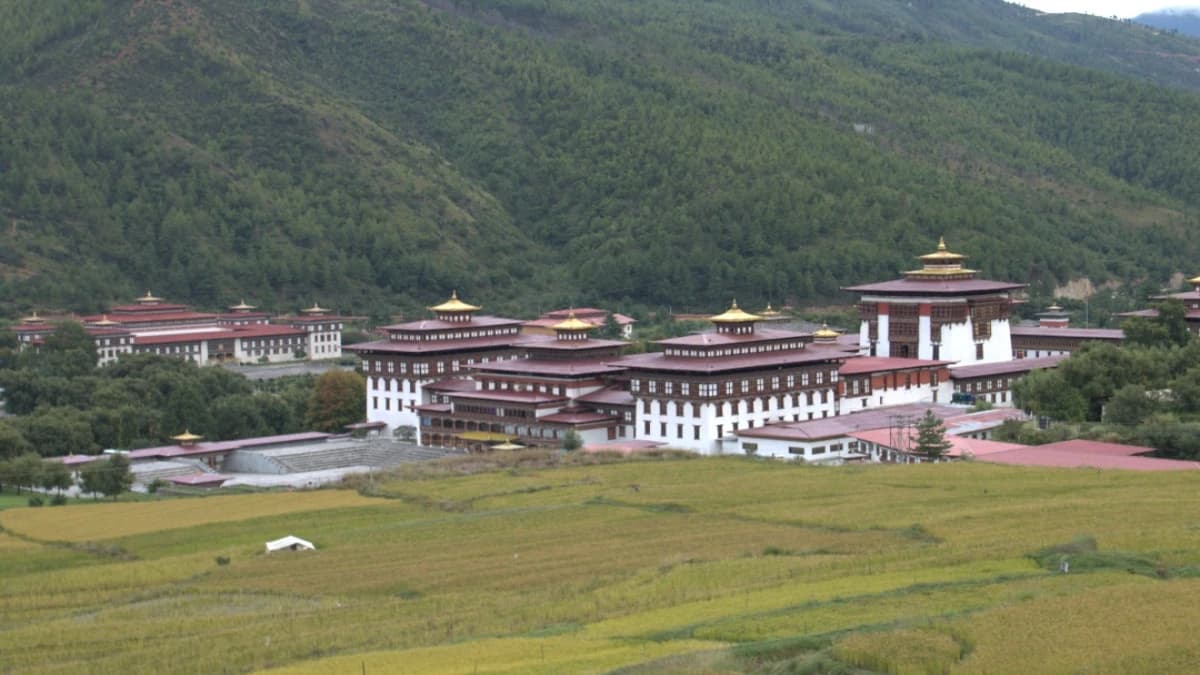
One of Thimphu’s most important and beautiful landmarks is the Tashichhon Dzong which is known as the fortress of glorious religion. It is the administrative and religious centre of Bhutan which also houses the throne room of His Majesty the King, government ministries, and the largest monastery of the nation. Their National Assembly hall is located across the Wang Chu river which is in a new building the parliament house. In the evening time, the Dzong which is sitting beside the Wang Chu river becomes peaceful and majestic as the butter lamps softly light its courtyards. We can also enjoy our free time in the evening strolling the streets of the town. Thimphu is also famous for the magnificent Buddha Dordenma which is a 54 meters tall golden statue of Lord Buddha located high above the valley. It is visible from almost anywhere in the city. The Great Buddha Dordenma is a gigantic Shakyamuni Buddha statue in the mountains of Thimphu, Bhutan celebrating the 60th anniversary of fourth king Jigme Singye Wangchuck. We can find more than one hundred thousand smaller Buddha statues inside that create a powerful spiritual atmosphere, while the viewpoint offers us amazing panoramic views of the Thimphu Valley.
We can experience the daily spiritual life best at the Memorial Chorten which was built in memory of Bhutan’s third king. We can also join the locals gathered here throughout the day for prayers, spinning prayer wheels, and chanting mantras. This site offers us visitors an authentic glimpse into Buddhist devotion of the Bhutanese people. The National Institute for Zorig Chusum in Thimphu for us culture lovers is a highlight in any Royal Bhutan Tour itinerary. Here, in the art school, students learn Bhutan’s thirteen traditional arts and crafts, including thangka painting, wood carving, embroidery, and sculpture with the motive of ensuring these skills continue for future generations and preserve their heritage and identity. A scenic uphill walk will lead us to Tango Monastery which is an important center for advanced Buddhist studies. The peaceful surroundings and sweeping views of Thimphu make it a perfect place for us to slow down and reflect on our Bhutan Royal Tour so far.
We can experience local life by visiting around Thimphu’s weekend market where villagers sell fresh produced vegetables, traditional textiles, and handmade crafts. The city also offers us a growing restaurant scene, serving authentic Bhutanese dishes as well as international cuisine.
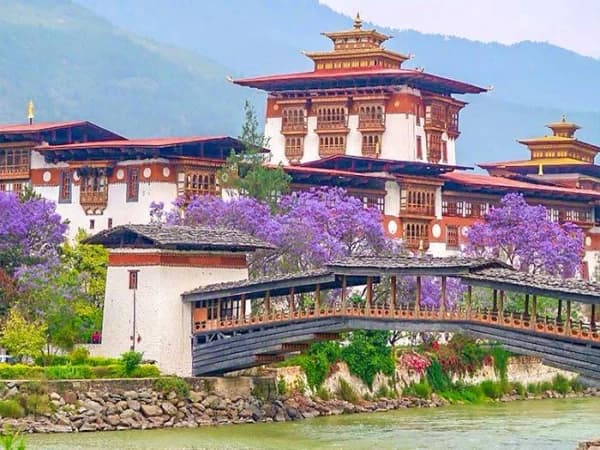
Punakha Valley- Punakha is the next valley on our Bhutan visit after Thimphu which offers us a dramatic change in landscape and climate. It is known as the winter capital of Bhutan as the valley enjoys favourable subtropical climate with warmer temperatures, lush vegetation and two rivers merging into one in a spectacular display of nature. Punakha valley also features the magnificent and arguably the most beautiful fortress in Bhutan which rests in the conjunction of the Pho Chu and Mo Chu rivers in a beautiful manner. It can be accessed by a wooden arched bridge along with detailed woodcarving on pillars and doorways, murals on the wall which showcases us the great art, architecture and sculpture of the Bhutanese. The Punakha Dzong is also a very important piece of architecture which played a crucial role in Bhutan’s history as it was the site where the coronation of the first king of Bhutan was held. We will witness the beautiful scenery seen from the suspension bridge near the Dzong which is covered in colorful prayer flags over the Mo Chu river.
Our journey to Dochu La pass while we are in the valley of Punakha offers us with one of the most spectacular viewpoints of the whole country. At an elevation of 3,048 meters it is a high pass which also features 108 memorial chortens that are arranged in a circular way keeping the Himalayan peaks right at the back of them. We can see snowcapped peaks with the chortens at the front of our eyes forming a panoramic view of unspoiled sacred and pristine mountains like the Masagang, Tsendagang, Terigang, Jejegangphugang of Bhutan.
We will also visit the sacred fertility temple in Mesina while on our Punakha valley tour. We can reach Chimi Lakhang temple with a scenic walk through rice fields and traditional Bhutanese farmhouses which was built with a belief that this monastery blesses couples who are hoping for children. During our walk to the temple, we can experience authentic glimpses into the rural lifestyle of Bhutanese farmer population with children playing along the fields.
Gangtey Valley- Gangtey valley which is also known as Phobjika Valley, let's us experience the most rural and unspoiled parts of Bhutan in this Bhutan holiday tour. It is a glacial valley which most of the tour skips due to time and duration reasons but this removal is a huge loss as Gangtey offers the most authentic look into the western Bhutan with traditional villages in harmony with nature, minimal development and its pristine state.
Gangtey is the place where the rare Black necked cranes migrate to from Tibet at the start of winter. These endangered and elegant bird species arrive here around late October and depart in early spring which is even celebrated as a festival here in Gangtey. The people here admire these rare birds and integrate them into their local folk as well which shows the respect towards nature and its creation among the Bhutanese. The Gangtey Monastery which is at the top of the hill has its roots connected with the Nyingmapa Tradition. We will learn about the life of monks in the monastery along with Buddhist rituals which will be a holy experience throughout our journey. During our time in Gangtey we can stroll through the natural trails and visit the local villages which will give us an experience into the warm hospitality and tradition of the rural Bhutanese lifestyle.
Bhutan Holiday Visit To Tiger’s Nest Monastery
The visit to the iconic monastery which is hanging on a sheer cliff is a breathtaking and awe-inspiring site to see on our Royal Bhutan heritage tour. The pilgrimage to Taktshang Monastery which is universally known as Tiger’s Nest, located 900 meters above the Paro valley floor is a sacred site which is historic for the Bhutanese people. According to Buddhist tradition it is believed that Guru Rinpoche (Padmasambhava) had flown to this location sitting on the back of a tigress. He is the intellectual monk who brought Buddhism to Bhutan in the 8th century. Hence it is given the name of Tiger’s Nest monastery. It is said that the tigress actually was his wife Yeshe Tsogyal who transformed herself into tigress and carried him to this cliff face. Guru Rinpoche then meditated in the caves here in order to defeat demons and evil spirits who opposed the spread of Buddhism for three months, three weeks, three days and three hours. Due to this legend and the religious and historic value it holds, the cliff is transformed into the most sacred pilgrimage sites in the last himalayan kingdom of Bhutan.If you have short time there are other option also Bhutan Tigernest Monestary tour 4 days.
Our hike up to the monastery is as meaningful as the monastery complex itself. We start at the trail which begins at the base near the valley of Paro and make our way up through beautiful blue pine forests which are decorated with prayer flags and Spanish moss.
Taktshang ( Tiger’s Nest Monastery ) Visit Highlights
While climbing the Taktshang monastery, we come across the Taktshang Cafe which is roughly at the halfway mark of the trail. From this cafe we can witness spectacular views of the monastery across the valley while resting and sipping on our favorite coffee. This is a famous stop for us tourists to rest and absorb the dramatic scenery which the monastery has to offer us while mentally preparing ourselves for the final ascent. On our final approach, we need to descend into a gorge which is crossed by a waterfall to reach the holy pilgrimage site. The monastery entrance is joined by an ancient stone bridge and then steep stone step ups. This dramatic entrance along with prayer flags fluttering in the wind and the sight of the magnificent monastery above extends the spiritual experience even more. Upon entering the monastery complex, we can discover a series of temples and shrines which are built into and around the sacred caves with the interior featuring ancient murals showing the life of the Legend of Guru Rinpoche along with statues of Buddhist deities. The spiritual heart of the complex is the sacred cave where Guru Rinpoche meditated and when we stand in this small chamber the butter lamps and prayer offerings make us feel and immerse into the deep faith of this sacred place and the significance it has held for over 12 centuries.
Tiger’s Nest Hike Difficulty
The hike to the Tiger’s Nest monastery difficulty is moderate as it takes typically around four to six hours round trip with the time spent at the monastery itself included. Though being a 900 meters uphill climb, the well developed trail with proper maintenance and the availability of rest points make it very friendly even for people with low to medium fitness level. While we rest at rest points the view and journey definitely takes all the tiredness out of us and motivates us to reach the top for the magical religious and spiritual experience in the most sacred pilgrim site of Bhutan. On our climb up, the monastery appears and disappears through the trees, each time providing us an even better glimpse of the monastery. Designated rest spots with perfect places to catch views and ponder upon the architectural genius of building such breathtaking structures in that seemingly impossible location makes our hike to Tiger’s Nest monastery beginner friendly.
Trekking Tips For Tiger’s Nest Hiking
- Comfortable hiking shoes with a strong grip and warm clothes to keep us warm should be worn.
- We must respect the no photography inside rule, however we can click pictures on the ascend and the views from outside.
- Early morning is the best time to start this hike as there is less crowd and morning lighting will make the views better with photography conditions.
- Modest dressing is a must as it is the most sacred monastery of the country.
- Before entering temples we need to take our shoes off.
When Is The Best Time For Bhutan Heritage Tour?
Bhutan shares similar climate and conditions to Nepal and as a result the best trekking and holiday season in Nepal is also the same time in Bhutan. Spring and Autumn are the two best seasons for our short Bhutan Tour from Kathmandu itinerary. During spring Bhutan comes alive with colour and celebration making it one of the peak seasons which provides the best value for our Royal Heritage tour. Similarly, the autumn season rivals spring as one of the best times for a Royal Bhutan Tour as it offers us with excellent conditions for touring around the country with ideal weather and rich cultural experience with major festivals.
Spring ( March to May )
The spring season in our Bhutan visit package offers us very favourable conditions and weather. The average temperature of a day ranges from 10°C to 20°C which makes the environment cool and comfortable but not cold. The days during this time are generally sunny with bright skies with occasional spring showers which enhance the lushness and scenic factor of the landscape.
The natural beauty element also gets better during spring with the bloom of Rhododendrons, wildflowers and Blue Poppies, the national flower of Bhutan which makes the scenery vibrant, warm and colorful. The clear skies after winter provide us excellent visibility of the Himalayas particularly from Dochula Pass along with the memorial chortens where snow-capped peaks create stunning panoramas. Springtime marks the planting season in the valleys of Bhutan which turns the landscapes green and offers us with experience into the agricultural side of the Bhutanese people.
Autumn ( September to November )
The autumn season in our Bhutan cultural tour package offers us excellent conditions and weather for touring the pilgrims and sites with a favourable environment. The average temperature of a day during autumn ranges from 15°C to 20°C which offers us a very moderate temperature, comfortable for trekking and touring the western valleys of Paro, Thimphu, Punakha and Gangtey. After monsoon exits the autumn brings in clearest of skies with bright days and excellent visual conditions for seeing the Himalayan peaks from the Dochu La pass, photography throughout the tour and during the hike to Tiger’s Nest Monastery. Autumn season marks the harvest time in the valleys when the crops and fruits ripen making the whole landscape turn golden. Apple orchards in the Paro valley are ripened for harvesting. The autumn season provides us with warm autumn colors which create a beautiful environment for photography.
Bhutan Festivals Tour Itinerary
During our cultural heritage tour to Bhutan, we witness, explore and immerse ourselves into the culture of the Bhutanese people with Buddhism not only being a religion but their mantra of living. We can plan our Bhutan holiday visit in such a way that the magnificent festivals are also during that time. The festival highlights of Royal Bhutan Tour are:
Paro Tsechu Festival Tour
The festival of Paro Tsechu Festival Tour itinerary 5 days in March or April during spring where dates can vary by the Lunar calendar. It is the most famous festival which attracts spectators from around the country to experience the beauty of it. During this festival dancers wearing black hats, masks and costumes of terrifying deities perform sacred and religious dances. We can experience this epic festival which is celebrated for their cultural heritage and blessings can be received from giant Thankas which are religious paintings.
Punakha Drubchen
Punakha Drubchen occurs around the months February and March. This festival is celebrated for Historical reenactments featuring them which is particularly significant for understanding Bhutan’s history.
Thimphu Tsechu
The festival of Thimphu Tsechu typically occurs during autumn in September or October which is viewed as the capital’s grand celebration. Thimphu Tsechu is observed with the attendance of the Royal family of Bhutan. It showcases us the finest Bhutanese culture with masked, black hats and costumed sacred and religious dances similar to that in Paro Tsechu.
Black Necked Crane Festival
Black necked crane festival is observed during autumn in November in the Phobjika valley or Gangtey. This festival celebrates the arrival of these elegant, endangered and rare species of bird to their hometown for winter migration from Tibet. We can witness how Bhutanese combine conservation of natural heritage such as the rare Black necked crane with cultural performance such as celebration and festival.
Royal Bhutan Tour Permits & Tour Guides
We have known that Bhutan follows their policy of “High Value, Low Volume” for their tourism activities prioritizing sustainability over mass tourism. This ensures that their culture, natural heritage and environment is protected while welcoming visitors. It helps us during our Bhutan 7 days tour from Kathmandu for effective planning that we understand the permit and requirements.
Bhutan Holiday Visit Visa Requirement
We will need a visa as an entry permit which must be booked through a licensed Bhutanese tour operator or international partner agency. Our tour operator arranges our visa, which is approved before we can travel and stamped upon arrival at Paro International Airport. We cannot obtain a tourist visa independently so it must be arranged through official channels.
However citizens of India, Bangladesh, and the Maldives can enter Bhutan without a pre-arranged visa and only need a valid passport or voter ID card which displays their legal and official identity.
Route Permits In Bhutan Tour From Nepal
For our travel beyond Paro and Thimphu, we need route permits issued by immigration authorities in Thimphu. Our tour operator handles this process, obtaining the necessary permits for Punakha, Gangtey, and other regions which are included in our Royal Bhutan Tour itinerary.
Solo Tour And Tour Guide Requirement In Bhutan Royal Holiday
We can experience the Royal Bhutan Tour solely without any groups. But it is a requirement that we book our tour through a licensed tour operator. We must understand that our booking must be done through a legal and registered tour operator and independent travel without a guide is prohibited in most of the regions. We can customize the Bhutan Paro To Gangtey Tour itinerary as per our need if we want to go solo. However, the per person cost in the group package is typically lower.
During our tour to Bhutan we require a licensed tour guide with us while visiting most of the regions in our journey. It is a requirement by the government of Bhutan hence we must abide by it and have a licensed tour guide accompany us. This only helps enhance our experience as guides provide invaluable cultural context and knowledge to us, telling us about the history of various places and ensuring no small details are missed.
Nepal Tour Company will ensure your package which is perfect for you by customizing the Royal Bhutan Tour itinerary as per your need. They also manage licensed tour guides for you so that your holiday experience will be hassle free with enjoyment and cultural exploration.
Bhutan Tour Sustainable Development Fee (SDF)
The Sustainable Development Fee (SDF) represents the kingdom's commitment to their policy of “High Value, Low Volume” tourism. This fee directly funds the crucial development and conservation initiatives of Bhutan. We are required to pay a certain amount to the government of Bhutan as a fee for sustainable development.
International Tourists
- USD 100 per person per night for adults.
- USD 50 per person per night for children aged 6-12 years.
- Free for children under 6 years of age.
Nationals of India, Bangladesh, and Maldives.
- INR 1,200 per person per night for adults.
- INR 600 per person per night for children aged 6-12 years.
- Free for children under 6 years of age.
Where Does Our SDF Go ?
The Sustainable Development Fee isn't just a tourism tax which is collected from us visitors but it is an investment in Bhutan's future and our meaningful visit. The government of Bhutan utilizes our Sustainable Development Fee in several ways.
Free education and healthcare service for the Bhutanese citizens.
The government of Bhutan provides free education and healthcare to the citizens of Bhutan which is contributed by the revenue generated by the SDF.
Environmental conservation projects.
They develop and implement projects which protect Bhutan’s incredible commitment of maintaining forest coverage, rich biodiversity and preserving natural habitats and heritage which is greatly supported by the SDF.
Carbon neutrality initiatives.
Bhutan is the world’s only carbon negative country meaning it absorbs more carbon from the atmosphere than emit in it. They largely invest in maintaining this status which is supported by the SDF, through renewable energy, reforestation programs, environmental protection, planned urbanization and development.
Infrastructure development and cultural preservation.
Bhutan immensely protects and preserves its culture and heritage and protects its identity for future. These works are supported by the revenue generated by the sustainable development fee which helps in maintaining dzongs, monasteries, arts and crafts, traditional sculptures with ancient Buddhist craftsmanship and cultural festivals. It also contributes to the government in planned infrastructure development without compromising nature and environment like roads development, tourist infrastructure development and facilities which benefit both us tourists as well as the locals of Bhutan.
Paro, Thimphu, Punakha and Gangtey Accommodation Facilities
Throughout our Bhutan Holiday Tour package in the western valleys of Paro, Thimphu, Punakha and Gangtey we stay at quite comfortable standard hotels which balance modern comfort with traditional Bhutanese experience. They are government rated 3 star hotels which offer us standardized quality with traditional touch offering distinct experiences in various valleys throughout Bhutan tour.
Paro Hotels
The accommodation in Paro valley features traditional Bhutanese architecture with painted wooden details which incorporates modern amenities with traditional touch. The hotels in Paro valley provide us with stunning views of the valley and surrounding mountains. As the hotels are near the town market, we can easily stroll around the streets and visit the markets for evening walks.
Thimphu Hotels
Thimphu valley provides us with accommodation which are typically near the main areas in the capital city ensuring convenient and easier access to markets, restaurants and city halls. As they are situated at a walking distance to the shopping street, we can always visit and explore the markets and town streets which provides us an insight to the daily life of the locals.
Punakha Hotels
We find accommodation in Punakha valley very scenic and beautiful. The hotels which we stay at capitalize on the valley’s rich natural beauty offering us spectacular views of river and mountains from our rooms or balconies. The warmer climate in Punakha allows the accommodations there to have outdoor seating areas for us to rest, drink tea and soak in the view in pure comfort and disbelief.
Gangtey Hotels
The accommodation in Gangtey valley is a mixture of nature and comfort standards. As the Phobjikha valley is remote and unspoiled with authentic experience into the village life of Bhutanese, the hotels provide us with rustic settings which emphasizes the peaceful, pristine and wild environment. They offer us amazing views of the black necked crane in season, natural trails and scenic panoramic views of the glacial valley.
On our visit to the Royal Bhutan Tour, the hotels provide us with comfortable beds, clean facilities, hot water, and the rest we will need after full days of exploration. The traditional architectural elements, wood craftsmanship, colorful paintings, prayer flags, Manis on walls and Buddhist symbols constantly remind us that we are experiencing Bhutan authentically.
Royal Bhutan Tour Package Food Service
We are provided a very convenient Full Board Meal plan during our Bhutan royal heritage tour. It eliminates the need for us to search and plan for our food which saves us from the hassle of finding restaurants and deciding where to eat. Due to the convenience of the full board meal plan we can focus only on our tour and exploring the beautiful country that Bhutan is. The meal includes breakfast, lunch and dinner along with tea and coffee throughout our journey. Our meals are arranged at restaurants which are carefully selected and known for best taste, experience and quality of food with a welcoming and warm hospitality. The food has various cuisine options we can choose from like the national Bhutanese cuisine, Indian cuisine as well as western menus. We can experience authentic local dishes like Ema Datshi (Chilli and Cheese), Red Rice, Momo (Dumplings), Phaksha Paa (Pork with Red Chillies) along with Indian delicacies like Dal, Roti, Curry as well as Western foods like Pasta, Sandwiches and so on.
During our short 7 day Bhutan itinerary, the variety in food options means that we can be daring and try the authentic dishes of Bhutan or stick with our comfort food.
Join Us On The Royal Bhutan Tour With Hike To Tiger’s Nest
Planning our holiday for the Royal Bhutan Tour with a hike to Tiger’s Nest, is a hassle with the need for managing visas, permits, fees, bookings and lots more. Hence, we at Attentive Holiday Tours remove all these complications allowing you to focus entirely on your experience ahead. With years of experience we understand exactly what makes a holiday special and memorable. We take care of all the requirements of your trip so that you can enjoy the Buddhist heritage and the rich spiritual and cultural kingdom Bhutan truly is.
Experience the authentic adventure through the western valleys of Paro, Thimphu, Punakha and Gangtey in this Bhutan Cultural Tour and explore the Land of the Thunder Dragon in its pristine form and rich Buddhist values and beliefs flowing through every art, sculpture and the lifestyle of people.
FAQs
1. Do I need a visa to travel to Bhutan from Kathmandu?
Yes. Bhutan visas must be arranged through a licensed tour operator. Indian, Bangladeshi, and Maldivian citizens can enter without a pre-arranged visa using a valid passport or voter ID.
2. What is the Sustainable Development Fee (SDF) for Bhutan?
International travelers pay USD 100 per person per night, while Indian, Bangladeshi, and Maldivian nationals pay INR 1,200 per person per night. Children from 6-12 years of age receive a 50 % discount and for under 6 it is free.
3. What is the best time to take the Royal Bhutan Heritage Tour?
Spring (March–May) and Autumn (September–November) are the best season as they offer the best weather, clear mountain views, and major cultural festivals.
4. How difficult is the Tiger’s Nest Monastery hike?
The hike is moderate and takes about 4–6 hours round trip. The trail is well maintained and suitable for travelers with average fitness with plenty of rest points with incredible views.
5. Are guides mandatory during the Bhutan cultural tour?
Yes. Licensed guides are mandatory as many regions and attractions in Bhutan prohibit entry without an authorized guide. This also ensures cultural understanding and compliance with tourism regulations.
6. What type of accommodation is provided during the tour?
The tour includes comfortable government-rated 3-star hotels in Paro, Thimphu, Punakha, and Gangtey with traditional Bhutanese design and architecture with modern amenities.
7. Is the Bhutan tour suitable for cultural and spiritual travelers?
Absolutely. The tour is ideal for travelers seeking Buddhist heritage, monasteries, dzongs, festivals, and peaceful Himalayan landscapes which is the epitome of spirituality and cultural heritage.