Annapurna Circuit Trek- Journey Around The Annapurna Massif
The Annapurna Circuit Trek is one of Nepal’s most legendary long-distance trekking routes which offers us a complete journey around the towering Annapurna massif. Unlike the Annapurna Base Camp trek which takes us to a single Annapurna trek starting and end point, this classic Himalayan journey of Annapurna circuit takes us circling through diverse landscapes and culture around the Annapurna region. Trekking in Annapurna circuit stands as one of the world's most celebrated and diverse long-distance Himalayan treks. This legendary journey takes us through an extraordinary range of landscapes and cultures, from the subtropical lowlands of Besisahar at just 760 meters to the challenging Thorong La Pass altitude of 5,416 meters which is one of the highest trekking passes accessible to us trekkers in the Himalayas. What makes the Annapurna Circuit trekking route truly exceptional is that it continues to deliver an authentic and challenging Himalayan trekking experience that tests both our physical endurance and mental resilience while rewarding us with some of the most spectacular mountain scenery on Earth.
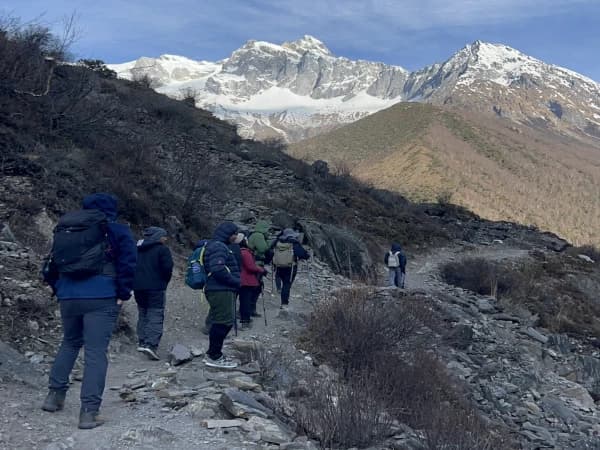
The journey to the Annapurna circuit trek starting point at Chame begins with a scenic drive from Kathmandu through winding mountain highways, terraced farmlands, and traditional settlements. From here onwards, we witness the scenery, culture, and atmosphere change dramatically with each passing day. The thing that truly sets the Annapurna Circuit apart is its incredible ecological and cultural transitions. We begin by trekking through the lush Marshyangdi Valley, passing villages like Pisang and Manang surrounded by Rhododendron forests, riverside trails and terraced fields where traditional stone houses and communal courtyards define village life of the Gurung and Thakali ethnic group of people. The Annapurna Circuit trek terrain is highly diverse, taking us through subtropical forests, river valleys and alpine meadows before gradually transitioning into dry high-altitude desert landscapes as we approach Thorong La and the rain-shadow region beyond Muktinath. Villages such as Chame, Pisang, and Manang are inhabited by Gurung and Manangi communities whose lives revolve around agriculture, seasonal trade and mountain tourism as they have for generations. As we trek higher toward Manang at 3,500 meters, the culture gradually shifts toward Tibetan-influenced Buddhism, reflected in the presence of monasteries, colorful prayer flags, sacred mani walls, and ancient chortens lining the trails, creating a spiritual atmosphere that spreads peacefulness in the heart of the Himalayas. The Annapurna Circuit trek ending point in Pokhara adds even more exceptional scenic beauty after we have completed the excruciating and tiring hiking journey which is of longer trekking duration of around 12 days walking through diverse landscapes.
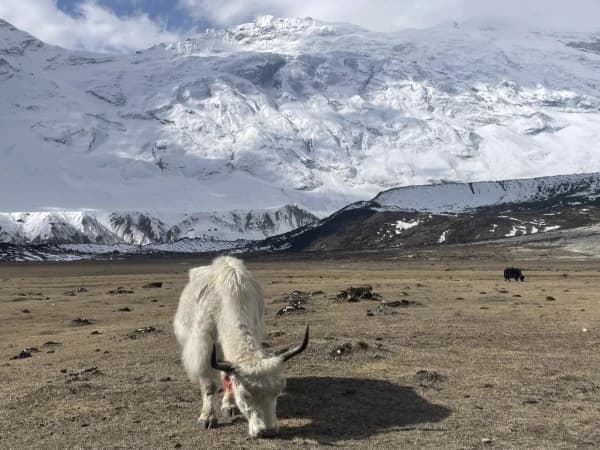
The Annapurna Circuit trek cultural experience becomes even richer as we continue our journey through high-altitude settlements. Beyond Manang, the landscape transforms into raw, open alpine terrain as we trek via Yak Kharka at 4,110 meters and Thorong Phedi at 4,600 meters, where the vegetation disappears and the environment becomes distinctly harsh and beautiful. The crossing of Thorong La Pass is the trek's greatest challenge and most rewarding achievement marking that we have successfully reached the Annapurna Circuit trek maximum altitude of 5,416 meters and now can complete the journey of circling the Annapurna massif through Muktinath, Jomsom and finally ending in Pokhara. We have to trek daily for about 6 to 7 hours depending on the terrain for the whole Annapurna circuit trek distance which is of approximately 200 kilometers. The descent from the pass brings another dramatic transformation as we enter the trans-Himalayan region toward Muktinath, experiencing a complete climate and scenery change compared to the eastern side of the circuit. The lush greenery and forests give way to the arid, windswept landscapes of Lower Mustang, where we follow the famous Kali Gandaki Valley through villages like Kagbeni, Marpha and Jomsom surrounded by apple orchards, barren cliffs and that same desert-like environment found during the Upper Mustang trek.
The cultural atmosphere transitions once again in Lower Mustang, home to Thakali communities known for their historical trading activities along the Kali Gandaki corridor. Villages display a fascinating blend of Hindu and Buddhist traditions where sacred temples, monasteries, and ritual practices coexist peacefully. Muktinath temple at 3,800 meters signifies this cultural convergence as it is revered by both Hindus and Buddhists as a sacred pilgrimage site, highlighting the region's deep spiritual significance and the religious harmony that defines Nepal. We can witness mesmerizing views of the towering peaks of Annapurna and Dhaulagiri massifs along with Nilgiri South, Nilgiri North, Gangapurna and Pisang Peak looming in the distance. Each day of trekking offers completely diverse and unique scenic beauty along with varying Annapurna Circuit trekking terrains that keep the journey fresh and exciting.
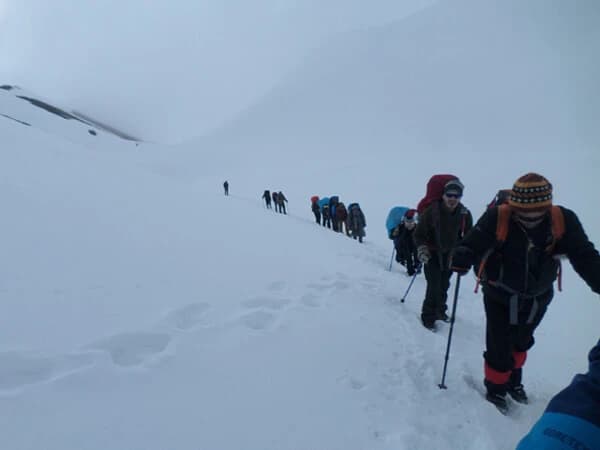
The Annapurna Circuit Trek difficulty is graded as strenuous and this is where we, the trekkers often underestimate what we are signing up for. The trek does not require technical climbing skills or specialized mountaineering equipment, but the combination of extreme altitude reaching 5,416 meters, longer trekking duration of 12 to 15 days, daily hiking ranging from 6 to 7 hours covering moderate to steep ascents and descents, environmental factors like thin air, strong winds and potential snow near the high pass make it physically demanding as well as mentally challenging. The risk of Annapurna Circuit trek altitude sickness is significantly higher than on moderate treks like Upper Mustang hence making proper acclimatization absolutely essential for safety and success. We should keep in mind that the Annapurna Circuit is not a casual cultural trek however, with proper fitness training, previous high-altitude hiking experience and mental resilience conquering this complete circuit around the Annapurna massif becomes an accessible and rewarding high altitude trekking adventure.
Annapurna Circuit trek itinerary is usually of 12 to 17 days depending on the starting point, acclimatization days and whether side trips like Tilicho Lake are included or not. The Annapurna Circuit trek accommodation features basic to comfortable teahouses and local lodges run by local families, with better facilities available in lower elevations like Chame and Manang, while simpler conditions are found at higher altitudes. Despite trekking through remote high-altitude terrain, the overall accommodation experience remains enjoyable due to the region's well-developed trekking infrastructure. Teahouses serve a wide variety of meals including traditional Nepali Dal Bhat (rice, lentils, and vegetables) which is popular among trekkers for its energy value and unlimited refills, along with international options like noodles, pasta, fried rice, soups, eggs, bread, and pancakes. During our stays, we immerse ourselves in the Annapurna Circuit trek food and culture as the warm hospitality of Gurung, Manangi and Thakali communities allows us to witness daily mountain life shaped by agriculture, seasonal trade and tourism, making the accommodation both comfortable and culturally enriching rather than limiting. Annapurna Circuit Trek with Tilicho Lake extension is a very rewarding and popular extension which takes us to one of the world’s highest glacial lakes at an elevation of 4,919 metres in the Annapurna range of the Himalayas. For this side trip the usual itinerary extends for an additional of 2 to 3 days.
Trekking in the Annapurna Circuit does require mandatory permits as the route passes entirely through the Annapurna Conservation Area which is a protected region established to preserve biodiversity, wildlife, forests and cultural heritage as well as the trekking route. The Annapurna circuit trek permits that we require during the trek are the Annapurna Conservation Area Permit (ACAP) and TIMS card. Importantly as of 2026, all foreign trekkers must be accompanied by a licensed trekking guide as solo trekking is no longer permitted in Nepal's national parks and conservation areas which was a policy change issued in 2023 but strongly and fully enforced from the 2026 season ensuring trekker’s permit management, safety, proper altitude management, cultural immersion and sustainable tourism practices. If someone is looking to solo trek the Annapurna circuit as of now he or she won't be issued the permits as it must be obtained through a licensed trekking agency. This rule enforcement now requires us to hire Annapurna Circuit trekking guides and porters through registered agencies for embarking on this breathtaking and once in a lifetime journey around the towering Annapurna massif.
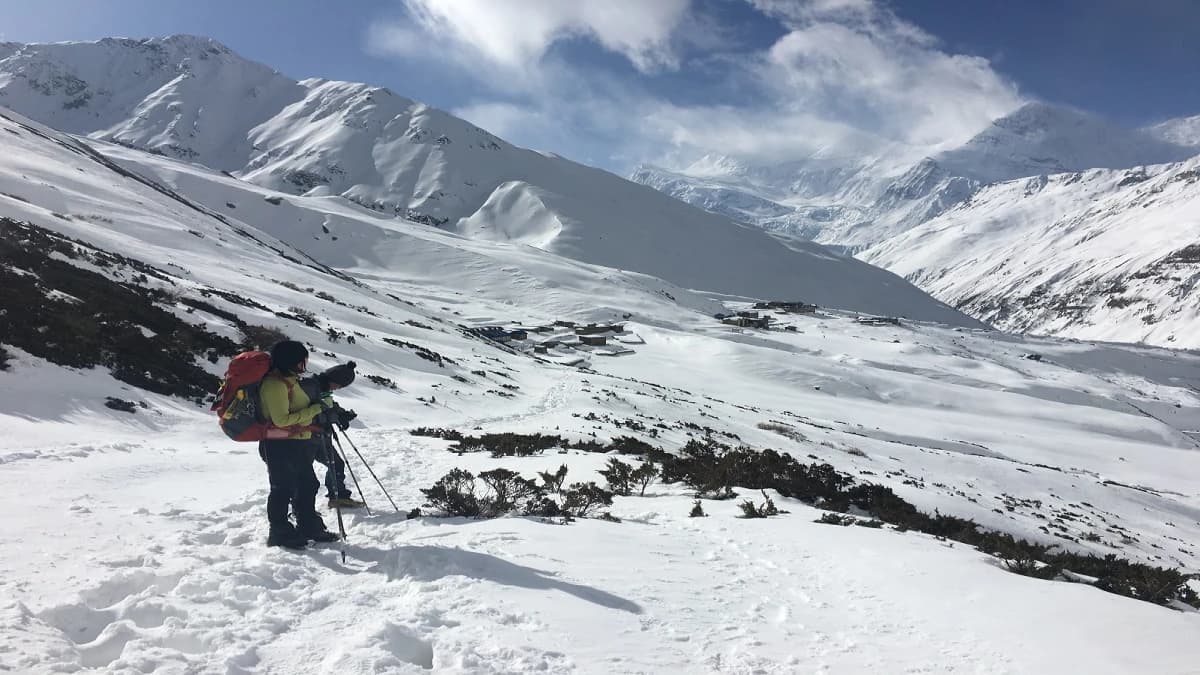
The best time for Annapurna Circuit trek is during spring and autumn. Trekking in spring from March to May and autumn from September to November brings the most favourable trekking conditions with stable weather, clear mountain views, mild temperatures and dry trails. Trekking in spring and Annapurna circuit trek in winter brings extreme cold and snow that can block high passes making them impassable while Annapurna circuit trekking in monsoon season brings heavy rainfall, slippery trails and frequent landslides that obscure mountain views making both these seasons challenging and generally not recommended for this high-altitude circuit.
Annapurna Circuit trek cost is usually a bit higher than the usual Annapurna base camp trek cost due to various factors. Many factors such as Annapurna circuit trek guide requirement, longer trekking days and simply the logistics of circling the entire region rather than just going from the starting point and retracing back down adds to the cost which results in the circuit trek being more expensive than the ABC trek. Annapurna circuit trek map lets us have a brief knowledge of the trekking route that we hike on as it starts from Chame and ends in Pokhara circling the entire mountain. Trekking in the Annapurna Circuit is not just about crossing a high pass or collecting summit views. It is about experiencing the complete Himalayan journey with a proper Annapurna Circuit trek packing list walking through diverse ecosystems and cultures. This trek allows witnessing how geography shapes traditions and daily life, testing our physical and mental limits in the thin air above 5,000 meters and experiencing the profound satisfaction that comes from completing one of the world's greatest long-distance treks. The Annapurna Circuit hike offers something increasingly rare in today's Himalayas which is an authentic adventure that feels genuinely challenging and culturally immersive rather than commercialized where ancient trade routes, living Buddhist traditions and dramatic mountain landscapes combine to deliver an experience that stays with us long after we've descended back to the lowlands and returned to everyday life.
Thorong La Pass Trek With Tilicho Lake Extension
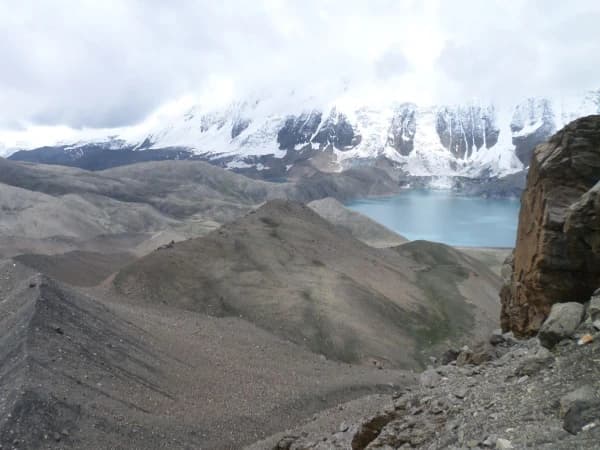
Another attractive journey while hiking the Thorong La Pass trek with Tilicho Lake extension. This extension takes us away from the main Annapurna Circuit trail towards Tilicho Lake located at the height of 4,919 meters from sea level making it one of the highest glacial lakes in the world. The magical Tilicho Lake is surrounded by raw alpine terrain and towering Himalayan peaks with icy turquoise water.
During the main circuit trek to reach Tilicho Lake we have to branch off near Manang via Khangsar village which adds around 2 to 3 extra trekking days to the standard Annapurna Circuit itinerary. Unlike the relatively well-trodden main circuit, the Tilicho section is rougher, more exposed and physically demanding with narrow landslide-prone trails, steep ascents and minimal vegetation. This is where the trek stops feeling teahouse-friendly and starts feeling like a true high-altitude Himalayan adventure. Before reaching Tilicho Lake, which itself is a serious achievement we reach the Tilicho Lake Base Camp. The landscape becomes stark and dramatic, dominated by snow-draped peaks like Tilicho Peak, Gangapurna and Annapurna II. Standing at the lake’s edge, surrounded by ice, rock and silence it delivers a sense of isolation and tranquility that the main circuit alone does not offer. After completing the trip to Tilicho Lake the main circuit trail is joined again at either Sri Kharka or Yak Kharka and onwards to the Thorong La pass via Thorong Phedi. This is exactly why the Tilicho Lake extension is very popular among trekkers who are seeking something beyond standard routes. Annapurna Circuit with Tilicho Lake presents similar challenges of altitude sickness and added difficulty. Hence why Tilicho lake extension must be done with proper acclimatization and preparation since the terrain is rough and altitude sickness can be less forgiving.
How Do You Get To The Annapurna Circuit Trekking Route?
The journey to the Annapurna Circuit trekking routes begins from the capital city of Nepal, Kathmandu. The most common way to reach the Annapurna trekking region is by road from Kathmandu. For us trekkers who prefer and enjoy the overland journey wanting to experience Nepal’s changing landscapes gradually, we are best to get to the Annapurna Circuit trailhead by driving from Kathmandu towards Pokhara. This by road journey takes us through highways etched on the side of massive hills curving through river valleys, terraced farmland, and traditional settlements. The road journey from Kathmandu usually takes 9 to 12 hours, depending on traffic and road conditions. The journey continues then driving to Beshishar where we will have the opportunities to see the beautiful Annapurna and Manaslu ranges. As we near Chame, the Annapurna range including Annapurna II, Annapurna III, and Annapurna IV can be seen offering us a magnificent Himalayan view along with breathtaking views of the Nepalese countryside. As we reach Chame the drive ends there as we then trek to Pisang which officially begins the trekking in Annapurna Circuit.
Another way we can get to the Annapurna Circuit trekking route is by flight which is generally more convenient and faster. As the drive to Chame from Kathmandu takes around 10 hours, a domestic flight to Pokhara From Tribhuvan International Airport in Kathmandu cuts the longer road journey significantly as the flight only takes around 30 minutes. From Pokhara airport the drive to Chame takes less time if we drive directly from Kathmandu. From the airport we can reach Chame by a road journey in about 6 hours which cuts the over 10 hours journey by nearly half. Once we leave the roadhead behind, the trekking trail unfolds from Pisang through forests, villages, and alpine landscapes, marking the start of the Annapurna circuit trekking experience.
Why Should We Trek The Annapurna Circuit?
- Travel from the lowlands of central Nepal into the heart of the Annapurna region, beginning with a scenic drive through rivers, hills, and rural settlements before entering the high mountain terrain.
- Trek through the Marshyangdi Valley, passing Chame, Pisang, and Manang, with continuous views of Annapurna II, Annapurna III, Annapurna IV, Gangapurna, and Pisang Peak.
- Experience a gradual and well-planned altitude progression, including a dedicated acclimatization day in Manang to help your body adjust safely before crossing the high pass.
- Explore Manang village, one of the most important settlements on the circuit offering insight into local Buddhist traditions and mountain life.
- Walk through high-altitude landscapes beyond the tree line, trekking via Yak Kharka and Thorong Phedi, where the terrain becomes raw, open, and distinctly alpine.
- Cross the legendary Thorong La Pass (5,416 m), the highest point of the trek and its greatest challenge, rewarded with vast panoramic views across the Annapurna and Dhaulagiri ranges.
- Descend into the trans-Himalayan region toward Muktinath, experiencing a dramatic change in climate and scenery compared to the eastern side of the circuit.
- Follow the Kali Gandaki Valley, passing Kagbeni and apple orchards before reaching Jomsom, with striking views of Nilgiri South and Nilgiri North.
- Enjoy a complete circuit-style experience that ends with scenic drives to Pokhara and Kathmandu, allowing time to relax and reflect after one of Nepal’s most classic long-distance treks.
How Difficult Is Annapurna Circuit Trekking?
The Annapurna Circuit Trek difficulty is typically graded as of strenuous level. It is suitable for those trekkers who have decent fitness and some prior high-altitude hiking experience. This iconic journey takes us gradually from Besisahar at 760 meters in the lowlands up to Thorong La Pass with most of our nights spent between 2,700 and 4,100 meters elevation from sea level. Annapurna Circuit Trek maximum altitude is higher than Upper Mustang at Thorong La Pass at the elevation of 5,416 meters. Combining all these factors of high elevation the risk of Annapurna Circuit trek altitude sickness is much higher than compared to the Upper Mustang trek. We must follow basic precaution measures like gradual ascent, proper rest, hydration and paying attention to early symptoms such as nausea, dizziness or loss of appetite are very essential for a safe trekking experience in the Annapurna circuit route.
The Annapurna Circuit trek terrain is also highly diverse which adds to its unique challenge. We hike through lush subtropical forests, terraced farmland, river valleys and alpine meadows and then gradually transition to dry high-altitude desert landscapes as they approach Thorong La and the rain-shadow region of Muktinath. Longer trekking days of 12 to 15 as compared to Mohare Danda trek 7 days also adds to the physical demand of the trek. We have to do daily trekking which typically ranges from 4 to 7 hours covering moderate to steep ascents and descents. In addition to the physical challenge, we also must be prepared for environmental factors like thin air and lower oxygen levels at high elevations to strong wind and snow near the high pass which can make the trek even more difficult. The conclusion is that while the trails do not require technical climbing skills, the long trekking days in higher altitude, high pass crossing, rocky paths, and occasional snow make the trek physically demanding as well as mentally challenging.
When Is The Best Time For Annapurna Circuit Trek?
Like most of the trekking routes in Nepal, the best time for Upper Mustang Trek is during the seasons of Spring and Autumn. These seasons provide us with the most favorable weather, clear mountain views and comfortable trekking conditions while navigating through the diverse landscapes of the Annapurna region from subtropical valleys, alpine terrain to high-altitude passes and semi-arid zones.
One of the popular and Annapurna Circuit Trekking best times is during the spring season from March to May when we can experience vibrant and colorful trails. The spring provides us with trails which are covered in lush greenery and rhododendrons along with many beautiful wildflowers blooming in the forests near Chame, Pisang, and Manang. This adds vibrant color to the trails which offers us excellent scenic beauty during trekking in Annapurna region. We can enjoy trekking on pleasant days of spring season which provides us with mild temperatures of 12°C to 20°C while the high-altitude areas of Yak Kharka and Thorong Phedi ranging from 0°C to 10°C. We are provided with perfect weather conditions for packing our bags circling around the towering peak of Annapurna. The spring season also provides us with insights in the Annapurna Circuit trek culture as we can witness the daily life of Gurung and Thakali people and their traditions during stay at teahouses along with occasional festivals.
Autumn season from September to November is considered another Annapurna Circuit trek best time as it blesses us with crisp visibility and moderate weather conditions. As the monsoon rain, the air becomes clean and crisp, providing us with bright and sunny days along with unmatched visibility of the Himalayan peaks such as Annapurna II, Annapurna IV, Gangapurna, Dhaulagiri, Pisang Peak, and Nilgiri ranges, making it ideal for photography and sightseeing. Trekking in Annapurna circuit during autumn comes with very stable weather and dry trails which makes hiking easier and very convenient. The temperature normally ranges from 15°C to 22°C in the lower villages and 2°C to 12°C at high-altitude sections, with nights well below freezing above Manang and Thorong La. Two of the biggest festivals of Nepal fall in late October to Early November which are Dashain and Tihar. We can experience the grand celebration of these massive cultural festivals of Nepal during our stay in lower villages during the trek.
Winter season from (December to February) is not recommended for Annapurna circuit trekking as due to extreme cold at high altitudes snow can block high passes, limiting accessibility and visibility. Similarly, the monsoon season from (June to August) comes with heavy rainfall making the trail slippery causing frequent landslides and obscuring mountain views with clouds.
What Are The Permits Required In Annapurna Circuit Trek?
During the journey on the Annapurna Circuit Trek, we are required to obtain some mandatory permits to legally hike through the protected areas. The Annapurna Circuit trekking route passes entirely through the Annapurna Conservation Area, a protected region established to preserve biodiversity, wildlife, forests, rivers, and cultural heritage as well as to manage trekking infrastructure. The Annapurna Circuit trek permits that we require while hiking as are follows:
Annapurna Conservation Area Permit (ACAP)
Since the Annapurna Circuit is fully located within the Annapurna Conservation Area, we must obtain an Annapurna Conservation Area permit (ACAP) before entering the trail. The permit allows us legal entry into the conservation area while contributing to the protection and management of the region’s natural and cultural resources. The fees for the ACAP permit vary by nationality as Non-SAARC nationals pay NPR 3,000 per person, SAARC nationals pay NPR 1,000 per person and Nepalese nationals pay NPR 100 per person. The permit is issued at the ACAP office in Kathmandu or Pokhara or through licensed trekking agencies. Trekkers are required to carry the permit at all times as it may be checked at the trail’s entry and exit points.
Trekker’s Information Management System (TIMS) Card
In addition to the ACAP permit, we must also obtain a TIMS (Trekkers’ Information Management System) card issued by the Nepal Tourism Board. This card is used to track our for safety and emergency purposes along the circuit. TIMS cards can be acquired in Kathmandu or Pokhara and it typically costs us NPR 2,000 per person. Additionally, while trekking with a licensed guide or in organized groups the TIMS card may be included in the trekking package, however Independent trekkers must ensure they carry the card throughout the trek, as it can be checked by park authorities along the trekking route.
Annapurna Circuit Trekking Guide / Porter Service
We must have asked ourselves if we require Annapurna Circuit trekking guides and porters or if we can do the Annapurna Circuit solo trek multiple times while planning about the trek. And the answer to that question is, “Yes, we do require a trekking guide or porter-guide with us while trekking the Annapurna Circuit”. The confusion arises as the region allowed solo treks or free independent trekkers (FITs) but the rules changes of 2023, engagement in the Himalayas have now been strictly reinforced for the 2026 season as the Government of Nepal and the Nepal Tourism Board (NTB) have implemented a major policy shift being “All foreign trekkers must now be accompanied by a licensed trekking guide or porter-guide while trekking in the country's national parks and conservation areas.” This change is to be viewed not as a limitation but as an important enhancement to ensure trekker safety, cultural immersion, and sustainable tourism. Now the ACAP and TIMs card permit can only be obtained through a licensed trekking agency and only while hiking with a licensed trekking guide.
Annapurna Circuit trekking guide and porter are not just required for legal purposes but they provide importance beyond that. They will enhance the overall experience during the trek as they break the language barrier, instill knowledge in us about the culture and history of the local people as well as navigate us safely throughout the entire hike. They are also trained to recognize the subtle early signs of Acute Mountain Sickness (AMS) and know when to stop, when to descend and call for helicopter rescue which is a process that is nearly impossible for a solo, sick traveler to manage. Porters will make our life easy during the hike through the diverse and rugged terrain with deep ascents and descents as they carry heavy baggage of gears, equipment and clothing ensuring that we have a smooth and memorable experience. The cost of hiring a licensed guide is around USD 25 to 30 and for porters is USD 20 to 25 per day.
Annapurna Circuit Trek 12 Days Itinerary
Day 01: Arrival in Kathmandu.
Day 02: Drive to Chame (2,710m/8,891ft).
Day 03: Trek to Pisang (3,300m/10,824ft).
Day 04: Trek to Manang (3,500m/11,482ft).
Day 05: Acclimatization day at Manang.
Day 06: Trek to Yak Kharka (4,110m/13,484ft).
Day 07: Trek to Thorang Phedi (4,600m/15,092ft).
Day 08: Trek to Thorong La pass (5416m).
Day 09: Trek to Jomsom (2,670m/8,760ft).
Day 10: Drive back to Pokhara.
Day 11: Drive back to Kathmandu.
Day 12: Final Departure.
Thorong La Pass With Tilicho Lake Trek Itinerary
Day 01: Arrival in Kathmandu.
Day 02: Drive to Chame (2,710m/8,891ft).
Day 03: Trek to Pisang (3,300m/10,824ft).
Day 04: Trek to Manang (3,500m/11,482ft).
Day 05: Acclimatization day at Manang.
Day 06: Trek from Manang to Khansgar (3,750m).
Day 07: Trek from Khangsar to Tilicho Base Camp (4,150m).
Day 08: Trek to Tilicho Lake (4,919 m) and back to Base Camp.
Day 09: Trek from Tilicho Base Camp to Yak Kharka (4,110m/13,484ft).
Day 10: Trek to Thorang Phedi (4,600m/15,092ft).
Day 11: Trek to Thorong La pass (5416m).
Day 12: Trek to Jomsom (2,670m/8,760ft).
Day 13: Drive back to Pokhara.
Day 14: Drive back to Kathmandu.
Day 15: Final Departure.
What Is The Annapurna Circuit Trek Accommodation Like?
The more popular trekking region of Annapurna does have somewhat better accommodation facilities than the remote Upper Mustang trek. Annapurna Circuit Trek accommodation features basic teahouses which are run by local families. That being said the trek doesn’t just feature basic teahouses as shelter but also offers us local lodges with the option of private rooms with attached bathrooms and sometimes Wi-Fi but ultimately costing more. Additionally we can also experience luxury lodges during this trek which are selective in number but are available in areas like Chame and Manang offering us a higher comfort level.
Despite trekking through high-altitude terrain, the overall accommodation experience on the Annapurna Circuit remains comfortable and enjoyable due to the excellent trekking infrastructure of the region. Teahouses serve a wide variety of meals, including traditional Nepali dishes such as Dal Bhat (rice, lentils, and vegetables), which is popular among trekkers for its energy value and unlimited refills. In addition, we can find a good selection of international meals such as noodles, pasta, fried rice, soups, eggs, bread, pancakes, tea and coffee. The warm hospitality of the local Gurung, Manangi, and Thakali communities adds to the overall trekking experience, making the Annapurna Circuit trek accommodation both comfortable and culturally enriching rather than limiting.
Annapurna Circuit Trekking Cultural Experience
The Annapurna Circuit trek is not only a high-altitude Himalayan journey but also a cultural passage through some of Nepal’s most diverse ethnic landscapes. The Annapurna Circuit crosses multiple ecological zones and cultural regions which makes it one of the richest cultural treks in Nepal. As the trekking trail loops around the Annapurna massif we move through diverse terrain of subtropical valleys, alpine settlements, and trans-Himalayan landscapes which offers us Annapurna Circuit Trek cultural experience which are each shaped by distinct ethnic groups, traditions and spirituality.
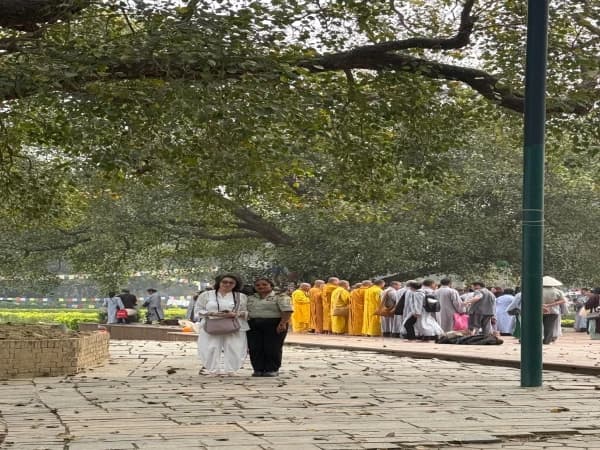
In the lower sections of the trek in villages such as Besisahar, Chame, and Pisang which are inhabited by Gurung and Manangi communities, we can see traditional stone houses, communal courtyards and terraced fields defining village life. As we trek higher towards Manang the culture gradually shifts toward Tibetan-influenced Buddhism, reflected in the presence of monasteries, prayer flags, mani walls, and chortens lining the trails. As we pass the Thorong La Pass the cultural atmosphere transitions once again as we descend into Lower Mustang, home to Thakali communities known for their trading history along the Kali Gandaki corridor. Villages like Muktinath, Kagbeni, and Marpha display a blend of Hindu and Buddhist traditions where sacred temples, monasteries and ritual practices coexist. Muktinath is a temple in the higher altitude region which signifies the cultural convergence as it is revered by both Hindus and Buddhists as a place of pilgrimage, highlighting the region’s deep spiritual significance.
Cultural understanding on the Annapurna Circuit is best gained through direct interaction with local people. In our journey we stay in family-run teahouses, which allows us to observe daily mountain life shaped by agriculture, seasonal trade, and tourism. Local meals, festivals, prayer rituals, and village customs allow us to culturally immerse in the daily lifestyle and tradition of the local ethnic group of people.
Why The Annapurna Circuit Trek Remains A Classic Himalayan Journey?
The Annapurna Circuit Trek offers us trekkers a complete Himalayan experience combining cultural villages with dramatic mountain scenery, high-altitude adventure, and deep cultural diversity within a single journey. Encircling the Annapurna massif, the trek takes us through lush river valleys, alpine forests, high mountain passes, and the arid trans-Himalayan landscapes of Lower Mustang. Crossing the iconic Thorong La Pass (5,416m) stands as one of the most rewarding achievements in Nepal trekking which marks both a physical and mental milestone for those of us who complete the circuit.
Beyond its landscapes, the Annapurna Circuit trek is a classic himalayan journey which stands out for its cultural richness and variation. As we move through Gurung, Manangi and Thakali villages, we experience a gradual shift in traditions, architecture, religion, and daily life shaped by geography and ancient culture.
For us trekkers who are seeking an experience that goes beyond the standard routes of Annapurna Base Camp or Everest Base Camp, the Annapurna Circuit trek remains as one of Nepal’s most rewarding long-distance treks which tests our endurance, preparation and respect for altitude. And as a reward for our resilience, delivers us an unmatched trekking experience of circling the Annapurna massif understanding the people, culture and the landscape of the journey.
Annapurna Circuit Trekking Tips
- Planning the Annapurna Circuit Trek during spring (March to May) or autumn (September to November) is considered ideal as these seasons are the best time for trekking as they usually provide the most stable weather, clear mountain views and safer trail conditions throughout the circuit.
- Trekking during winter can be challenging due to heavy snowfall and extremely cold temperatures around Thorong La Pass while the monsoon season often brings rain, landslides and reduced visibility which can affect both safety and overall trekking experience hence these seasons are not advised.
- The Annapurna Circuit is regarded as a strenuous high-altitude trek reaching a maximum elevation of 5,416 meters at Thorong La Pass which means a reasonable level of physical fitness and mental preparedness plays an important role in completing the journey comfortably.
- As the route passes through the Annapurna Conservation Area, trekking with a licensed guide is mandatory and permits such as ACAP and TIMS should be arranged through registered trekking agencies.
- The body requires time and proper rest to adapt to higher elevations before moving towards the pass for reducing the risk of Annapurna circuit hike altitude sickness, hence making acclimatization days in the itinerary very crucial.
- Walking at a steady and unhurried pace is important as it helps conserve energy and supports proper acclimatization, reducing the likelihood of altitude-related discomfort.
- Maintaining good hydration and regular meals supports the body’s ability to cope with altitude while avoiding alcohol helps minimize the risk of altitude sickness.
- Being aware of early signs of altitude sickness such as headache, nausea, dizziness, or loss of appetite is important. The earlier the symptoms of altitude related sickness are identified the quicker rest or descent to safety will be possible.
- Since ATM facilities are limited and often unreliable beyond Besisahar and Jomsom we should carry enough cash in Nepali Rupees to help cover daily expenses along the trek.
- Showing respect for local customs, monasteries and village life contributes to a positive cultural exchange and a more meaningful trekking experience.
What To Pack For The Annapurna Circuit Trek?
- Clothing: Warm layers, waterproof jacket and trousers, comfortable trekking pants, hat and gloves.
- Footwear: Sturdy trekking boots and comfortable socks with optional camp shoes or slippers for evenings.
- Sleeping Gear: Sleeping bag suitable for cold nights at high altitudes.
- Trekking Gear: Trekking poles, backpack, water bottles and basic navigation or lighting gear.
- Sun & Eye Protection: Sunglasses, hat and sunscreen to protect against high-altitude sun.
- Health & Safety: Personal first-aid kit, any required medications, blister care.
- Hygiene: Basic toiletries, towel, wet wipes, hand sanitizer, bio-degradable soap.
- Electronics & Documents: Power bank, essential chargers, permits, ID, travel insurance and enough cash for the trek.
FAQs Related To Annapurna Circuit Trek
1. What is the Annapurna Circuit Trek about?
The Annapurna Circuit Trek is a classic long-distance trek that circles the Annapurna massif. It crosses the Thorong La Pass, through diverse landscapes ranging from subtropical forests and terraced farmland to alpine terrain and high mountain deserts. The trek is known for its cultural diversity, traditional villages, and dramatic Himalayan scenery.
2. How long does the Annapurna Circuit Trek take?
The trek typically takes 12 to 17 days, depending on the starting point, acclimatization days and whether side trips such as Tilicho Lake are included or not.
3. What is the highest altitude reached on this trek?
The highest point of the Annapurna Circuit Trek is at the Thorong La Pass at 5,416 meters elevation making it one of the highest trekking passes in Nepal.
4. How difficult is the Annapurna Circuit Trek?
The Annapurna Circuit Trek is moderate to strenuous. While it does not require technical climbing, the longer trekking duration, high altitude, steep ascents and crossing the high altitude pass of Thorong La make it physically demanding.
5. Is solo trekking allowed on the Annapurna Circuit?
No. Solo trekking used to be allowed without a guide in the Annapurna Circuit trek but as of 2026 the rule changes have been fully enforced requiring us to hike with a licensed trekking guide in treks within protected areas such as national parks and conservation areas.
6. Do I need a guide for the Annapurna Circuit Trek?
Yes. A licensed trekking guide is required. Guides are essential for permits, navigation, safety, altitude management, and logistics, particularly during the Thorong La Pass crossing.
7. What are the accommodation options on this trek?
Annapurna Circuit trek accommodation consists mainly of teahouses and local lodges. Facilities range from basic to comfortable, with better amenities in lower elevations and simpler conditions at higher altitudes.
8. Are permits required for the Annapurna Circuit Trek?
Yes. The permits required for the Annapurna Circuit Trek are:
I. Annapurna Conservation Area Permit (ACAP)
II. TIMS Card