This travel guide answers your questions and doubts regarding how to prepare and train for completing the Annapurna Base Camp trek successfully.
Annapurna Base Camp Trek - 10 Days
10 Days
20

This travel guide answers your questions and doubts regarding how to prepare and train for completing the Annapurna Base Camp trek successfully.
You are surfing the web and exploring 'Annapurna Base Camp trek preparation', which means you're seriously looking for a guide. Maybe you've already booked flights to Kathmandu or maybe the idea is still forming in your head. Either way, you've stumbled onto the right resource. Annapurna Base Camp Trek preparation isn't just about packing the right gear. It’s equally about arriving physically prepared, paperwork ready and mentally equipped to handle anything the Himalayas throw your way.
Here's the uncomfortable truth most blog posts won't tell you. Hundreds of trekkers return every season. That is not because the trail is technically difficult but because they underestimated the altitude, miscalculated their fitness level or simply forgot a crucial permit. Simply due to the lack of preparation for trekking to ABC.
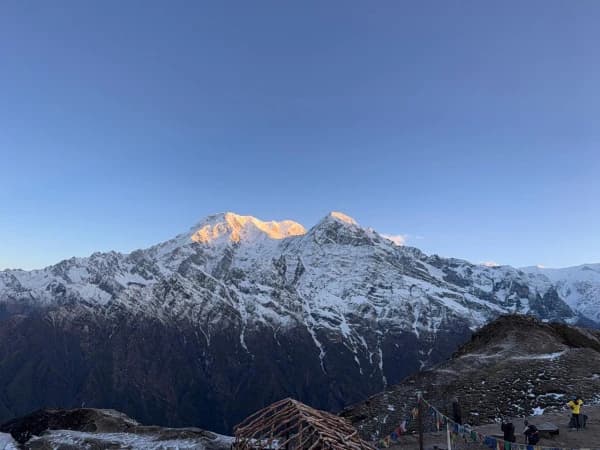
The Annapurna Base Camp Trek is also called the Annapurna Sanctuary Trek. The base camp is at an elevation of 4,130 meters. It is widely considered a moderate-difficulty Himalayan trek. No ropes or climbing skills needed. But you will need solid cardio fitness, altitude awareness and mental resilience.
Did You Know?
According to a survey by Trekking Agencies' Association of Nepal (TAAN), over 30% of ABC trek dropouts cited poor physical preparation as the primary reason.
This guide is different. It's not just a gear list disguised as a ABC trek guide. It is a comprehensive guide to Annapurna Base Camp training. It covers everything first-timers miss from fitness, permits, packing, acclimatization and mental preparation. One clear roadmap from start to finish. By the end, you'll have a clear ABC trek preparation system which you can implement immediately after reading.
Let's get into it.
This guide is thoughtfully crafted to follow your preparation timeline. From the moment you commit to the trek, all the way to your first steps on the trail. With this travel guide focused on training for the Annapurna Base Camp, you can experience a smooth trek to Annapurna.
“How fit do you need to be physically to be able to trek to the ABC?”, is a question trekkers ask themselves quite often.
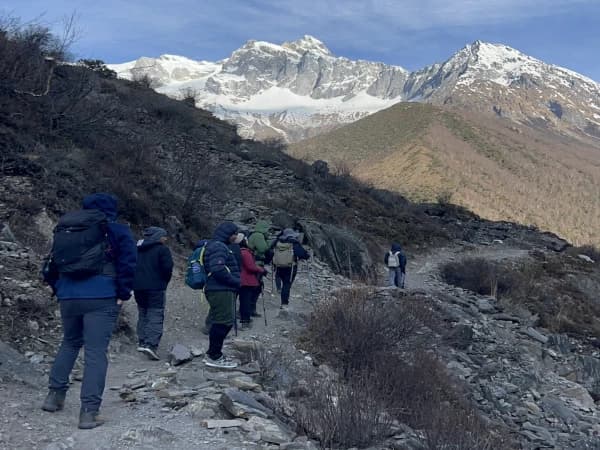
You need to be able to hike for up to 5 to 8 hours a day. And also for around a week depending on your pace and itinerary. You need to trek carrying a 6 to 10 kg daypack, on terrain that includes endless seeming stone steps, muddy trails and rocky ridges. At progressively higher altitude the terrain becomes icy and alpine. That's the honest benchmark.
You don't need to be an athlete. But you do need a structured training plan for ABC trek. Below is a 90-day program for ABC trek preparation, proven by trekking coaches and Himalayan guides.
The goal in the first month should be to develop your cardiovascular conditioning. Your heart and lungs need to become efficient engines before altitude stress is added.
3x weekly
Train 45 to 60 minutes, at a comfortable pace where you can hold a full conversation. Activities like brisk walking, cycling, elliptical, etc. If no equipment is present then uphill walks are also perfect. The goal is to develop your base first with light and effective cardio.
1x weekly
Go on long walks. It should be for around 2 hours which helps your body get used to hiking motion and duration.
2x weekly
Bodyweight training including squats, lunges, step-ups, calf raises helps build strength in the actual muscle group which is needed for trekking for days. You need to build leg strength for your trekking journey.
Also add a daily 10-minute walk in the morning. Although it may seem simple, this habit genuinely builds consistency.
Plus, a great tip is doing all of your long walks by loading your actual trekking backpack with 6 to 8 kg weight.
Now you shift the focus from pure cardio to the movements that matter on trail. They are uphill climbing, descending with a heavy pack and extended low-intensity endurance. To train focusing on that, you should:
Add stair climbing or hilly terrain to all workouts and stretch daily. Trekking is relentless and poses an increased stress on these muscles. Stretching after training is a great cooldown exercise which helps the muscles recover quicker.
The final month is about sharpening your fitness and then easing off so you arrive fresh on the trail. Train the highest volume on the earlier weeks from 9 to 10. And aim for a higher intensity during training.
Reduce the volume by 40% from week 11 to 12. Train by maintaining intensity. Don't introduce new physical challenges and focus heavily on rest and recovery.
Training for Altitude should be done differently. No training at sea level will completely prepare your body for high altitudes. However, being aerobically fit greatly lowers your chance to get Acute Mountain Sickness (AMS). If you live near hills or mountains, add at least two days of high-altitude training hikes (above 2,500m) in your last 4 weeks.
It's not a must, but it does give a glimpse of the low-oxygen conditions your body faces at altitude and would uncover any unusual altitude sensitivity before you're fully committed to the ABC trekking trail.
For the final week, easy 30-minute walks are enough. Sleep well and eat nutritious food. This is the time for your body to rest and store up for the actual trek to the ABC.
ABC trekking requires two permits which are the conservation area permit and the TIMS card. Getting this wrong can turn you back at a checkpoint. Essential permit preparation during any hikes, treks or holidays is an integral part of preparation.
Your licensed trek operator can arrange all the necessary permits but you need to prepare your essential documents like passport size photos, passport copy, etc.
The trail runs through the protected zone of Annapurna Conservation Area. Without the ACAP permit, you'll be turned back at the checkpoint. The permit fee is paid in Nepalese rupees.
Cost: NPR 3,000 for Non-SAARC and NPR 1,000 for SAARC nationals per person.
Valid for: Single entry into the Annapurna Conservation Area.
The TIMS (Trekkers’ Information Management System) card is a permit issued by the Nepal Tourism Board (NTB). This card is used for safety tracking during the trek. If you go missing, rescue teams use this card to locate you.
Cost: NPR 2,000 per person.
Yes, having travel insurance during Annapurna Base Camp trek is very crucial. Few trekkers ignore it and later have to cover hefty expenses. You must trek to the ABC with your travel insurance. Also, it should have a policy that explicitly covers high-altitude trekking (above 5,000m) and helicopter evacuation. The trek can pose some challenges as the Himalayas are unpredictable.
Altitude sickness, accidents or weather changes can demand emergency evacuation which can be very costly. That’s why having proper insurance helps you pay for medical care and other costs if an unexpected situation arises.
Standard travel insurance often excludes high-altitude activities. A helicopter rescue from ABC can cost around $3,000. And without proper insurance and coverage, you pay out of your own pocket.
Depending on whether you hire a porter the total weight of your backpack should be adjusted. If you hire a porter, the weight should be around 6 to 9 kg. And it should be around 8 to 12 kg if you are carrying everything by yourself.
At 12 kg, it is generally considered the final limit. Every extra kilogram punishes you more as the days and elevation stack up. The biggest mistake that beginner trekkers make is overpacking. One extra kilogram starts to add up as the number of days and elevation increases every day. It is very important to pack carefully.
Here is a layered clothing system that would be able to handle ABC's extreme temperature differences, starting from 25°C (77°F) at Nayapul going to -5°C to -15°C (23°F to 5°F) at the base camp of Annapurna.
2x merino wool or synthetic moisture-wickinglong-sleeve shirts, 2x moisture-wicking underwear, 1x thermal leggings.
This layer pulls the sweat and moisture away from the skin and keeps you dry during hiking activities.
1x fleece jacket (heavier weight = more warmth) and 1x down jacket (higher fill power warmer and lighter).
It is the most important item on this list. They provide insulation and keep the warmth trapped inside which helps you feel warm during trekking in cold regions.
1x waterproof hardshell jacket, 1x waterproof hardshell pants.
This is crucial to protect against the weather. They act as shields against rain and wind in the cold and harsh weather conditions.
Trekking boots
Waterproof, ankle support, broken in (minimum 3 months' wear before the trek) boots for comfort and necessary protection.
Trekking poles
Collapsible, lightweight poles are non-negotiable for steep descents. They save your knees from failing during the steep stone steps and endless ascents and descents during the trek.
Sleeping bag
Rated to -10°C (14°F) as tea house blankets alone are insufficient at altitude.
Headlamp
Morning departures are common so headlamps help in visibility when starting your hike in early morning darkness.
Water purification tablets
Water purification tablets are very important as you don’t want to fall ill during any point of your trek. This also saves you money as compared to buying bottled water everyday.
Daypack
A small daypack with a hip belt for carrying essentials like reusable water bottles, documents and other items.
Trekking gaiters
Invaluable in wet season and early morning frost above 3,000 m. They keep you dry from frost, mud and debris.
Sunglasses
Category 3- 4 UV protection sunglasses as the glare of snow at altitude causes intense pain and temporary blindness.
Sunscreen
SPF 50+ to protect against the higher altitude sunrays. UV radiation increases by around 10% per 1,000 meters of altitude gain. Plus, pack hats, and neck gaiters to protect your skin from the sunrays.
Toiletries and sanitation
Personal hygiene items like toothbrush, toothpaste, mouthwash, towel and toiletries like biodegradable soap, wet wipes, tissue paper, toilet paper,etc.
On the way to Annapurna Base Camp (4,130 m), trekkers get exposure to high altitudes of over 3,000 m from places like Chhomrong and Deurali. Most of the conventional routes in the Annapurna region make you spend time at altitudes of above 3,000 m, where the risk of altitude sickness is higher.
Acute Mountain Sickness (AMS) does not discriminate. Elite athletes, experienced trekkers and fit young people get AMS every season. Age, fitness and prior altitude experience provide partial protection, but the only reliable prevention is a proper acclimatization schedule and ascending slowly.
To reduce the chances of falling ill to AMS, you must:
On your acclimatization days in Chhomrong or Dovan, take a day hike 300 to 500m higher than your sleeping altitude, then return to sleep. Hiking to higher elevations during the day and sleeping at a lower elevation than your highest point exploits your body's overnight recovery and adaptation cycle. This is the best way to acclimatize to avoid AMS.
Never ascend or push ahead if you have a persistent headache that isn't resolved. There is no shame in taking rest days. The mountain will still be there tomorrow.
Physical fitness matters for trekking. Saying that, mental fitness and preparation matters equally too. The most common psychological challenges on the ABC trek are days 3 to 5 fatigue when the novelty wears off and the cumulative tiredness sets in. The trek is not extreme however, it does get uncomfortable at times.
Long days of trekking uphill, climbing stone steps which seem to be endless will take a toll on your mind too. You must prepare yourself for mental hardships. Training the mentality to thrive in discomfort matters more than you think. With every step you feel your body wanting to quit. Hence, you need to have a strong mental resilience and determination to complete the trek smoothly.
Mental Strategies During ABC Trekking
The Annapurna Base Camp trek is genuinely one of the most rewarding experiences on this planet. Trekkers who complete it almost universally describe it as a transformative journey. The landscape, the physical accomplishment, the human connection with local communities make it more than just a trek.
On top of that, the perspective that comes from standing in the base of Annapurna surrounded by some of the highest peaks on Earth makes you realize how magnificent nature is.
But transformation requires preparation. Start your “How to prepare for ABC trek?” journey today. The trekkers who reach base camp aren't special. They are simply the ones who prepared and trained for the trek properly.
Your preparation for trekking to Annapurna starts the moment you finish reading this guide. Start with one action today and that's how base camp gets climbed.