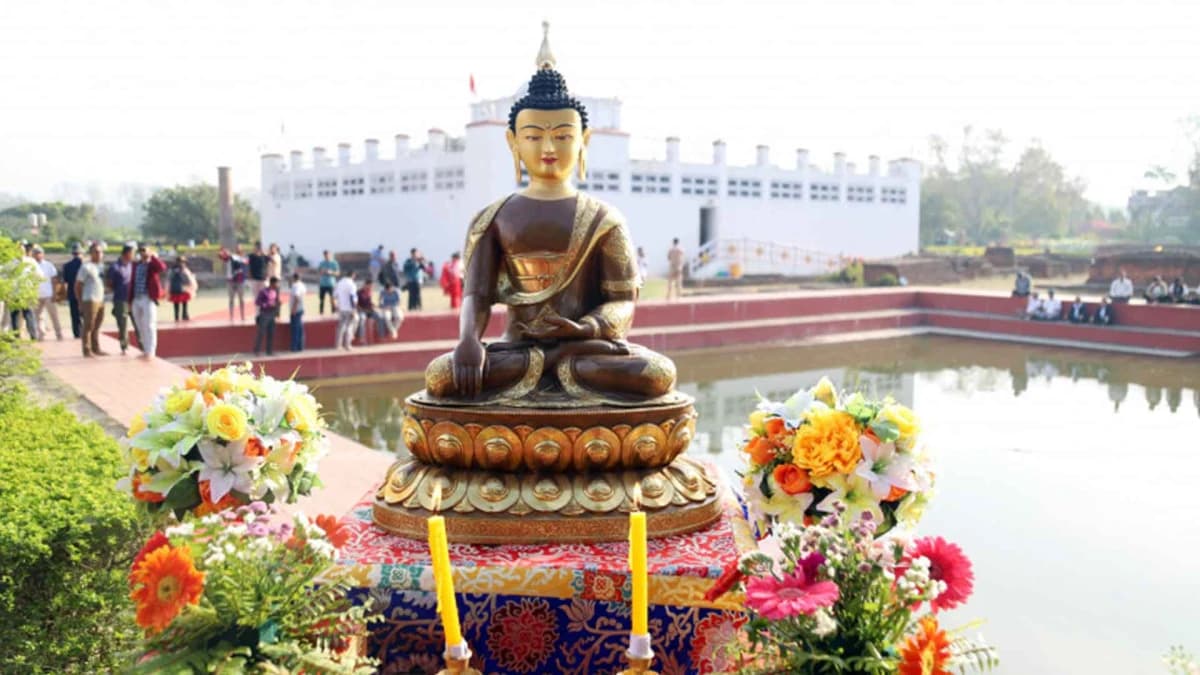
Buddha Jayanti Festival In Nepal 2026
Buddha Jayanti in Nepal is an auspicious celebration of peace and valuable teachings of Lord Buddha. It is primarily a Buddhist festival which is mostly celebrated in South and East Asia. During this festival in Nepal, it is the full moon night of May. The Buddhist pilgrim sites in Nepal flourish in smells of melted butter and juniper smoke. Thousands of people, monks, pilgrims from all over the world visit and experience Buddha Day in Nepal. The stupas are circumambulated in a clockwise procession. You can hear the sound of prayer flags fluttering and prayer wheels spinning everywhere in the nation. It is the celebration of Buddha Purnima in Nepal.
If you have never heard of it, this festival draws pilgrims from across Asia to the one country where the whole story actually started. No other place on Earth can say that.
Here is what you need to know, the history, the date, where to go, what you will actually see during the ceremony of peace.
What is Buddha Jayanti Festival?
Buddha Jayanti festival is the most important day in the Buddhist calendar. It marks three events in the life of Siddhartha Gautama, all believed to have fallen on the same full moon. It is celebrated to commemorate his birth in Lumbini, Nepal, his enlightenment and Mahaparinirvana (death). Over 500 million Buddhists worldwide observe it each year.
The celebration also has various different names. It is called Buddha Purnima as it falls on a full moon day. It is commonly known as Buddha Day in the western countries. And the international name is Vesak which is derived from Pali (Vesākha) meaning lunar month of Buddha’s birth.
Prince Siddhartha Gautam was born around the 6th century BCE from Queen Mayadevi at Lumbini, Nepal. His father was King Suddhodana of the Shakya clan. The birth was attended by court astrologers who reportedly told the king his son would either become a great ruler or renounce the world. Suddhodana spent years trying to prevent the second option.
Siddhartha left the palace at 29 after experiencing the world full of sufferings. He sat under a fig tree in Bodh Gaya determined not to move until he understood the nature of suffering. Six years after leaving home, at 35, he gained enlightenment (Bodhi). He became the Buddha, which means the Awakened One.
At 80, the Buddha passed away in Kushinagar, after 45 years of teaching. His death is referred to as Mahaparinirvana which means (death and release from the cycle of rebirth). He taught his followers one last thing before passing. He said everything is temporary and to strive in life with diligence.
Hence, Vesak which is also recognized by the United Nations is a major festival in the Buddhist community celebrating the birth, enlightenment and death of Gautam Buddha.
Buddha’s Noble Eightfold Path Teachings
The Eightfold Path is the teachings of lord Buddha. You will hear it referenced in monastery sermons, pamphlets and dharma talks throughout the festival. It is worth knowing and is considered what Buddha strived for.
The eight elements are:
- Right Understanding: Seeing things as they are, including the reality of suffering and its causes.
- Right Intention: Choosing thoughts of goodwill rather than harm.
- Right Speech: Saying things that are true, kind and worth saying.
- Right Action: Behaving ethically, not harming living things.
- Right Livelihood: Earning a living in ways that do not cause harm.
- Right Effort: Putting consistent work into practice rather than treating it as occasional.
- Right Mindfulness: Paying attention to what is actually happening in your body and mind.
- Right Concentration: Developing the mental focus that makes insight possible.
- On Buddha Jayanti you can watch most of these being practiced in real time.
Buddha Purnima or Vesak
Buddha Purnima and Vesak are the same event. Vesak is the name used in Southeast Asia (Thailand, Vietnam, Cambodia, Myanmar) and in international contexts, including the UN. Buddha Purnima is used in nations like Nepal and India. Purnima means full moon and hence it is called so.
- What is different about Nepal's version compared to everywhere else?
- It happens at the birthplace. Lumbini is in Nepal. The ceremonies there carry a historical grounding that cannot be replicated at any other site.
- Because the Buddha is classified as a Vishnu avatar in Hindu theology, the festival crosses religious lines as there is also Hindu participation.
- Nepal's mountain regions practice Tibetan Buddhism, which has a distinct character from Theravada or Zen. The combination makes Nepal's observance unusually diverse.
- The old stupas of Boudhanath and Swayambhunath are 2,000 years old and still in active use. That depicts history and deep Buddhist heritage which is rarely found elsewhere.
Why is Buddha Purnima celebrated?
Buddha Purnima is observed to commemorate when the Buddha was born, reached enlightenment and died on the full moon day of Vaisakh. Buddhists use the day to recommit to the Four Noble Truths and the Eightfold Path. It is about living the way he taught, following peace and kindness in every aspect of life. This celebration honors his teachings of non-violence and compassion to all beings.
The Four Noble Truths are the core of what he taught. Suffering exists and it has a cause (wanting things to be other than they are). It can end and there is a specific path to ending it. Buddha Purnima is the day people take that seriously again or for the first time.
The celebration connects Buddhist communities. Monks teach and preach, people give to the poor, strangers share meals depicting compassion and kindness. In Nepal especially, where the Buddha was actually born, the day carries national weight on top of the religious. It is not just a holiday. It is something people feel.
The Buddha's arguments against violence and in favor of ethical living do not belong to one religion. They show up in nearly every major moral tradition. That is why Buddha Jayanti also draws observers who are not Buddhist at all.
When is Buddha Jayanti 2026?
Buddha Jayanti 2026 falls on May 1, 2026. It is a public holiday in Nepal. Banks, government offices and most businesses are closed. It is celebrated on the full moon of the first month of the year in Baisakh Shukla Purnima according to Nepali Bikram Sambat calendar.
If you are looking for the Buddha Jayanti in Nepali date, that is the one to know. The Gregorian date moves each year because it follows the lunar cycle, landing anywhere between late April and mid of May.
Purnima means full moon. That is the whole calendar logic. The festival happens on the full moon of Baishakh, no matter what the English-language date happens to be.
Why is Nepal the ultimate destination for the Buddha Jayanti Festival?
- You can observe Buddha Purnima in Thailand, Japan, Sri Lanka, Myanmar and many more places. All of them do it well. But Nepal is where Siddhartha was born. Lumbini is the birthplace of Gautam Buddha where his life is actually connected.
- 300 km southwest of Kathmandu, with archaeological evidence dating back to the 3rd century BCE. That is not marketing but history. The Kathmandu Valley alone has two of the world's largest Buddhist stupas, Boudhanath and Swayambhunath. And both are over 2,000 years old.
- Monasteries built by Tibetan, Japanese, Korean and Theravada Buddhist communities ring the valley. On Buddha Jayanti in Nepal, all of them are active at once.
- There is also the Hindu angle, which surprises people. Hindu philosophy classifies the Buddha as the 9th avatar of Lord Vishnu. This means many Hindu Nepalis observe the day too. You end up with Hindu families lighting lamps at Buddhist stupas next to Tibetan monks next to pilgrims from all over the world. This is the beauty and reason for Nepal as the best destination for Buddha Jayanti festival.
Highlights of the Buddha Jayanti Festival in Nepal
- During the full moon procession at Boudhanath, thousands of people circle the stupa by lamplight after dark in a slow, clockwise and quiet manner.
- Pilgrims from across Asia gather at the Maya Devi Temple at Lumbini, the spot where the Buddha was born.
- After dusk, monasteries, temple doorways and stupa bases across Nepal are lined with butter lamps. At Boudhanath, the whole dome appears to float above a ring of flame.
- People line up to offer food, robes and household items as alms to monks in an act of generosity (dana) that Buddhists treat as a serious practice of Buddhism.
- People buy and release caged birds as an act of compassion toward living things.
- Hindu and Buddhist communities observe the day together at shared sites. You will not see this in Thailand or Japan. It is specific to Nepal.
- Most monasteries around Boudhanath run puja ceremonies and dharma talks throughout the day, open to anyone who wants to immerse in the teachings of Buddha.
Best places to celebrate Buddha Jayanti in Nepal
The best Buddhist temples to celebrate Buddha Jayanti in Nepal are Lumbini (Buddha's birthplace), Boudhanath and Swayambhunath in Kathmandu, Patan's Durbar Square, Namo Buddha outside the valley and the mountain monasteries along the main trekking routes. They each offer something different.
Lumbini
Buddha Jayanti in Lumbini draws pilgrims from Japan, China, Myanmar, Sri Lanka and Korea, among others. The Maya Devi Temple is built over the site where the Buddha was born. Archaeologists confirmed the location in 1996 after excavating a stone inscription. The Ashoka Pillar, put up by the Indian emperor Ashoka in 249 BCE to mark his visit, is right there.
The international monastic zone around the Sacred Garden has over 20 monasteries built by different Buddhist nations. On Buddha Jayanti, all of them are running ceremonies. Walking through feels less like tourism and more like watching the same story told in 20 different architectural languages.
Boudhanath Stupa, Kathmandu
Boudhanath is one of the largest Buddhist stupas on Earth and the center of Kathmandu's Tibetan community. On Buddha Jayanti celebrations day, the surrounding monasteries run back-to-back ceremonies.
On this day only, pilgrims are allowed to climb to the base of the dome, which is normally restricted. It is crowded but worth it.
Swayambhunath (Monkey Temple), Kathmandu
Swayambhunath sits on a hill west of Kathmandu. The 365-step climb is a test of your patience. Pilgrims treat each step as a small act of effort. On Buddha Jayanti, the complex gets freshly strung with prayer flags and monks conduct pujas in the open-air temple. The 360 degree view of Kathmandu valley from the top is good on clear days.
Patan (Lalitpur)
Patan is the old artisan city just south of Kathmandu. On Buddha Jayanti, Patan Durbar Square and the Newari neighborhoods around it have processions, classical music and temple ceremonies. The Mahabouddha Temple is worth paying a visit to. It is covered in thousands of small terracotta Buddha tiles, each slightly different.
Namo Buddha
Namo Buddha is 40 km east of Kathmandu, past Dhulikhel. Tibetan Buddhist legend says this is where the Bodhisattva Mahasattva, in a previous life, gave his body to feed a starving tigress. The hilltop stupa and the Thrangu Tashi Yangtse Monastery below it draw serious pilgrims on Buddha Jayanti. It is more excluded from the city chaos and beautiful and tranquil sitting at a hilltop.
Mountain Monasteries
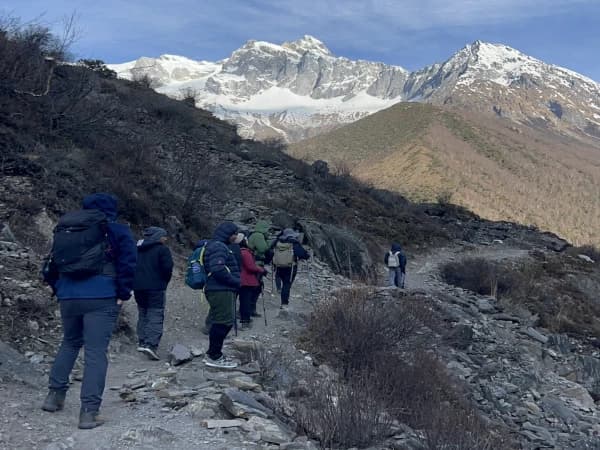
If you happen to be trekking during Buddha Jayanti in Nepal, the high-altitude monasteries observe the day quietly. Tengboche monastery in the Khumbu region, the gompas around Manang on the Annapurna Circuit, and the Tamang monasteries in Langtang all mark it with prayer sessions and freshly raised flags. Those places have minimal crowds and present you with majestic and spiritual views of mountains.
Buddha Jayanti Short Itinerary in Kathmandu
Day 1: Spiritual Exploration Around Buddhist Heritage Sites in Kathmandu
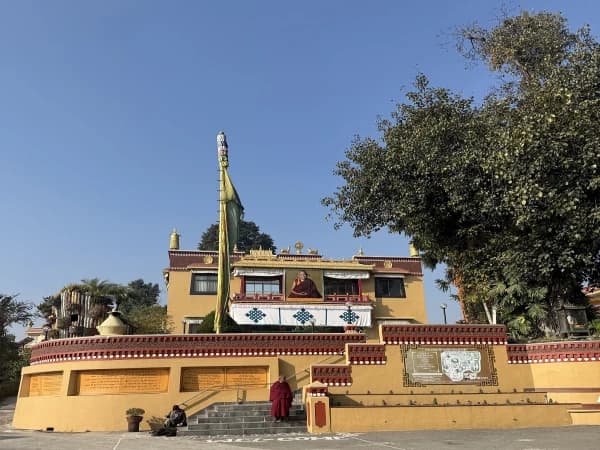
The day starts early around sunrise at Boudhanath Stupa. The air is cool and the crowds are still light. The white stupa glows and people begin their kora while spinning prayer wheels and chanting mantras.
You can also grab a butter tea from a nearby rooftop cafe and just experience the peace and spiritual feeling on this auspicious day. The smell of incense, the fluttering prayer flags and the sound of mantras allow calmness.
Then later, a short ride uphill takes you to a quieter and scenic Kopan Monastery. Kopan feels removed from the city noise, especially on Buddha Purnima when monks chant and visitors sit in silent meditation.
You’ll notice fewer tourists here and more intentional practice. The sound of chanting carries across the hill, mixed with wind through trees. You can also meditate here experiencing the peaceful monastery with other followers.
The day then takes you to Swayambhunath, the Monkey Temple. The climb is part of the experience. You will see that monkeys cover the whole area from the base of the stairs to the jungle of Swayambhunath and at the top of the stupa itself.
At the top, you get a panoramic view of Kathmandu along with a mix of Hindu and Buddhist practices happening side by side. It’s a great reminder of Nepal’s religious harmony.
After Swayambhunath, your spiritual journey takes you to Patan Durbar Square, the ancient artistic city of crafts. During Buddha Jayanti, the square is quieter than the major stupas but filled with carved temples, golden windows and locals offering small prayers.
Patan gives a chance to appreciate Newar architecture and Buddhist artistry telling stories of the Buddha’s life. It also features the magnificent Buddhist temples like the Golden Temple, Temple of Thousand Buddhas, etc.
How is Buddha Purnima celebrated in Nepal?
Buddha Purnima in Nepal is observed through acts of giving, restraint and compassion, kindness and non-violence as the teachings of Lord Buddha. People visit temples, light lamps, offer food to monks, avoid meat and alcohol, release caged animals and sit in on teachings.
The practices vary by country and tradition, but the logic is consistent.
Visiting temples and stupas
Followers show up at various sacred sites to offer prayers. This is simple and universal across Buddhist traditions.
Lighting butter lamps (Diyo)
People light lamps to represent knowledge over ignorance. In Nepal on this night, it happens at scale.
Sutra chanting
Monks recite texts from the Pali Canon or Tibetan tradition. In Kathmandu, you will hear it coming from every monastery you pass.
Vegetarian food and no alcohol
Ahimsa (non-violence), non-harm is applied to diet. Many restaurants near Buddhist sites in Kathmandu go fully vegetarian on this day.
Dana (Alms-giving)
Food, clothing and money given to monks, monasteries and people who need it. Buddhists consider this especially meritorious on Buddha Purnima.
Releasing animals
People free caged birds and animals in the act of compassion in a concrete expression rather than an abstract one.
Meditation
Many monasteries open their doors to lay practitioners on this day to practice and perform peaceful, mindful meditation striving for peace and kindness.
Public programs
Processions, interfaith events, talks on Buddhist philosophy. More prominent in urban areas.
Buddha Jayanti significance
The significance of Buddha Jayanti in Nepal operates on several levels. They are religious, historical, national and practical for anyone traveling here. Understanding each one changes how you experience the birthday of Buddha.
Religious Significance
For practicing Buddhists, Buddha Jayanti is the year's most important day. The birth, enlightenment and death of the Buddha all converge here.
Actions taken on this day, giving, meditating, acting with restraint, are believed to carry more weight than the same actions on ordinary days. That is why the alms-giving, the Kora (circumambulation) and the lamp lighting all happen with more intensity than usual.
It is also a teaching day. Senior monks give public talks. Monasteries are open. People who would not normally sit for meditation also do so.
Historical Significance for Nepal
Nepal is the only country that can say the Buddha was born here. That is a real historical fact, backed by archaeology. The Buddha Jayanti festival is therefore also a national occasion and not just a religious one.
When Nepali people observe the day, they are acknowledging their connection to one of the most-studied figures in human history. The Hindu-Buddhist overlap makes it even broader. Because Hindu philosophy includes the Buddha as the 9th avatar of Lord Vishnu, the day is observed across religious communities.
Global Significance
The United Nations designated Vesak (Buddha Purnima) as an international day of observance in 1999 AD. More than 500 million people follow Buddhist practice worldwide. The day has enough reach that it gets formal UN recognition, which matters for how governments in Buddhist-majority countries treat it.
The arguments the Buddha made, against violence, for careful ethical reasoning, for attention to one's own mind and body, show up across philosophy and religious traditions. People who are not Buddhist engage themselves in Buddha Purnima.
Buddha Jayanti in Lumbini- The birthplace of Buddha
Lumbini is the birthplace of the Buddha and the most historically weighted place to spend Buddha Jayanti festival in Nepal. It is calmer than Boudhanath. It is very significant to Buddhism and its heritage. Lumbini is the place where Buddha was born and spent his life before attaining enlightenment. It is the holy place connected with the life of prince Siddhartha Gautam.
The Sacred Garden and Maya Devi Temple
The Sacred Garden is the core of Lumbini. It contains the Maya Devi Temple which is built over the excavated birthplace of Siddhartha. Also, the Ashoka Pillar from 249 BCE and the pond where Queen Mayadevi bathed before giving birth. On Buddha Jayanti, the garden fills with pilgrims. The ceremony at Maya Devi Temple is grand with lamps on the water and chanting in the dark. It is the quietest and best part of the day.
The International Monastic Zone
There is the Monastic zone of over 20 monasteries built by Buddhist countries surrounding the site. Japanese Peace Pagoda, Myanmar Golden Temple, Cambodian Monastery, Chinese monastery, Korean monastery all surround the site just outside the sacred garden.
On Buddha Jayanti, all of them are running ceremonies. You can walk between them and sit in on each one. It takes a few hours and is genuinely one of the most spiritual things you can do in Nepal.
How to get to Lumbini from Kathmandu?
You can get to Lumbini from Kathmandu by the following options:
By Air: A domestic flight from Tribhuvan International Airport, Kathmandu to Gautam Buddha International Airport in Bhairahawa is the fastest way. The flight takes about 35 minutes followed by a 1 hour drive to Lumbini heritage site.
By tourist bus: Tourist buses take 8 to 10 hours depending on traffic. The Terai flatlands are not exciting to drive through, but they are interesting if you have not seen that part of Nepal before. These buses offer comfort with AC, reclining seats and stop for meals.
By private transport: This is a great way to travel if you are travelling by road. Your tour operator can arrange comfortable and safe vehicles with experienced drivers so you fully enjoy the lowlands of Terai. It takes around 7 to 8 hours by private transport to reach Lumbini from Kathmandu. It allows for a flexible schedule and scenic stops along the way.
Cultural etiquette during Buddha Jayanti
Buddha Purnima is a religious day and not a cultural showcase. The etiquette is not complicated, but skipping it is noticeable and disrespectful to the followers of Buddhism and teachings of Buddha. Here is what etiquette should you follow during the Buddha Jayanti festival:
Cover your shoulders and knees with modest dressing at temples, stupas and monasteries.
Remove shoes before entering any sacred space, including open courtyards.
Always walk clockwise around stupas while performing kora. Counterclockwise is wrong and people will tell you.
Spin prayer wheels clockwise only.
Keep your voice down and follow a quiet and peaceful approach.
Politely ask before photographing monks or people in prayer.
Do not touch offerings, statues or sacred objects.
Skip alcohol on this day. It is widely avoided and your drinking near a temple on Buddha Purnima will be noticed.
Eat vegetarian if you can. Many Nepali Buddhists observe ahimsa on this day and it is a reasonable thing to match.
In the kora, walk at the pace of the crowd. Do not cut across the path.
In monastery ceremonies, sit quietly at the back.
Receive prasad (blessed food or flowers) with your right hand or both hands.
Experience Buddha Jayanti Where It All Began in Nepal
Traveling for Buddha Jayanti in Nepal is one of those trips that stays with you spiritually long after you leave. The ceremonies are real and the sites are old.
The full moon at Boudhanath, the lamps on the water at Lumbini, the sound of chanting coming out of every monastery on the circuit, these are not staged. They have been happening here for over a thousand years and they will keep happening after you leave.
For Buddha Purnima activities, you can do all of it in one day in Kathmandu or spend two days between Lumbini and the valley depending on your time and itinerary.
If you have ever thought about experiencing Buddha Jayanti where it truly began, this might be the year to do it. Whether you spend the day at Boudhanath Stupa or watch the evening lamps in Lumbini, the experience is transforming.
FAQs
1. When is Buddha Jayanti celebrated in Nepali date?
This year, Buddha Jayanti is celebrated on Baisakh 19, 2083 in Nepali date according to the Bikram Sambat calendar.
2. In which season is Buddha Jayanti celebrated?
Buddha Jayanti is celebrated in the spring season as it generally falls in late April to early May.
3. Is it Buddha Jayanti or Buddha Purnima?
Buddha Jayanti and Buddha Purnima both are celebrations of the same Buddha’s Day festival. In Sanskrit language, Jayanti means celebration of victory or birth and Purnima means full moon day. Hence both are different names for the celebration of the same festival.
4. Was the Buddha born in Nepal?
Yes, Prince Siddhartha Gautam, who later became Buddha after gaining enlightenment was born in Lumbini, Nepal.